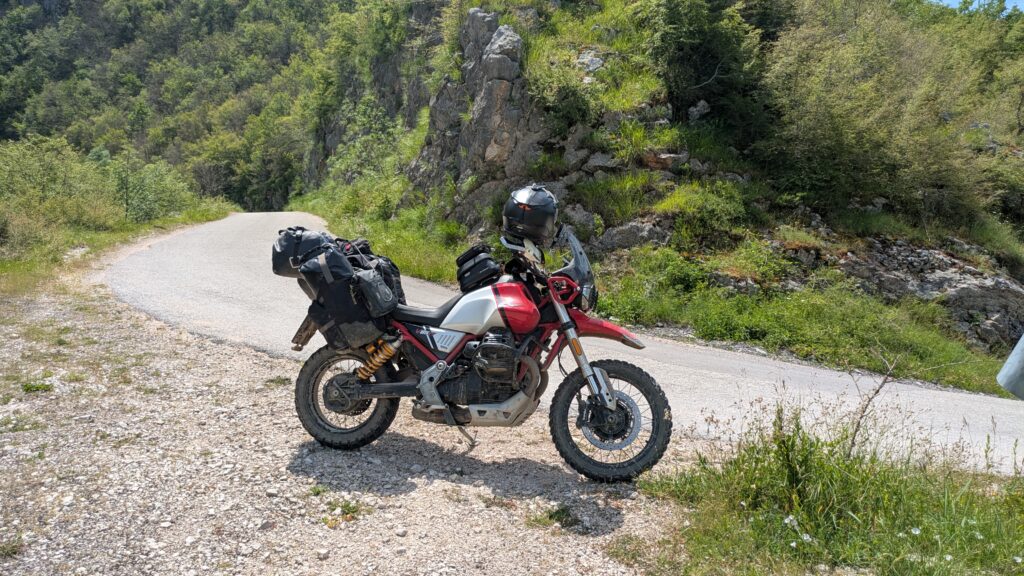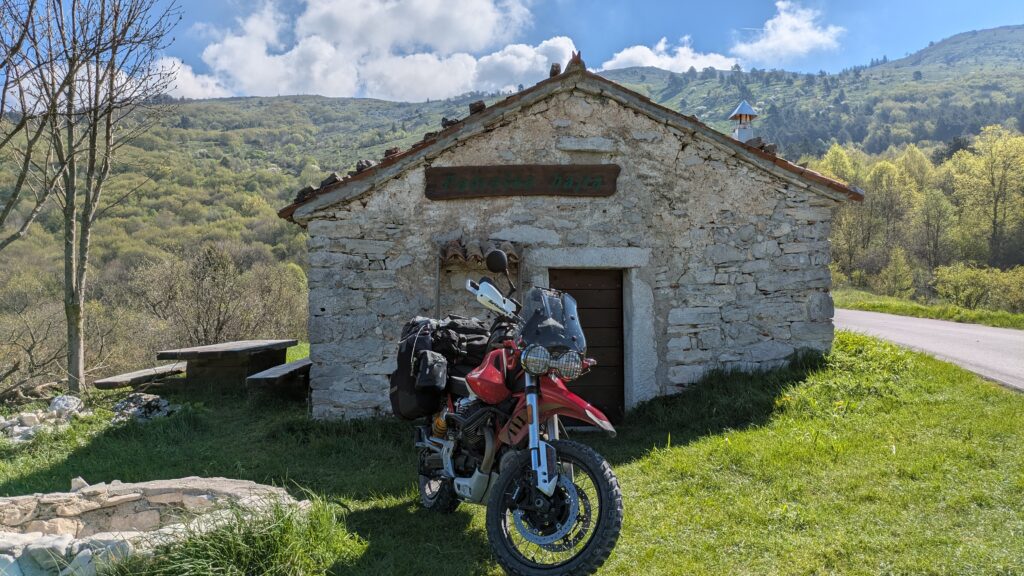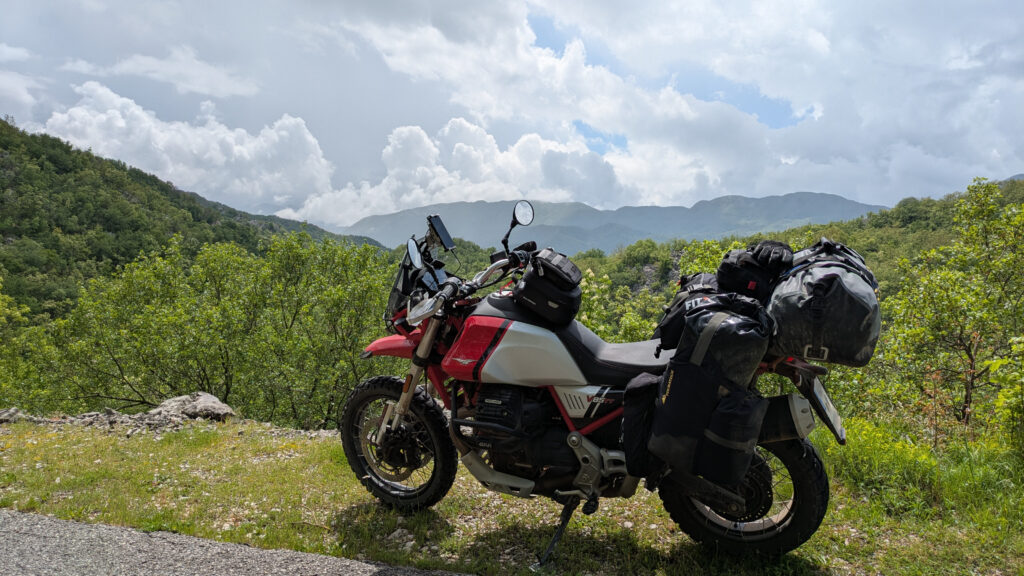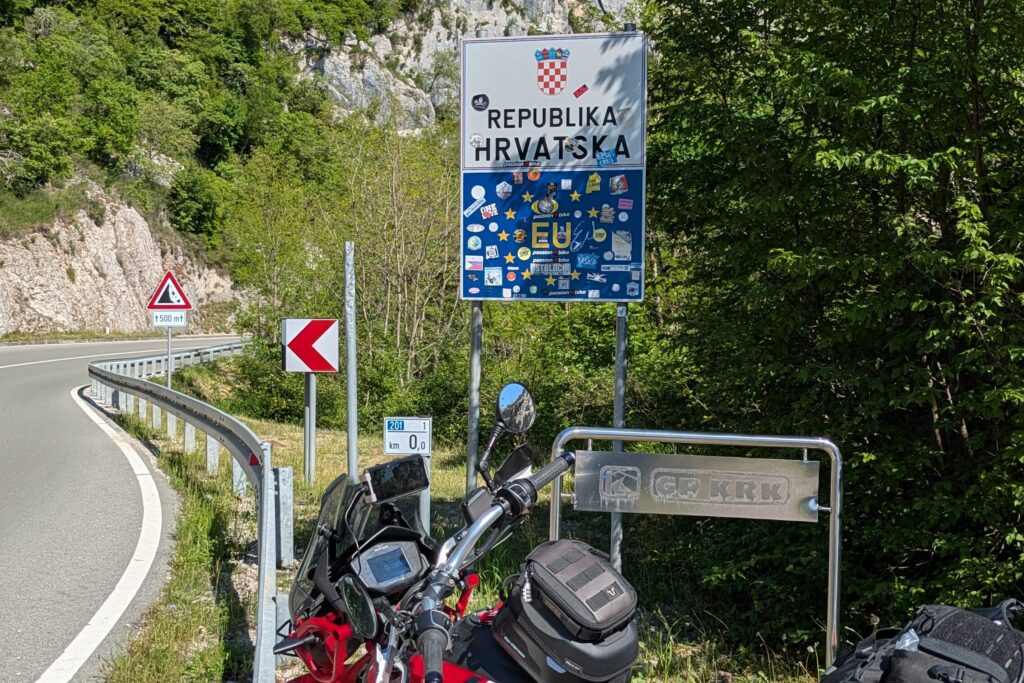
There are roads in Europe that make you pull over just to stare. Croatia has an embarrassing number of them. The Dalmatian Coast — that long ribbon of asphalt squeezed between limestone mountains and a shimmering Adriatic — is one of the most visually dramatic motorcycle routes on the continent. I’ve ridden a lot of coastlines, but nothing quite prepares you for cresting a hill on the D8 and seeing hundreds of islands scattered across a sea that can’t decide whether it’s blue or green.
This Croatia motorcycle travel guide covers everything you need to plan a proper tour — the best routes from the Istrian Peninsula in the north to Dubrovnik in the south, realistic daily budgets, border crossing practicalities, and the honest truth about summer crowds. Croatia rewards riders who plan well and punishes those who show up in August expecting empty roads. Want to find out the best time to visit the Balkans by Motorcylce? Check out this post!
Why Croatia Belongs on Every Rider’s Europe List
Croatia has something most European destinations can’t offer in a single country: variety. You can ride winding mountain passes in the morning, drop down to a coastal road flanked by olive groves by lunch, and be sitting at a harbour-side konoba with fresh fish and local wine by evening. The country packs an extraordinary amount of riding terrain into a relatively small area.
Road quality is notably good by Balkan standards, particularly on the coast and the main inland routes. The infrastructure has improved dramatically over the past decade, driven by tourism investment. You’ll find reliable fuel stations, decent mobile coverage, and mechanics who’ve seen plenty of touring bikes pass through.
Beyond the roads, Croatia sits at the western edge of the Balkans, making it a natural entry point or finishing point for broader Balkan tours. The border crossings into Slovenia, Bosnia, and Montenegro are all straightforward, and each neighbouring country offers a completely different riding experience.
Best Time to Ride Croatia by Motorcycle
Timing your Croatia motorcycle tour correctly makes an enormous difference — more so than almost anywhere else in Europe.
- May–June: The sweet spot. Temperatures are warm but not punishing (22–28°C on the coast), roads are clear, ferry timetables are full, and accommodation prices haven’t hit peak season rates. This is when Croatia motorcycle touring is at its best.
- September–October: An equally excellent window. Crowds have thinned, the sea is still warm from summer, and you’ll find better value everywhere. September in particular feels like the coast exhales after the chaos of August.
- July–August: Croatia is beautiful but genuinely overcrowded on the coast. The D8 becomes a procession of camper vans. Accommodation costs double or triple. If you must ride in peak summer, start at dawn — the roads are manageable before 9am.
- April: Possible but limited. Some ferry routes run reduced schedules and mountain roads can still be cold. Good for early-bird budget riders who don’t mind occasional rain.
Croatia’s Best Motorcycle Routes
The Dalmatian Coast — Split to Dubrovnik
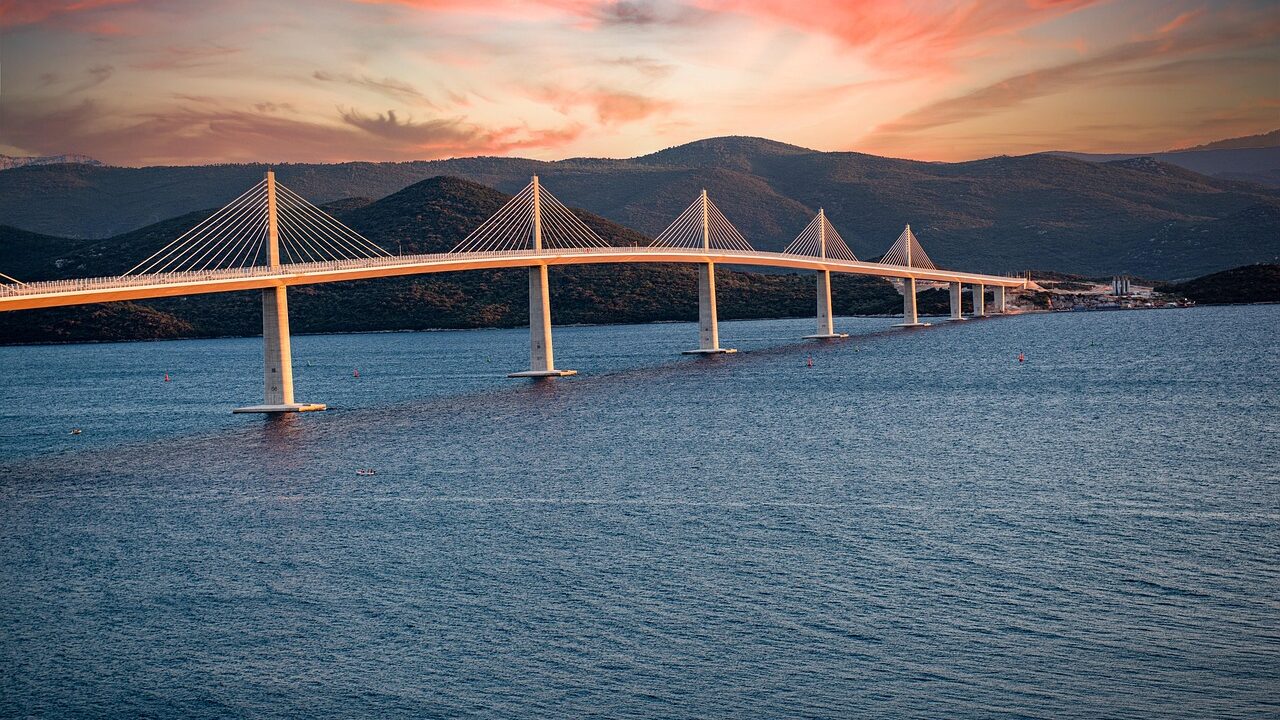
This is the route. Route D8 — the Jadranska magistrala, or Adriatic Highway — runs the length of the Dalmatian coast and is simply one of the most spectacular roads in Europe. You ride with mountains rising steeply to your left and islands dropping away into the sea on your right. The road surface is excellent for the most part, though watch for older tarmac sections near smaller towns.
The distance from Split to Dubrovnik is roughly 230 km on the coastal road, but allow a full day minimum. The Pelješac Peninsula detour alone is worth an extra hour — the road hugs the peninsula’s spine with views over the channel to Korčula island. With the Pelješac Bridge open since 2022, you can now ride straight through to Dubrovnik without the brief Bosnia transit previously required.
Avoid this route in peak July and August unless you’re prepared for serious traffic. The convoy of summer tourism is real.
Istria Peninsula Loop
Istria is Croatia’s most underrated riding region and one of the best reasons to start your itinerary in the north. The interior is a landscape of rolling red-earth hills, vineyards, and medieval hilltop towns that feel distinctly Italian — unsurprisingly, given centuries of Venetian rule.
Motovun, Rovinj, and Pula form a natural triangle. The roads between them are sinuous and largely empty outside peak season. Istria tends to be quieter than Dalmatia throughout summer, making it a smarter choice if you’re touring in July. Road surfaces throughout the peninsula are consistently good.
Plitvice Lakes and the Interior
The inland route through the Lika region connecting Zagreb to the coast passes through some of Croatia’s most dramatic karst landscape. Plitvice Lakes National Park is the obvious highlight — a UNESCO site of stacked travertine lakes and waterfalls that genuinely delivers on the photos. Entry fees run around 25–40 € per person depending on season, and dedicated motorcycle parking for around 5€ is available near the main entrance.
The interior roads are emptier and in slightly rougher condition than the coast, but that’s part of the appeal. This is where you feel Croatia’s quieter, wilder side.
Velebit Mountain Road and Northern Coast
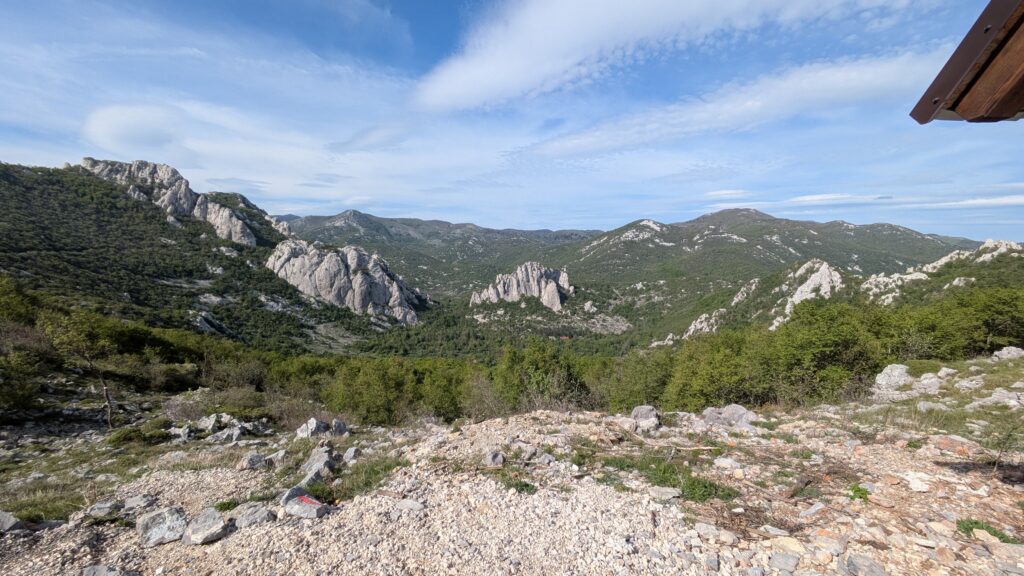
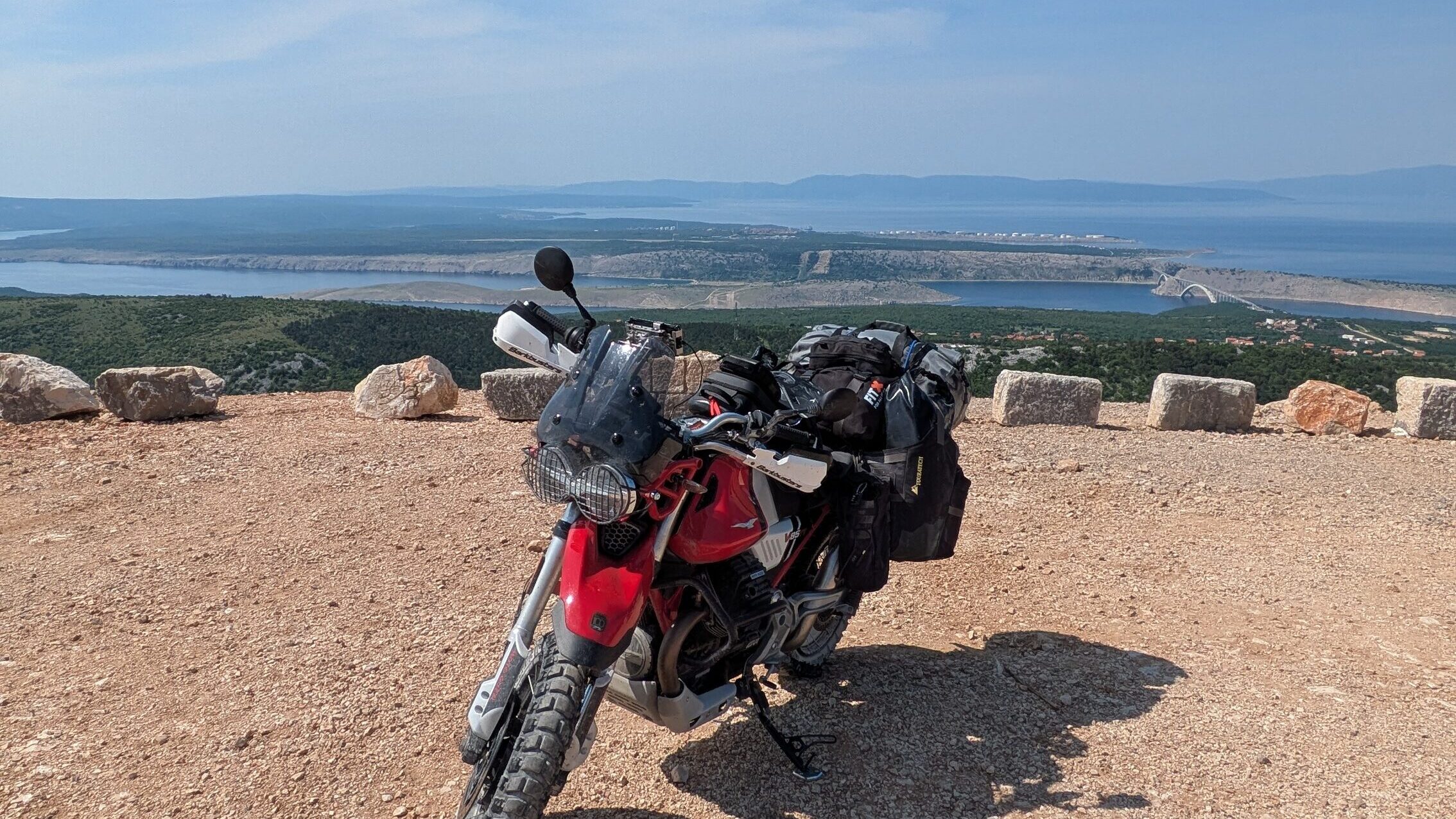
For riders who want to combine coastal Croatia with proper elevation, the Velebit range offers a genuine mountain road experience. The D23 climbs steeply from the coast near Karlobag with views over the Kvarner Gulf that rank among the best in the country. The road is narrower than the Dalmatian coast routes and gets much less traffic — ideal for a focused riding morning.
Krka National Park Loop
A short loop from Šibenik takes you into Krka National Park — another waterfall park, slightly less visited than Plitvice and more accessible for a half-day stop. Entry fees run around 20–30 € depending on season, and motorcycle parking is straightforward at the main Skradinski Buk entrance. It pairs well with an afternoon on the Dalmatian coast.
Budget and Daily Costs in Croatia
Important note if you haven’t been recently: Croatia adopted the Euro in January 2023. No more kuna. This simplifies budgeting considerably for European riders, though it hasn’t made Croatia cheaper — prices adjusted upward with the transition in many tourist areas.
Fuel: Expect to pay around 1.50–1.70 € per litre for petrol. Fuel stations are plentiful on the coast and main inland routes. If you’re heading into remote interior areas, fill up before leaving the main road.
Accommodation: Established campsites on the coast run 15–30 € per night including motorcycle. Wild camping is effectively prohibited in Croatia, particularly in coastal areas and national parks. For private rooms (sobe) or budget hotels, expect 40–70 € in shoulder season and 80–120 € in July and August.
Food: This is where Croatia rewards you. A meal at a local konoba — a traditional Croatian tavern — runs 12–18 € for a full meal with local wine. Supermarkets are well stocked and reasonably priced. Avoid restaurants in the historic centre of Dubrovnik if budget matters; prices there are firmly in tourist-premium territory.
Tolls: The A1 motorway charges per section — a full Zagreb to Split run costs around 25–30 €. The coastal D8 is entirely toll-free and far more interesting anyway.
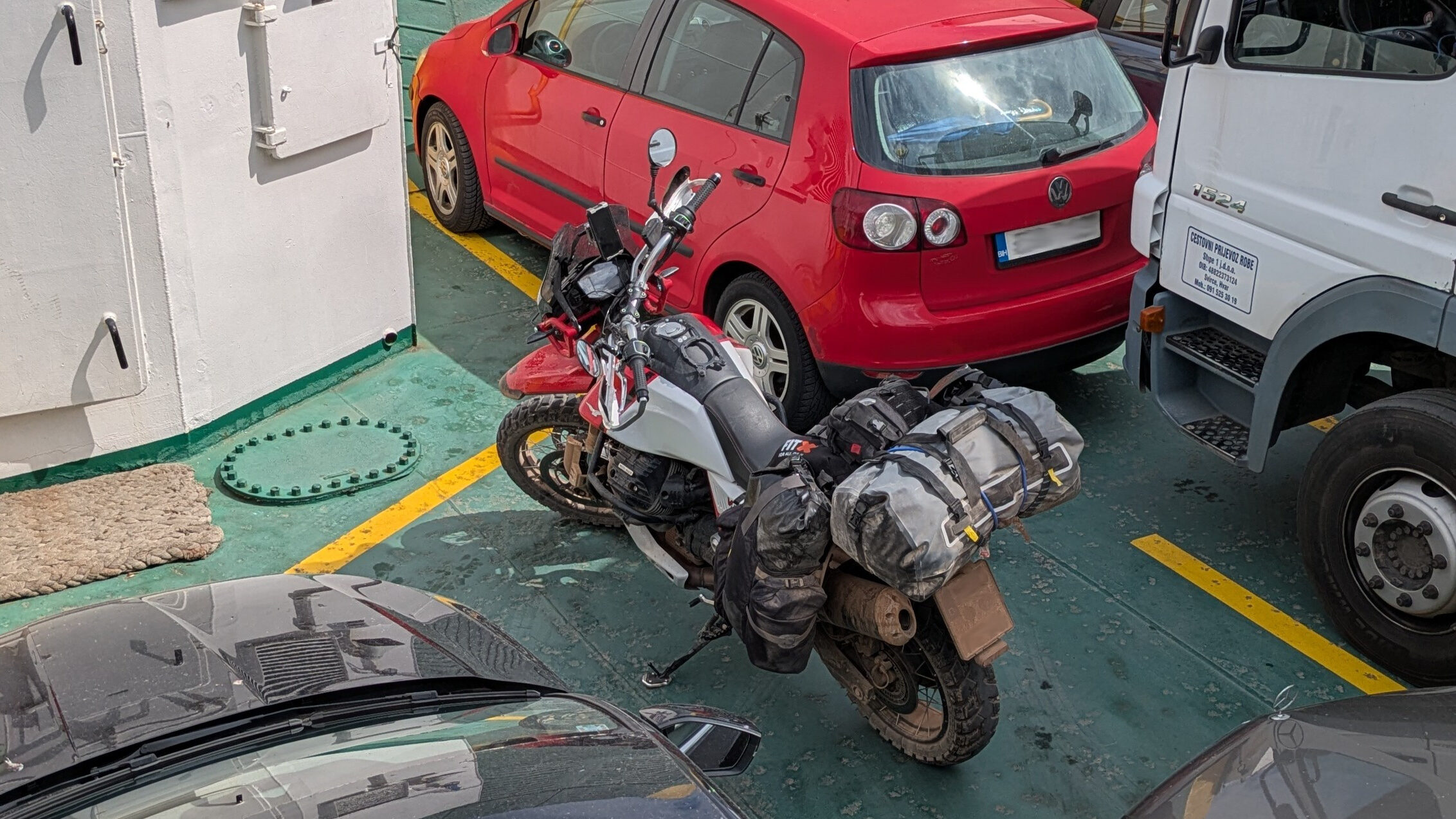
Ferries: Jadrolinija operates the main island ferry network. Motorcycle rates depend on bike size but expect 10–25 € per crossing. In peak season, book ahead.
Three daily budget tiers:
- Budget: 45–60 €/day — camping, self-catering most meals, no toll motorways
- Mid-range: 80–110 €/day — private rooms or budget hotels, mix of konoba meals and supermarket
- Comfortable: 140+ €/day — hotels, restaurant meals, national park entries, occasional ferry excursions
The budget tiers above are averages, and Croatia can surprise you in both directions. I spent a night in Sinj — a small inland town about 30 km north of Split — and paid 55 € for what turned out to be an absolutely spotless, premium hotel. Friendly staff, great breakfast, secure parking. Two nights later I was on Hvar and handed over 120 € for a room that was, frankly, pretty basic. Same trip, same standards, wildly different prices.
The lesson is simple: the coast and the islands charge what the summer market allows. Move even slightly inland and the prices drop dramatically. A bit of research before each overnight stop pays for itself quickly — if you know you’re heading toward a popular island or coastal town, book a night or two inland first, then cross for a day visit without the accommodation premium. Planning your stops even loosely a day ahead makes a real difference to your overall budget on a Croatia motorcycle tour.
Border Crossings and Entry Requirements
Croatia joined the Schengen Area in January 2023. If you’re entering from Slovenia, Hungary, or Austria, there are no passport checks — you simply ride through. The internal EU/Schengen borders are now as seamless as riding between German states.
Entering from Bosnia and Montenegro still involves border controls, as neither country is in the EU. These crossings are generally efficient — budget 10–20 minutes at quieter posts, longer at busy summer crossings near popular coastal routes. Carry your vehicle registration and a green card insurance certificate; standard EU coverage applies throughout Croatia.
There is no motorway vignette in Croatia. Tolls are paid per section at booths, with cash or card. Standard payment works everywhere.
Practical Riding Tips for Croatia
A few things that will make your Croatia motorcycle travel experience smoother:
- Speed limits: 50 km/h urban, 90 km/h rural, 110 km/h expressway, 130 km/h motorway. Croatian traffic police are active on tourist routes in summer.
- Alcohol: Zero tolerance for motorcyclists. Take this seriously.
- Mandatory equipment: Reflective vest, warning triangle, and first aid kit are legally required. Keep them accessible — a police spot check will ask for these.
- Parking: In most coastal towns, motorcycles park on pavements without issue — this is the accepted local norm. In Split and Dubrovnik old town areas, use designated two-wheeler spaces.
- Ferry booking: For Jadrolinija routes in peak season, book motorcycle spots online in advance. The Split–Supetar and Drvenik–Sućuraj routes fill up fast.
- Timing the coastal road: Start before 8am on the D8 in summer. By 10am, traffic is building noticeably.
One thing worth knowing from experience: locals treat speed limit signs as suggestions, especially on the D8. Don’t be tempted to follow their pace — during peak season the police specifically target tourists, and a foreign plate on a motorcycle is an easy catch. Stick to the posted limits, watch for signs carefully around town boundaries where the limit drops suddenly, and you’ll have no issues.
Combining Croatia with Neighbouring Countries
One of the best things about this Croatia motorcycle travel guide destination is how naturally it connects to the wider Balkans:
- Slovenia + Croatia: The most natural pairing. Cross from the Ljubljana area into Istria, ride south along the coast, exit through Dubrovnik into Montenegro. Two weeks minimum.
- Croatia + Bosnia: A day trip to Mostar from the coast is one of the most rewarding detours in the Balkans. The Neretva Valley road approaching Mostar is spectacular.
- Croatia + Montenegro: Continue south from Dubrovnik for some of the most dramatic coastal riding in Europe — the Bay of Kotor is in a league of its own.
- Full Balkan loop: Croatia → Bosnia → Montenegro → Albania → back north. Croatia as the natural bookend.
Conclusion
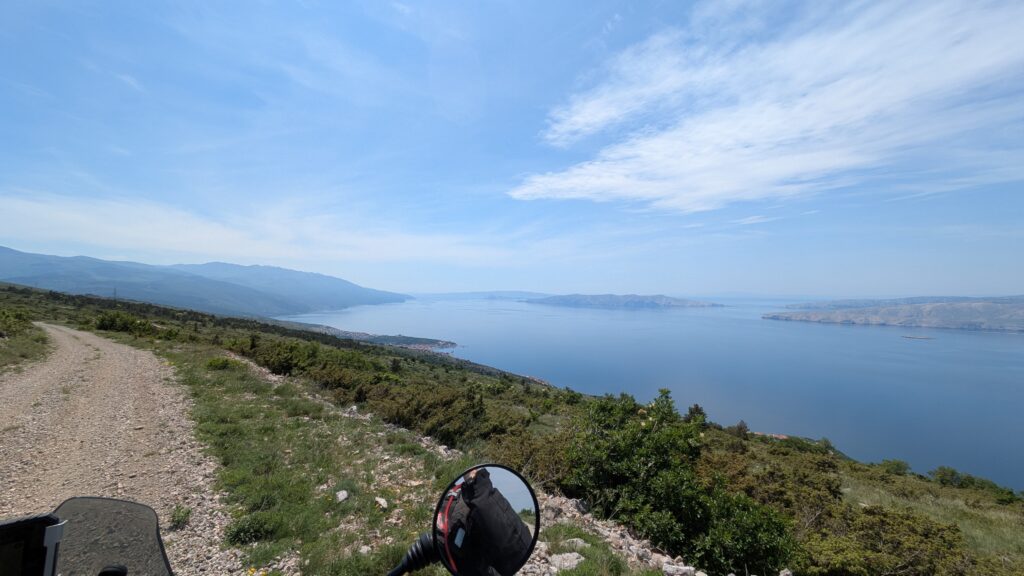
This Croatia motorcycle travel guide only scratches the surface of what the country offers. The Dalmatian Coast will live up to every expectation — but it’s often the detours that stick with you longest. The backroad through the Lika interior. The Pelješac Peninsula at dusk. The first coffee in a tiny harbour town where nobody seems to care what month it is.
Ride in May, June, or September if you possibly can. Avoid the peak summer coastal road unless you’re an early riser with patience. And build in extra days — Croatia has a habit of slowing you down in the best possible way.
Have you ridden the Dalmatian Coast or Istria? Drop your own route tips in the comments — fellow riders planning their first Croatia motorcycle tour will appreciate the intel.