Most riders budget carefully for accommodation and fuel and then haemorrhage money on food without noticing. Three restaurant meals a day in Western Europe — breakfast at a café, lunch at a tourist restaurant near the main square, dinner somewhere with an English menu — adds 60–80 € to your daily spend before you’ve touched accommodation or petrol. Over a two-week tour that’s 800–1,100 € on food alone. For a budget that’s supposed to cover everything, that’s a significant problem.
The good news is that cheap food motorcycle touring doesn’t require eating badly or skipping meals. It requires a simple strategy and the willingness to eat where locals eat rather than where tourists end up. The unexpected bonus: the food is almost always better. The best meal I’ve had on a motorcycle tour has never come from a restaurant with an English menu and a laminated photo of the dishes. It’s always come from somewhere with a handwritten sign, a set menu, and no other tourists in sight. As part of the Budget Travel series this guide covers the strategy that keeps food costs manageable without sacrificing the experience.
Why Food Budget Matters More Than Most Riders Think
The compounding effect of food costs across a long tour is easy to underestimate. At 60 € per day on food — three restaurant meals in a moderate Western European city — a two-week tour costs 840 € on eating alone. At 20 € per day — grocery store breakfast and lunch, one local restaurant dinner — the same tour costs 280 €. The 560 € difference funds another week of riding.
The tourist restaurant trap is the primary cause of inflated food budgets. Restaurants within sight of a major attraction, on the main square, or with menus in four languages charge prices calibrated to tourists who won’t be back and don’t know the alternatives. The alternative is almost always fifty metres away and half the price. Finding it requires five minutes of walking away from the obvious and a willingness to sit somewhere without an English menu.
Food is also one of the genuine cultural pleasures of motorcycle touring — and the cultural pleasure almost always sits in the local option rather than the tourist one. A bowl of Bosnian burek eaten standing at a bakery counter for 1.50 € is a better experience than the same calories in a tourist café for four times the price. Cheap food motorcycle touring and good food motorcycle touring are, consistently, the same thing.
The Grocery Store Strategy — Foundation of Cheap Food Motorcycle Touring
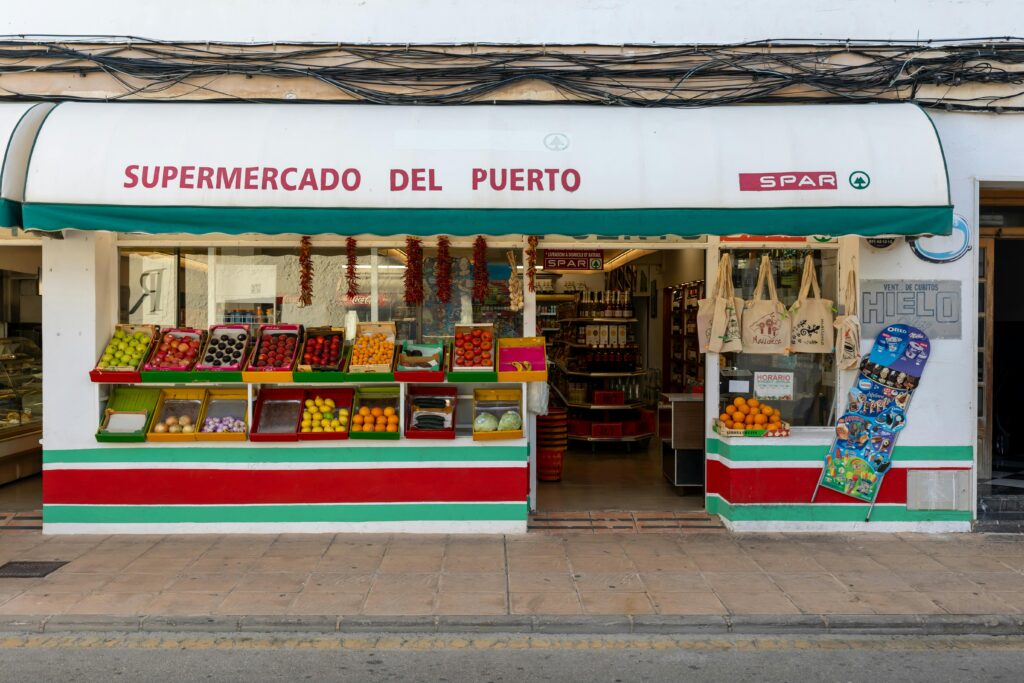
The grocery store strategy is simple: buy breakfast and lunch ingredients from supermarkets and eat one proper meal at a local restaurant in the evening. Implemented consistently, it cuts daily food costs by 40–60% without requiring any sacrifice in quality or quantity.
The shopping list barely varies across the continent: fresh bread or rolls, local hard cheese, cured meat or salami, fruit, and a handful of nuts or chocolate for riding energy. Total cost for a day’s breakfast and lunch: 4–8 € across most of Europe, 3–5 € in the Balkans and Eastern Europe. The same food from a café costs 15–25 €.
Finding supermarkets on the route is straightforward — Google Maps searches work reliably across Western Europe, and even small Balkan towns have a local market or mini-market within a few minutes of the main road. The most efficient approach is the morning supermarket stop: pull in before the riding day starts, buy the day’s food in ten minutes, and you’re set until evening without stopping again.
Storage on the bike requires a little thought. Hard cheese, cured meats, bread, whole fruit, and nuts all survive without refrigeration for a full riding day even in summer heat, provided they’re not sealed in a hot pannier in direct sun. A small insulated bag or a shaded spot in a soft-sided bag keeps food in reasonable condition. Soft cheese, anything in cream, and cut fruit in high summer heat are all problems waiting to happen — avoid them.
The grocery store strategy wasn’t something I planned — I stumbled into it on my first proper adventure tour. Heading into remote terrain with no towns on the route, I stopped at a supermarket out of necessity and spent just over 4 € on bread, cheese, cured meat, and fruit. I ate well all day and arrived at my overnight stop realising I’d spent less on food for the entire day than I’d normally spend on a single café sandwich. It wasn’t a strategy at that point. But it immediately became one.
The One Restaurant Rule — Eating Out Without Breaking the Budget
One proper sit-down meal at a local restaurant per day is the balance point between budget and experience for most motorcycle tourers. It keeps the food cultural experience intact — you’re still eating local food, talking to locals, experiencing the places you’re riding through — while cutting the cost of eating out from three meals to one.
The economics of lunch vs. dinner vary by region. In Portugal and France, lunch is the main meal culturally and set lunch menus offer three courses for the price of a single dinner dish. In the Balkans, lunch and dinner pricing is similar and the choice is personal. In Italy, lunch at a tavola calda or pizzeria al taglio is cheaper than dinner and equally satisfying.
Identifying a local restaurant from a tourist one takes about thirty seconds of observation. Local restaurants have customers who arrived on foot from the neighbourhood, not from a tour bus. The menu is short, handwritten or on a chalkboard, and in the local language first. There are no photos of the dishes. The prices are in a range that suggests locals can afford to eat there regularly. Walk toward this restaurant. Walk away from the one with the seven-language laminated menu and the host standing outside trying to attract customers.
Local Food Cultures That Save You Money
The Balkans — Konoba Culture
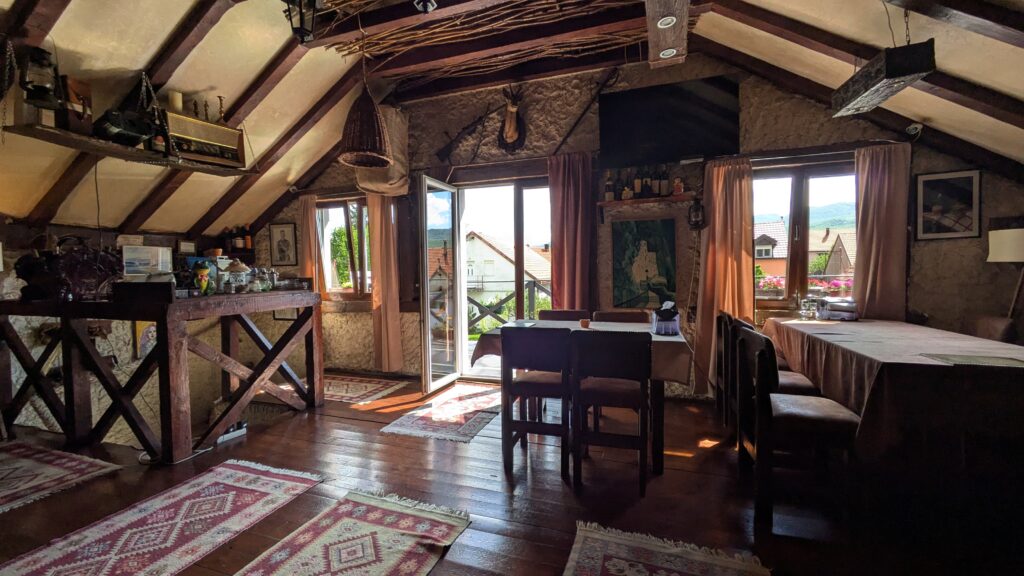
The konoba — a traditional Balkan tavern serving local food at local prices — is the budget motorcycle tourer’s most reliable ally in Croatia, Bosnia, Montenegro, and along the Adriatic coast. A full meal of grilled meat, local cheese, bread, salad, and a glass of house wine costs 8–12 €. The food is generous, the quality is consistently good, and the atmosphere is invariably more enjoyable than anything in the tourist restaurant tier.
Bosnia’s burek deserves its own mention. This flaky pastry filled with minced meat, cheese, or spinach, baked fresh and sold by weight at local bakeries, costs 1.50–2.50 € for a portion that constitutes a full meal. It’s the most efficient cheap food motorcycle touring option in the Balkans and one of the genuinely great street foods in Europe. Albania’s byrek is the same concept at 0.50–1 € — almost implausibly cheap and completely satisfying.
Italy — Aperitivo and Local Tricks
Northern Italy’s aperitivo culture is the finest cheap food discovery available to a motorcycle tourer in Western Europe. Order a drink — typically 4–6 € — in a bar between 6pm and 9pm and the accompanying spread of free food is often substantial enough to replace dinner entirely. Milan invented it but the tradition extends across Lombardy, Piedmont, and Emilia-Romagna. The quality of the food varies but is frequently excellent.
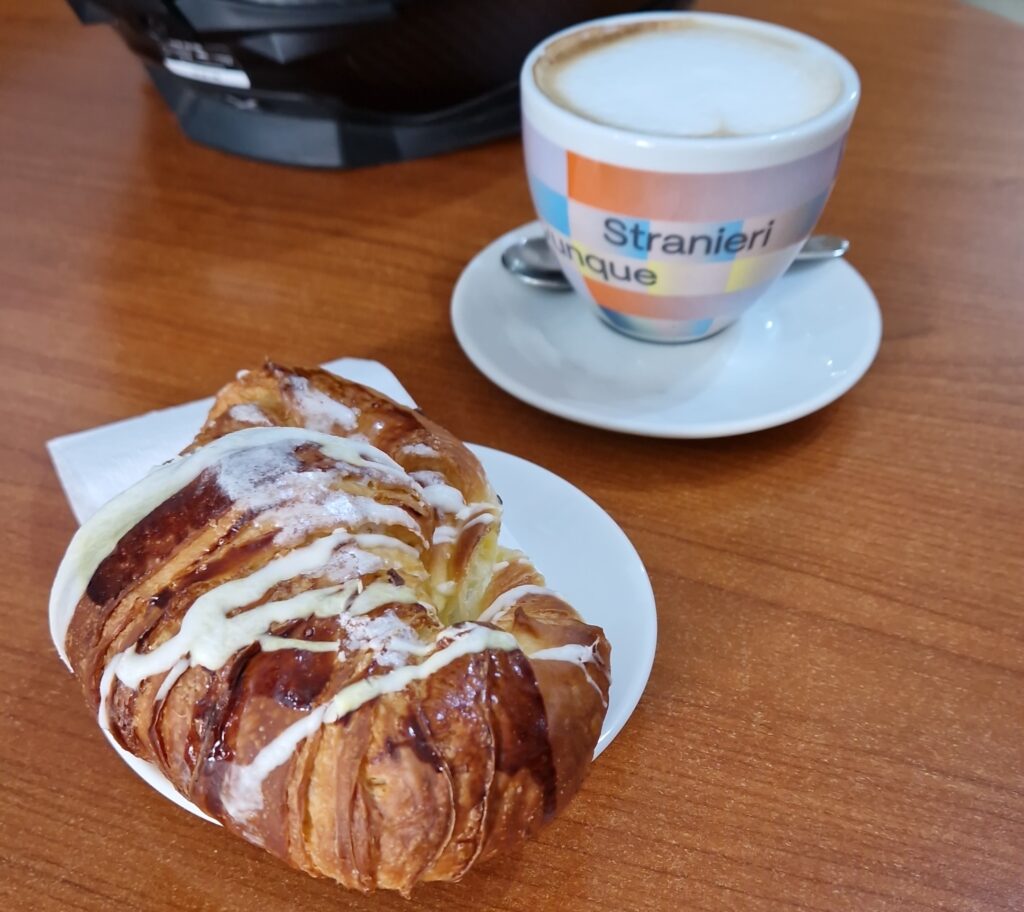
Bar breakfast is the Italian standard for good reason: espresso and a cornetto (croissant) costs 1.50–2 € standing at the bar, a ritual that takes four minutes and sets up the morning perfectly. Pizza al taglio — by-the-slice pizza sold by weight — runs 2–4 € per piece at any pizzeria outside the tourist centre. Tavola calda is the Italian canteen concept: hot food displayed behind glass, self-service, full meal for 8–12 €. All three are better than tourist restaurant equivalents at a fraction of the cost.
Northern Italy’s aperitivo culture genuinely surprised me the first time. I stopped for a drink expecting nothing more than a cold beer and was presented with a spread that came close to matching what I’d been calling lunch for the past few days. It’s one of those discoveries that feels almost too good to be true — and in tourist hotspots, it often is. Step away from the obvious areas and the tradition is alive and generous. Stay on the main square and you’ll pay tourist prices for a handful of crisps.
Portugal — The Menu do Dia
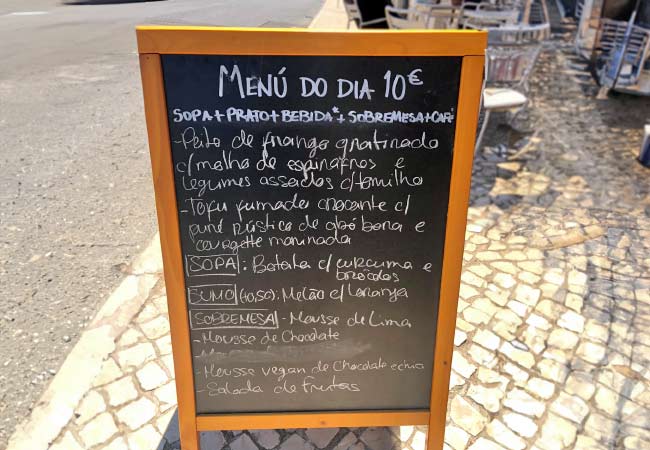
Portugal’s menu do dia is among the best value food experiences in Western Europe — a set lunch of three courses including wine or water for 10–12 € at most inland restaurants. Soup, a substantial main course, dessert or coffee. The food is home-style Portuguese cooking rather than tourist-facing interpretation, and the quality is consistently better than anything available at tourist restaurant prices.
The menu do dia is served at lunchtime only — typically noon to 3pm — and identified by a handwritten sign rather than a printed menu. Restaurants that serve it are almost always full of local workers at 1pm, which is the most reliable quality indicator available. Adjust your riding day to include a proper lunch stop in Portugal and the food budget essentially disappears.
France — Markets and Boulangeries
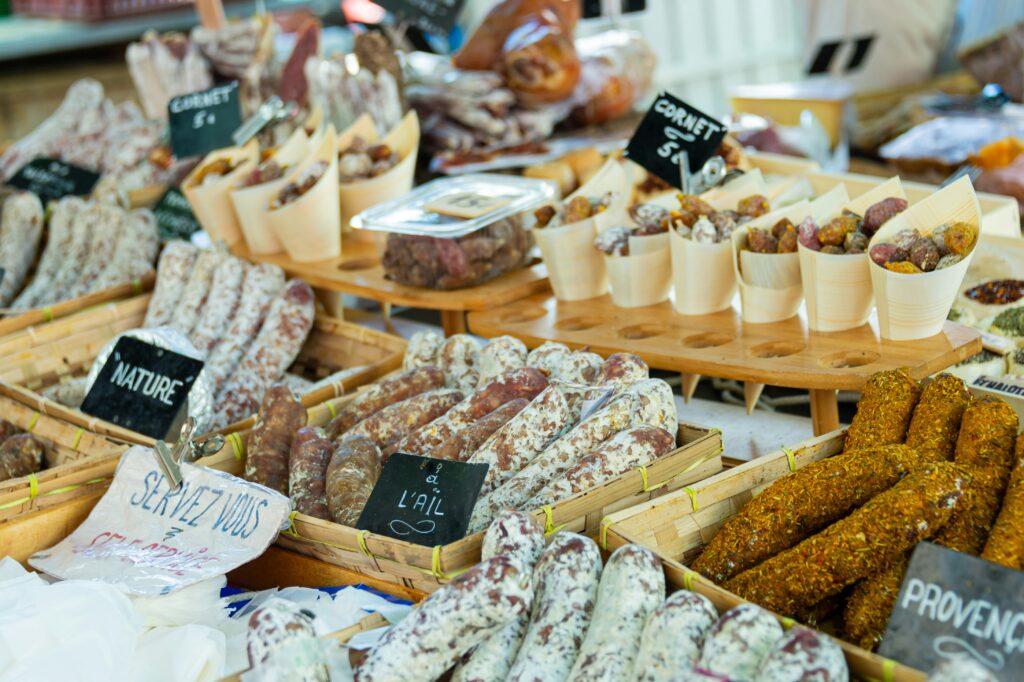
French market culture is one of the great pleasures of touring through France and one of the most effective cheap food strategies available. Most towns have a weekly market selling fresh bread, local cheese, charcuterie, olives, and seasonal produce at prices that make supermarket shopping look expensive. A market lunch of baguette, cheese, cured meat, and fruit assembled from market stalls costs 5–8 € and is frequently the best meal of the day.
The boulangerie lunch — a fresh baguette with cheese or ham from the adjacent charcuterie, eaten at a bench or on the bike — costs 3–5 € and is a legitimate and deeply French way to eat. Avoid autoroute service stations for any food purchase: they are the most expensive food in Europe by a significant margin and the quality doesn’t justify the premium by any measurement.
Eastern Europe — Best Value on the Continent
Eastern Europe consistently offers the best value food on any European motorcycle tour. Czech and Slovak lunch menus run 4–7 € for a full meal including soup. Poland’s bar mleczny — milk bars, a communist-era institution serving traditional Polish food at canteen prices — offer complete meals for 3–5 €. Romanian and Bulgarian local restaurants sit in the 5–8 € range for full meals. Hungary’s lángos — deep-fried flatbread with toppings, sold at markets and roadside stalls — costs 1–3 € and is one of the most satisfying cheap food discoveries in Central Europe.
Cooking at Campsites — Maximum Savings
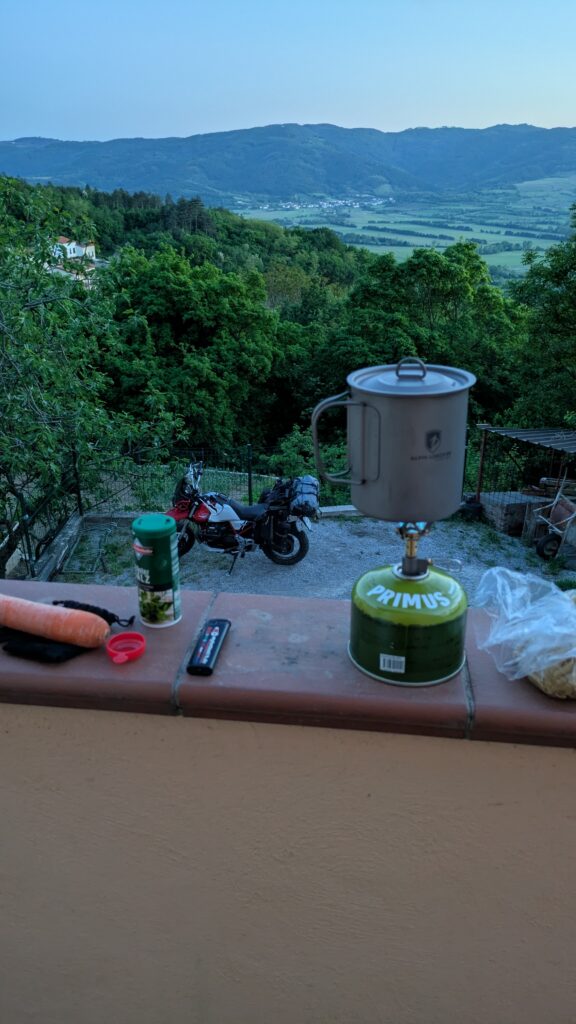
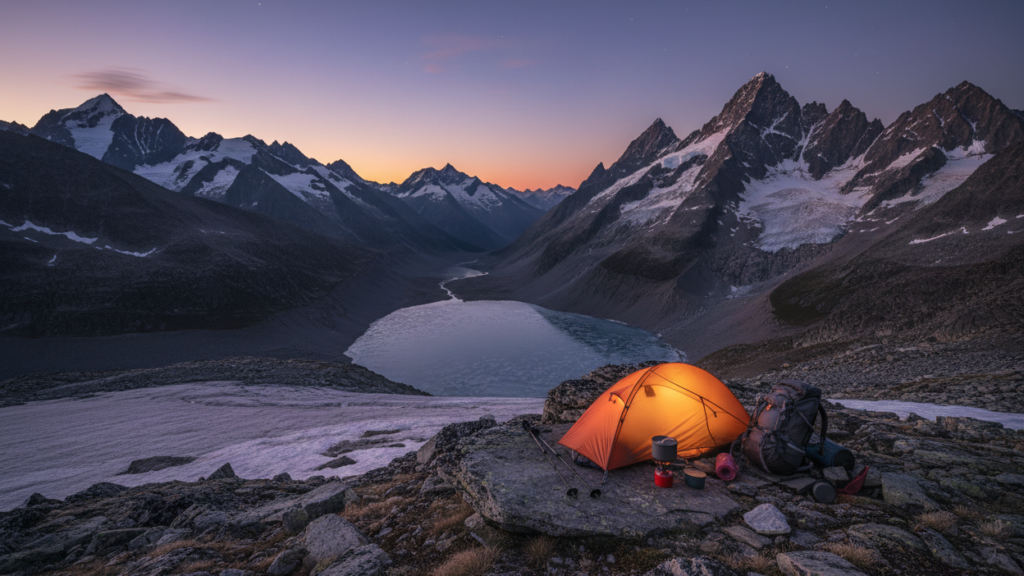
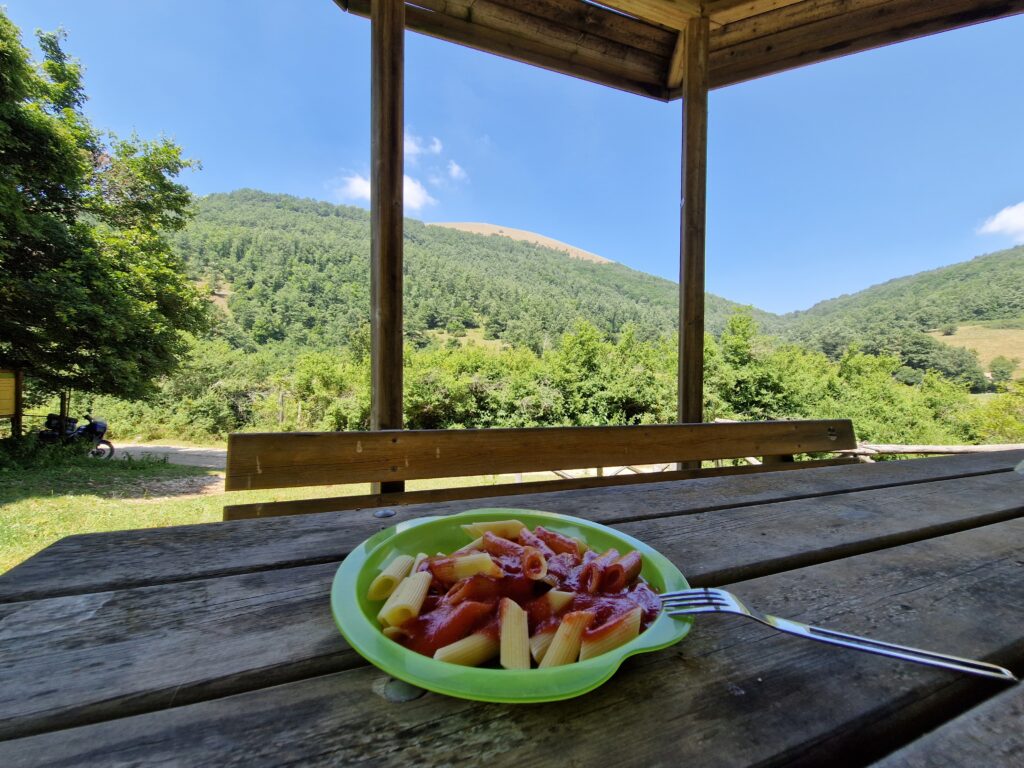
Campsite cooking with a compact stove takes cheap food motorcycle touring to its logical conclusion. A simple pasta, rice, or couscous meal with vegetables and local cheese bought at the day’s supermarket stop costs 2–4 € and takes twenty minutes. Over a week of camping nights that saves 40–80 € compared with eating out every evening.
The equipment required is minimal: a compact canister stove, a single lightweight pot, a spork, and a small cutting board. Total weight under 500 g, total cost 40–60 € for a quality setup. The meals won’t win awards but they’ll keep you fed, fuelled, and under budget consistently.
Local markets are the best source of campsite cooking ingredients — fresh vegetables, local bread, eggs, and cheese at prices significantly below supermarket level. Most Southern and Eastern European towns have a daily or weekly market that rewards the rider who arrives with a shopping bag and twenty minutes to browse.
Practical Food Storage on a Motorcycle
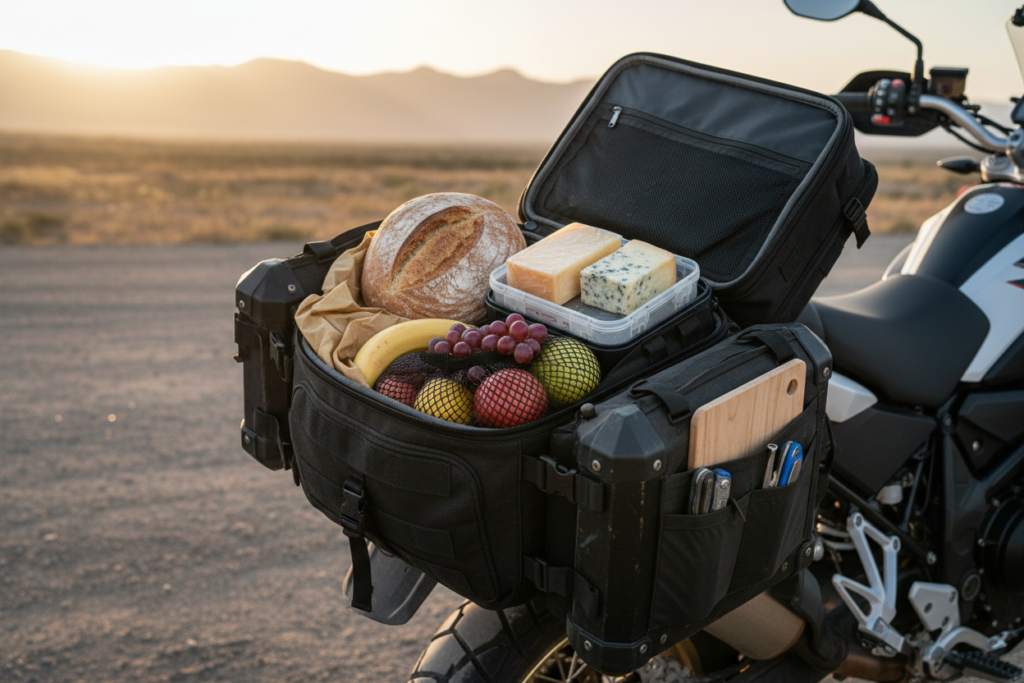
The key principle for food storage on a motorcycle is buying for one day at a time rather than stocking up for several days. Food bought fresh in the morning and eaten by evening requires no refrigeration strategy. Food bought for three days ahead in summer heat requires a plan that most motorcycle luggage systems can’t support.
Hard cheese, cured meats, whole fruit, bread, and nuts are the touring staples precisely because they’re robust. Keep them in a shaded spot in your luggage rather than a black pannier baking in direct sun, and they’ll survive a full riding day in good condition. A small dry bag or cotton bag keeps bread from being crushed by heavier items.
Hydration — The Hidden Food Budget Cost
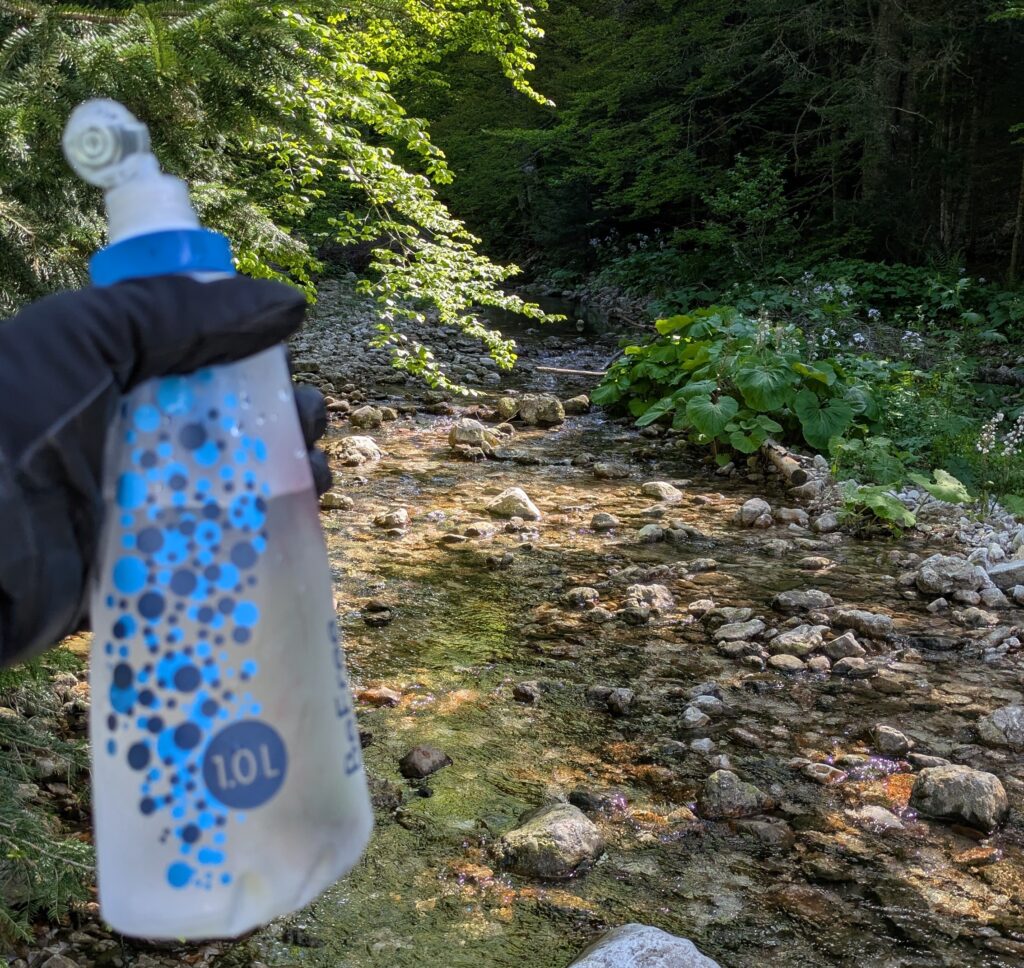
Buying bottled water every day adds 2–4 € to daily costs across a long tour — small individually, significant cumulatively. Most of Southern and Eastern Europe has drinking water fountains in town squares and village centres — look for the tap symbol on Maps.me or simply ask locally. Refilling a 1.5-litre bottle at a fountain takes thirty seconds and costs nothing.
Coffee is the other daily cost worth managing. A coffee at a tourist café terrace costs 3–5 € across most of Western Europe. The same coffee standing at the bar inside costs 1–1.50 € in Italy, 1–2 € in Portugal, and 0.80–1.20 € in the Balkans. Bar culture across Southern Europe is designed for standing, drinking quickly, and moving on — use it as locals do.
Country-by-Country Food Budget Reference
Daily food costs at comfortable spending level — self-catering breakfast and lunch, one local restaurant dinner:
- Albania: 10–15 €/day
- Bosnia: 12–18 €/day
- Montenegro: 15–22 €/day
- Eastern Europe: 10–18 €/day
- Croatia: 18–28 €/day
- Portugal: 15–22 €/day
- Slovenia: 20–30 €/day
- Italy: 18–28 €/day
- France: 20–35 €/day
The pattern is consistent: the cheapest food countries are also the most rewarding riding destinations. Cheap food, cheap accommodation and great motorcycle touring point in exactly the same direction.
Final Thoughts
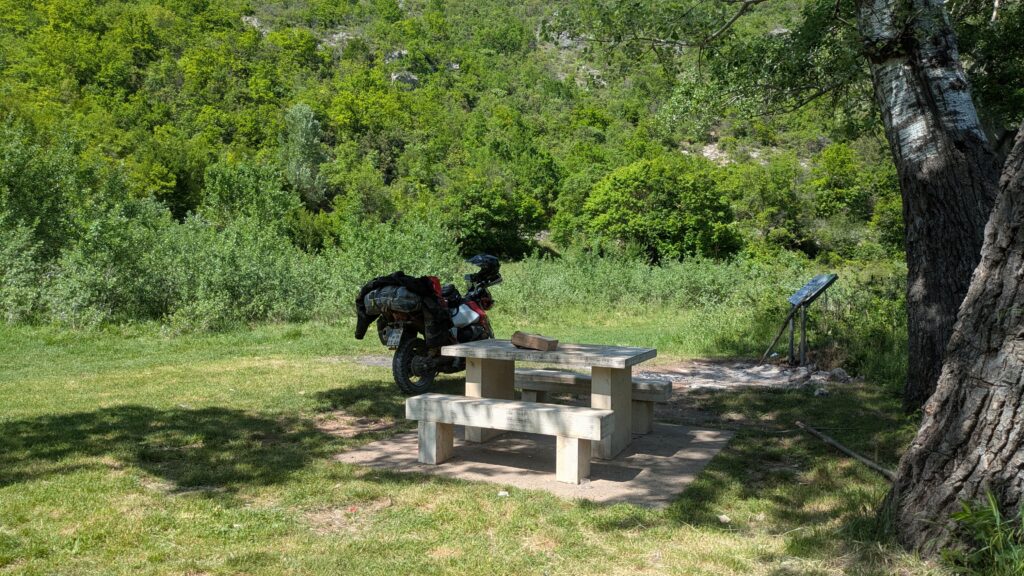
Eating cheap on a motorcycle tour in Europe is not a compromise — it’s a better way to experience the places you’re riding through. The grocery store lunch on a mountain pass, the burek from a Bosnian bakery, the aperitivo in a Milan bar, the menu do dia in a Portuguese village — these are better food experiences than anything available in the tourist restaurant tier, and they cost a fraction of the price.
Build the one restaurant rule into your daily routine. Use supermarkets for breakfast and lunch. Cook at campsites when you have the setup. Drink coffee at the bar rather than on the terrace. The cumulative saving across a two-week tour is substantial, and the food memories are better for it.
What’s your best cheap food discovery from a motorcycle tour? Drop it in the comments — there’s always a rider planning their first long tour who’ll benefit from a genuine local food tip.