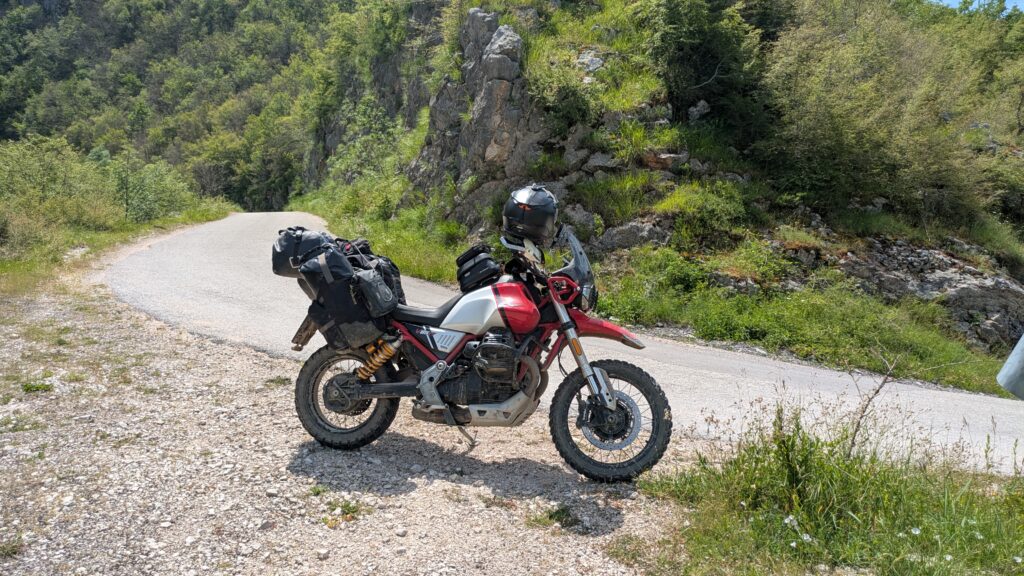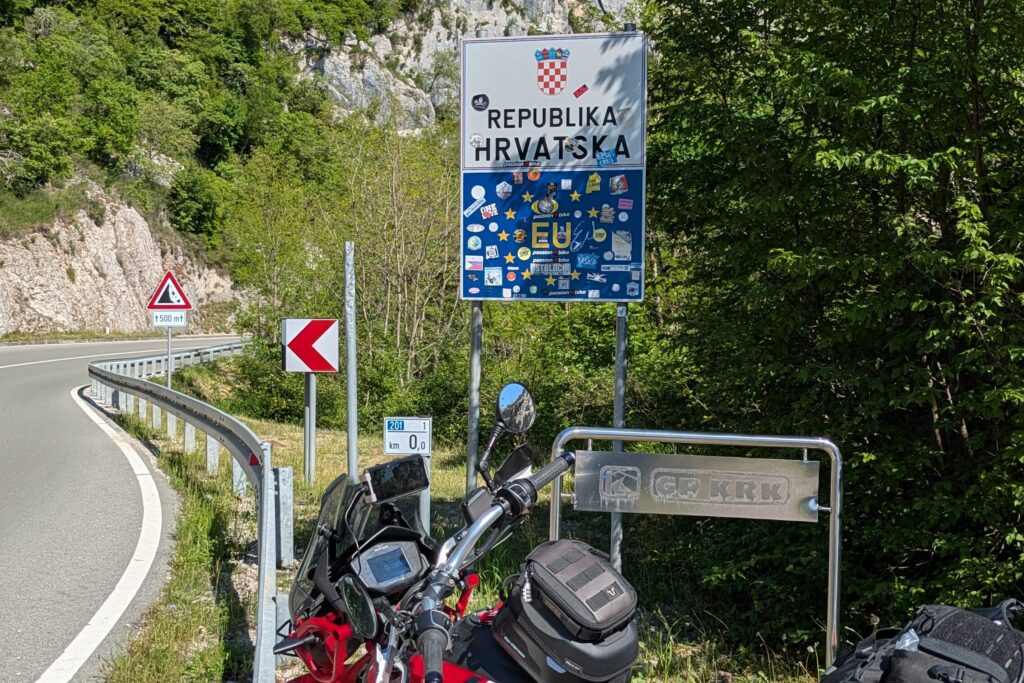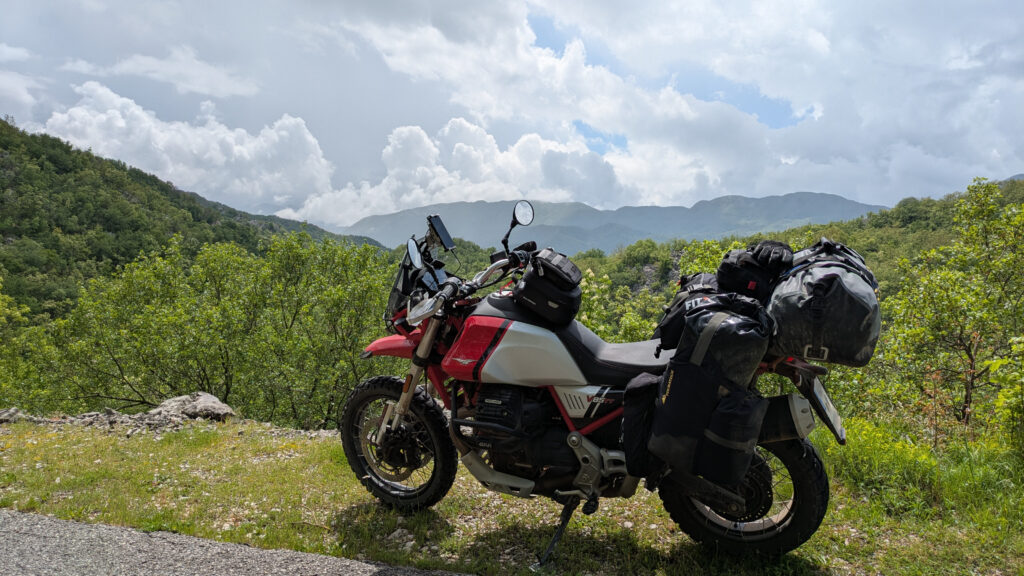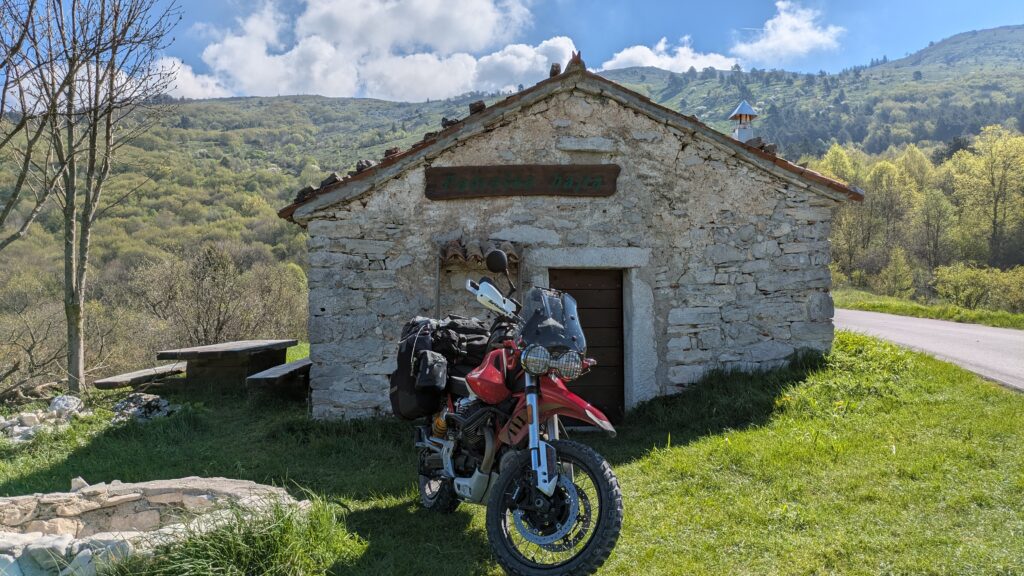
Slovenia might be one of Europe’s smallest countries, but it packs more stunning motorcycle roads per square kilometer than almost anywhere else on the continent. Tucked between Italy, Austria, Hungary, and Croatia, this Alpine gem offers dramatic mountain passes through the Julian Alps, pristine lakes including the iconic Lake Bled, charming medieval towns, and an Adriatic coastline—all within a few hours’ ride from anywhere in the country.
I’ve ridden through Slovenia multiple times, and it’s become one of my favorite destinations for motorcycle touring. The roads are excellent quality, drivers are generally courteous to motorcyclists, the scenery rivals Switzerland at a fraction of the cost, and you can traverse the entire country in a day if you want—or spend weeks exploring every valley and mountain pass. Slovenia motorcycle travel works perfectly as a standalone destination for a long weekend or week-long tour, or as part of a larger Balkans or Alpine journey.
This guide covers everything you need for touring Slovenia by motorcycle—the best routes including must-ride mountain passes, realistic budget expectations, border crossing procedures, where to stay, and practical tips for riding in the country. If your need more help on planning your motorcycle trip check out this guide. Whether you’re planning your first visit or returning to explore deeper, Slovenia delivers some of the best motorcycle touring experiences in Europe. Let’s get you ready to ride one of the continent’s hidden treasures!
Why Slovenia Is Perfect for Motorcycle Touring
Slovenia’s compact size works in your favor. You can ride border-to-border in four hours on highways, or spend days exploring winding mountain roads without ever feeling rushed. The road quality throughout the country is exceptional—smooth pavement, proper maintenance, and excellent signage make navigation easy. The combination of Alpine scenery, lake districts, forests, and a tiny slice of Mediterranean coast provides incredible variety in a small area.
Compared to neighboring Austria and Switzerland, Slovenia offers similar mountain beauty at significantly lower costs. A hotel room that costs 150 € in Austria might be 60 € in Slovenia. Fuel prices are reasonable, food is affordable, and attractions don’t break the budget. The country has low traffic on mountain roads except peak summer weekends, creating peaceful riding conditions that let you focus on the scenery and curves.
The motorcycle-friendly culture helps too. Slovenians generally respect motorcyclists, drivers are courteous, and the country’s infrastructure supports touring riders well. Slovenia works beautifully as part of larger European tours—easy connections to Italy’s Dolomites, Austria’s Alps, or Croatia’s coast make it perfect for multi-country itineraries. Four distinct regions offer variety: the Julian Alps in the north, Karst plateau in the southwest, Pannonian plains in the east, and a small but charming Adriatic coastline.
Best Time to Visit Slovenia by Motorcycle
Spring arrives in April and May with warming temperatures of 10-20°C, though weather remains variable with frequent rain. Lower mountain passes open by late April, while the famous Vršič Pass typically opens in late May depending on snowmelt. Crowds are very light—mostly locals—and shoulder season pricing makes Slovenia motorcycle travel especially affordable. This is ideal for budget touring and avoiding summer crowds, though you’ll need proper rain gear.
Summer from June through August brings warm to hot weather (20-30°C) and mostly dry conditions. All mountain passes are open with excellent riding conditions. Peak season means weekends get busy near Lake Bled and popular passes. Costs reach their highest levels, though Slovenia remains affordable compared to Western Europe. Book accommodation in advance during July and August. Summer guarantees good weather and access to all routes.
Autumn, particularly September, offers perhaps the best Slovenia motorcycle travel conditions. Temperatures stay pleasant at 15-25°C in September before cooling in October. All roads remain open through September, with passes starting to close in October. Crowds drop dramatically after the first week of September when European schools resume. Shoulder season pricing returns, and autumn colors paint the mountain valleys beautifully. September balances weather, costs, and crowds perfectly.
Winter from November through March brings cold temperatures, snow in mountains, and closed mountain passes. Most touring routes become inaccessible, many facilities close, and riding conditions are poor. Skip Slovenia for motorcycle touring in winter and plan trips elsewhere. The optimal months for Slovenia motorcycle travel are May, June, and September.
Essential Slovenia Motorcycle Routes
Vršič Pass stands as the absolute must-ride route in Slovenia. At 1,611 meters elevation, this highest mountain pass in the country features 50 numbered hairpin turns—24 on the south side ascending from Kranjska Gora, and 26 on the north side descending into the Trenta Valley. The road surface is excellent paved asphalt despite the tight hairpins, and the difficulty is moderate since the surface quality is good even if the turns are challenging.
What makes Vršič special is the dramatic scenery throughout the 50-kilometer route. Every hairpin offers photo opportunities with Julian Alps peaks surrounding you. The Russian Chapel sits mid-route, a WWI memorial worth stopping to visit. The north side descending toward the Soča Valley is more dramatic than the south side, with tighter hairpins and more exposure. Summer weekends bring significant traffic including cyclists, so start before 9 AM or ride midweek if possible.
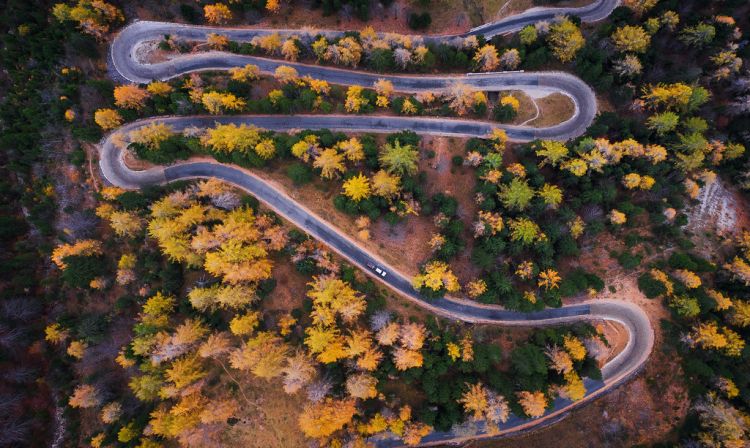
I rode Vršič on a September morning when early fog filled the valleys below. As I climbed through the hairpins, I emerged above the fog layer into brilliant sunshine with peaks jutting through the white sea below. The light at that elevation in autumn was incredible—golden on the limestone peaks. I stopped at nearly every hairpin taking photos and just absorbing the views. By the time I descended the north side into the Soča Valley two hours later, the fog had burned off and the emerald river sparkled below. That ride reminded me why Slovenia motorcycle travel creates such memorable experiences—world-class roads without the crowds you’d find on similar passes in Switzerland or Austria.
Mangart Saddle Road reaches even higher at 2,055 meters, making it the highest road in Slovenia. The six-kilometer route from the main road to the saddle includes a toll of €10-15 for motorcycles, and the final two kilometers are unpaved gravel. The narrow road has no barriers in places, creating genuine exposure, but the 360-degree Alpine panoramas from the saddle are absolutely spectacular. This route is only open June through September and closes immediately in bad weather. Gravel riding skills help for the final section, and you should bring water since there are no facilities at the top.
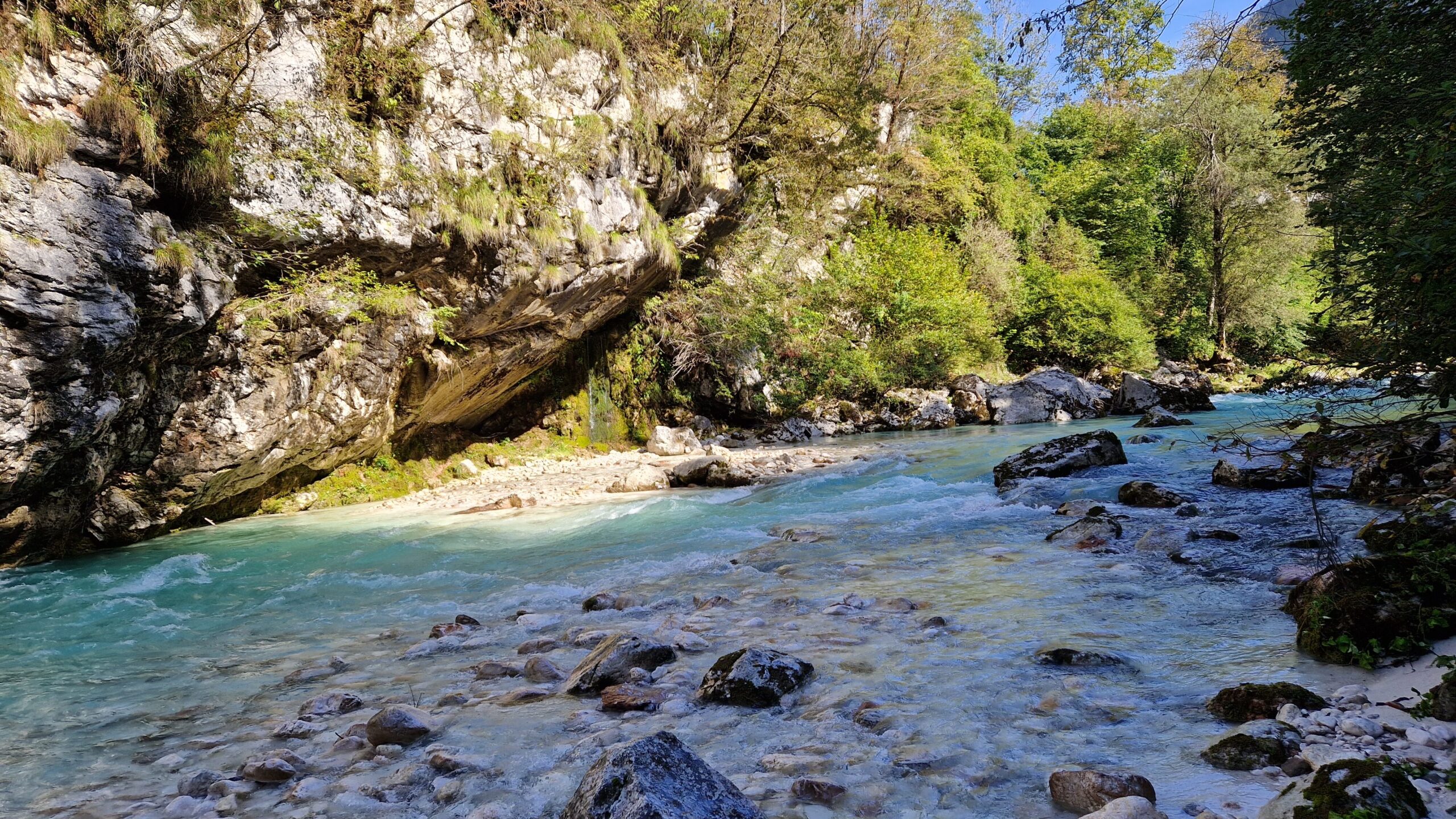
The Soča Valley offers 60 kilometers of stunning riding along the emerald-green Soča River. This river’s color is unlike anything else—a vibrant turquoise that looks almost artificial. The valley road connects multiple mountain passes and provides access to charming villages like Bovec and Kobarid. WWI history is present throughout the valley since this was the Isonzo Front. Multiple access points let you stop and walk to the river, and adventure sports opportunities abound in Bovec. The valley serves as the northern starting or ending point for Vršič Pass and connects to Italy’s Predil Pass.
Pokljuka Plateau and the surrounding gorges offer peaceful high-elevation riding through forests at 1,200-1,400 meters. The roads are excellent quality with light traffic except near Lake Bled. Access points to Vintgar Gorge—a walking trail worth visiting—and views toward the Julian Alps make this area valuable for rest days between more challenging passes. The forested plateau riding provides a different character than the dramatic mountain passes.
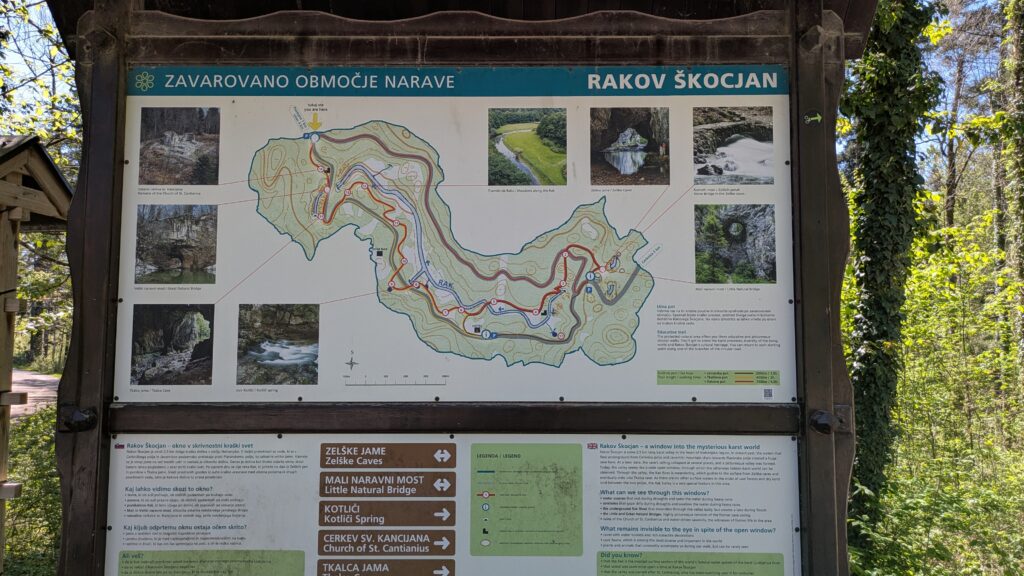
The Karst region in southwest Slovenia features limestone plateau riding through cave country. Postojna Cave is the largest show cave while Škocjan Caves offer spectacular UNESCO-listed caverns. The Lipica Stud Farm breeds famous Lipizzaner horses, and the region produces excellent wines. Roads wind gently through the plateau with cultural and geological interest rather than dramatic Alpine scenery. This makes a good change of pace from intense mountain riding.
Slovenia’s short Adriatic coastline spans just 40 kilometers between Koper, Izola, and Piran. The Venetian-influenced architecture is charming, seafood is excellent, and the Mediterranean atmosphere contrasts with Alpine regions. However, the coast is busy in summer, expensive by Slovenia standards, and more worthwhile as a cultural stop than a riding destination. The riding itself is ordinary compared to mountain routes—consider this an interesting addition rather than the main attraction of Slovenia motorcycle travel.
Budget and Costs for Slovenia Motorcycle Travel
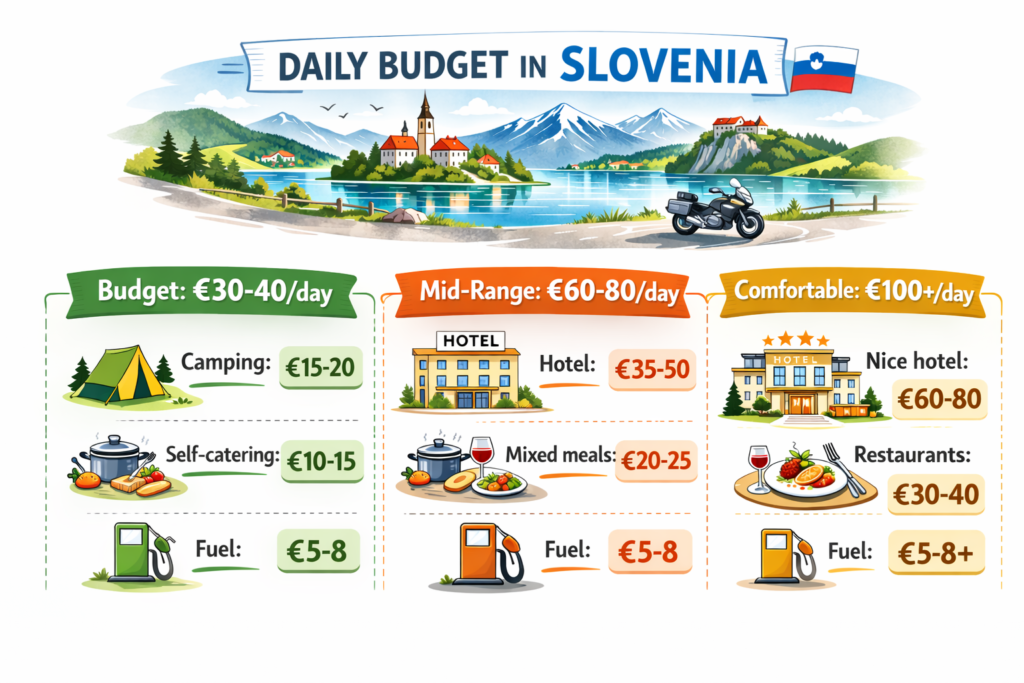
Daily budget requirements vary significantly based on your accommodation and dining choices. Budget touring at 30-40 € per day uses camping for accommodation (15-20 €), grocery store food with self-catering (10-15€), fuel costs of 5-8€, and mostly free natural attractions with perhaps one paid cave or museum. This budget works well but requires camping gear and willingness to cook your own meals.
Mid-range touring at 60-80 € per day provides more comfort with budget hotels or guesthouses (35-50 €), a mix of restaurant meals and grocery shopping (20-25 €), fuel costs (5-8 €), and budget for caves, museums, and tolls. This level balances cost and comfort well, allowing occasional restaurant meals and proper accommodation without extreme spending.
Comfortable touring at 100+ € per day includes nice hotels (60-80 €), restaurant meals for all dining (30-40 €), fuel (5-8 €), and budget for all activities without concern. At this level, you’re not sacrificing comfort or experiences for budget reasons.
Fuel costs 1.40-1.60 € per liter, making a typical tank fill (15-20 liters) cost 25-30 €. Daily riding of 200 kilometers consumes roughly 15-20 € in fuel depending on your bike’s efficiency. These prices are cheaper than Austria or Italy and similar to Croatia. Accommodation options range from camping at 15-25 € per person through budget hotels at 40-60 € for a double room up to mid-range hotels at 70-100 €. Wild camping is technically illegal but tolerated in remote areas if you’re discrete, arrive late, and leave early.
Food costs are reasonable. Grocery shopping for self-catering runs 10-15 € daily. Budget restaurant meals cost 10-15 € while mid-range restaurants charge 20-30 €. Coffee costs 1.50-2.50 € and beer 2.50-4 €. Attraction entrance fees include Vršič Pass (free), Mangart Saddle toll (10-15€), Postojna Cave (28€), Škocjan Caves (18€), Vintgar Gorge (10€), and museums (5-10€).
Weekly budget examples provide realistic planning numbers. A budget week costs 250-300 € using five nights camping, two nights wild camping, self-catering mostly, visiting one cave, covering vignette and fuel. Mid-range touring for a week runs 450-550 € with mixed camping and budget hotels, restaurant meals half the time, main attractions visited, and all necessary expenses covered. Comfortable touring costs 700-850 € weekly with hotels throughout, restaurant meals, all attractions, and no budget concerns affecting decisions.
Border Crossings and Entry Requirements
EU and Schengen citizens face no border controls entering from Austria or Italy since Slovenia is part of the Schengen zone. Valid ID card or passport is required with no visa needed and freedom of movement throughout. Non-EU citizens need appropriate Schengen visas if required, with the standard 90 days in 180-day period applying. Valid passport is essential, and checking specific country requirements before traveling is important.
Vehicle documents needed include registration papers, insurance with green card for non-EU riders, valid driving license (EU licenses work throughout Slovenia), and International Driving Permit for riders from outside Europe. From Italy, multiple crossing points exist with Predil Pass being popular for riders. No border checks occur since both countries are Schengen members. Austria similarly has several routes including the Karawanken Tunnel and scenic Loibl Pass with no border checks and smooth crossing.
Croatia represents the most likely place to encounter border controls even though Croatia joined Schengen in 2023. Checks may still occur, and peak summer can bring delays. Multiple crossing points exist with generally quick processing for motorcyclists. From Hungary, the eastern entrance to Slovenia sees less motorcycle touring traffic with minimal border controls.
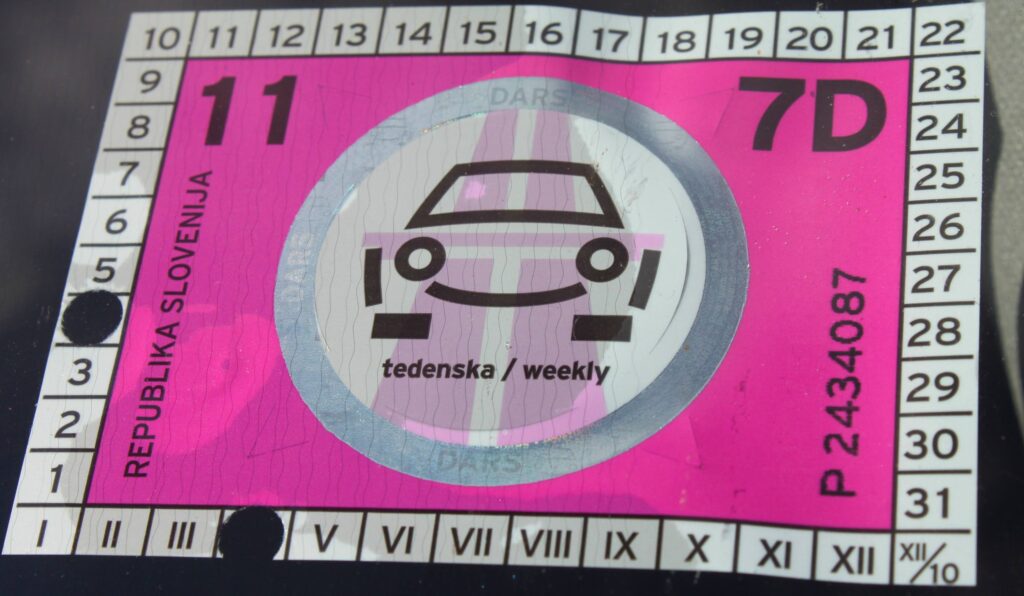
The highway vignette requirement deserves emphasis. This toll sticker is mandatory for all highways (A roads and H roads) but NOT required for regular roads. A 7-day vignette costs 16 €, one-month 32 €, and annual 117 €. Purchase at borders, gas stations, or online before using highways. The vignette must be visible on motorcycles. Digital vignette options exist as alternatives to the physical sticker. Fines for riding without proper vignette start at 300 € and increase. The Karawanken Tunnel between Austria and Slovenia charges 8 € one-way, and Mangart Saddle requires 10-15 € toll.
Practical Tips for Riding in Slovenia
Road quality throughout Slovenia is excellent. Mountain roads receive good maintenance, surfaces are generally smooth, winter damage gets repaired quickly, and tunnels are in good condition. Traffic behavior sees drivers generally courteous to motorcycles, though lane splitting is not common or accepted culturally. Good adherence to traffic rules is normal, though watch for occasional aggressive drivers on highways. Rural roads are usually peaceful with light traffic.
Speed limits are strictly enforced: 50 km/h in built-up areas, 90 km/h on open roads, 110 km/h on expressways, and 130 km/h on highways. Speed cameras are common and fines start at €40 and increase significantly with higher speeds. Road hazards include gravel on mountain road corners especially in spring after winter, occasional livestock on rural roads, cyclists on popular routes like Vršič, narrow sections on mountain passes, and wet roads that can be slippery on polished surfaces.
Weather in mountains changes rapidly. Afternoon thunderstorms are common in summer. Morning fog fills valleys frequently. Temperature drops significantly with elevation. Rain gear is essential even for summer Slovenia motorcycle travel. Emergency services use the standard European number 112. The medical system is good, English is widely spoken, roadside assistance is available, and proper insurance coverage is important.
Fuel stations are widely available except in remote mountains. Self-service is common, credit cards are accepted everywhere, prices are clearly displayed, and premium fuel is widely available. Motorcycle services exist with dealerships in major towns and independent mechanics available. Parts availability is good for common brands like BMW, Honda, and Yamaha. Ljubljana has the most comprehensive services.
During one trip, I had a minor electrical issue with my bike near Bovec. I asked at my guesthouse, and the owner directed me to a local mechanic who normally worked on cars but was happy to look at my motorcycle. He diagnosed a loose connection, fixed it in fifteen minutes, and refused payment—just asked that I have a beer at his brother’s bar in town that evening. This kind of helpfulness is common in Slovenia, where people genuinely want visitors to have positive experiences.
Slovenian is the official language, but English is widely spoken in tourist areas. German is common in northern regions and among older generations. Italian is known near the Italian border. Young people generally speak English well. Useful phrases include Zdravo (hello), Hvala (thank you), Ja/Ne (yes/no), and Koliko stane? (how much?). The word for motorcycle is motorno kolo.
Best Places to Stay for Slovenia Motorcycle Travel
Ljubljana, the capital, offers a central location for day trips throughout the country. Cultural activities, museums, and excellent restaurants provide rest day entertainment. Good motorcycle parking options exist, and accommodation spans all budgets from hostels to hotels. Lake Bled is the most famous tourist hub, consequently expensive with beautiful location but requiring advance booking in summer. It provides a good base for Julian Alps exploration.
Bovec in the Soča Valley serves as an outdoor adventure center with good budget accommodation options. It’s centrally located for northern routes including Vršič Pass and Mangart Saddle, with camping available. The town atmosphere is relaxed and motorcycle-friendly. Lake Bohinj offers a less touristy alternative to Lake Bled with good camping, access to Pokljuka Plateau and Alps, and a quieter atmosphere away from tour buses.
Coastal towns like Piran and Izola provide Mediterranean atmosphere but expensive accommodation and limited motorcycle parking. They work better as overnight stops than base locations for extended stays. The coast’s appeal is cultural rather than riding-focused, making it a nice addition to an Alps-focused tour rather than a primary destination for Slovenia motorcycle travel.
Combining Slovenia with Neighboring Countries
Slovenia pairs naturally with northern Italy for extended tours. Routes connecting Friuli region to Slovenia’s Alps, Venice to Slovenian coast and Julian Alps, or loops connecting Italy’s Passo Pramollo with Vršič Pass create excellent multi-country itineraries. Easy border crossings, complementary scenery, cultural variety, and extended loop possibilities make this combination popular.
Austria and Slovenia together create mountain pass heaven. Comparing Austrian Alps with Slovenia’s Julian Alps, combining Grossglockner with Vršič Pass, or routing Vienna to Ljubljana to the coast provides diverse experiences. No border controls, similar road quality, combined Alpine experience, and cultural differences despite proximity make this pairing work well.
Croatia is the most natural pairing for Slovenia motorcycle travel, especially for Balkans tours. Routes from Slovenia to Croatian coast (Istria), Julian Alps to Plitvice Lakes, Slovenia coast to Dalmatian coast, or capital combinations (Ljubljana to Zagreb) flow naturally. The contrast between mountains and coast, budget-friendly combination, and diverse experiences create excellent tours. Border crossings are generally smooth though summer can bring delays.
A northern Italy-Slovenia-Austria-Italy loop creates an exceptional 10-14 day tour. Start in Venice, ride to Slovenia’s coast and Ljubljana, explore Julian Alps including Vršič and Mangart, head north to Austria for Grossglockner, then return through Italian Dolomites. This complete Alpine circuit combines the best mountain roads in three countries with excellent variety and manageable daily distances.
Conclusion
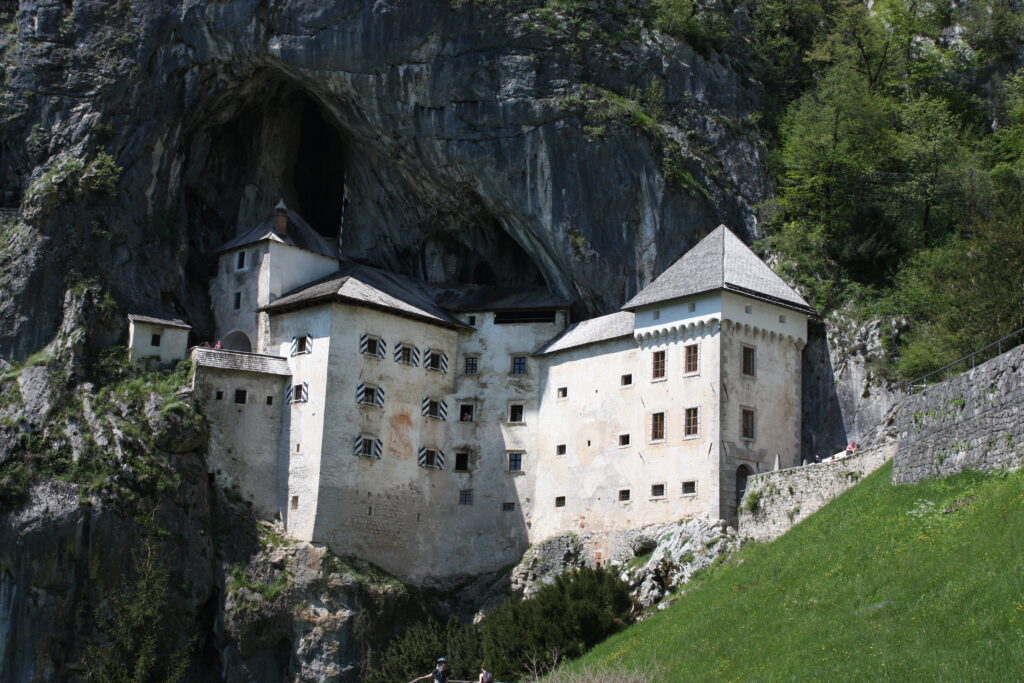
Slovenia delivers exceptional motorcycle touring in a compact, affordable, and stunningly beautiful package. From the dramatic hairpins of Vršič Pass to the emerald waters of the Soča Valley, from medieval lakeside castles to underground cave systems, this small Alpine nation offers experiences that rival far more expensive destinations. The excellent road quality, motorcycle-friendly culture, and manageable size make Slovenia motorcycle travel ideal for both first-time European tourers and experienced riders seeking new roads.
Whether you dedicate an entire week to exploring Slovenia thoroughly or incorporate it into a larger Balkans or Alpine tour, the country rewards motorcycle travelers with memorable roads and authentic experiences. The combination of affordability and quality is rare in Europe—Slovenia costs less than half of neighboring Austria while delivering comparable scenery and better roads than many more expensive destinations.
Start with the must-ride routes like Vršič Pass and Soča Valley, explore the Karst caves and wine regions, then venture into the quieter eastern valleys. Mix camping with budget accommodation, enjoy excellent local food without breaking your budget, and discover why riders who visit Slovenia often return year after year. This is motorcycle touring at its best—challenging roads, stunning scenery, and the freedom to explore at your own pace.
Have you ridden in Slovenia? Which routes impressed you most, and what tips would you add for fellow riders? Share your Slovenia experiences in the comments!