The accommodation decision on a motorcycle tour gets made twice. Once at home during the planning phase, and again on the road when the plan changes — which it always does. Generic budget travel advice rarely applies cleanly to motorcycle touring, because the bike changes the problem. Parking security, arrival time flexibility, and the ability to reach locations no car can access all shift the calculus in ways a suitcase-on-wheels traveller never encounters.
Costs range from zero on a good wild camping night to 120 € for a mid-range hotel on the Croatian coast in August. The spread is wider than any other daily touring cost, and the strategies that work for motorcycle tourers are worth understanding before either extreme catches you unprepared.
The Accommodation Spectrum
Motorcycle touring accommodation runs from a sleeping mat on forest ground to a private room in a centuries-old farmhouse. The options below cover the full range — what each actually delivers for a rider specifically, not for a generic backpacker.
Wild Camping and Established Campsites
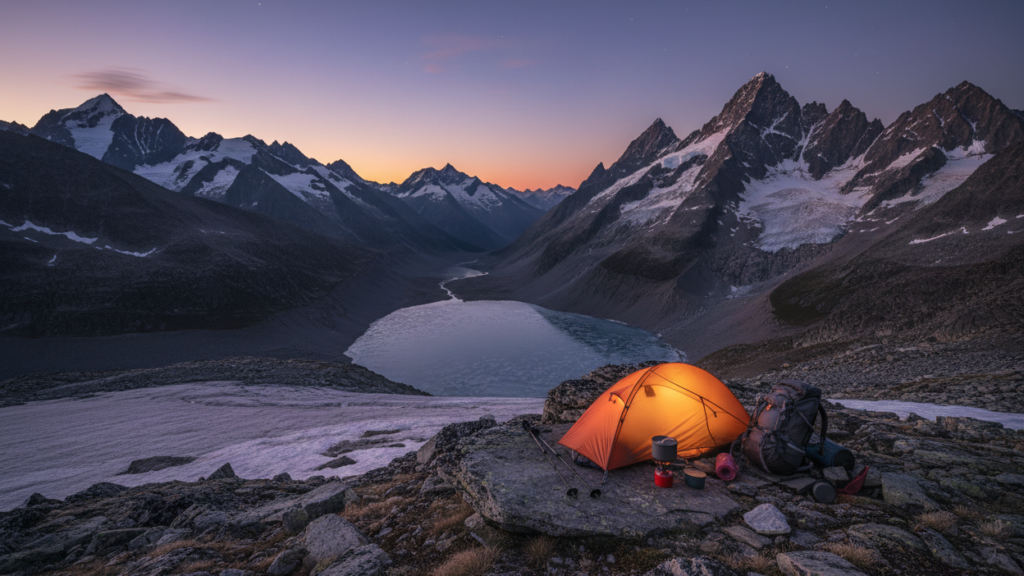
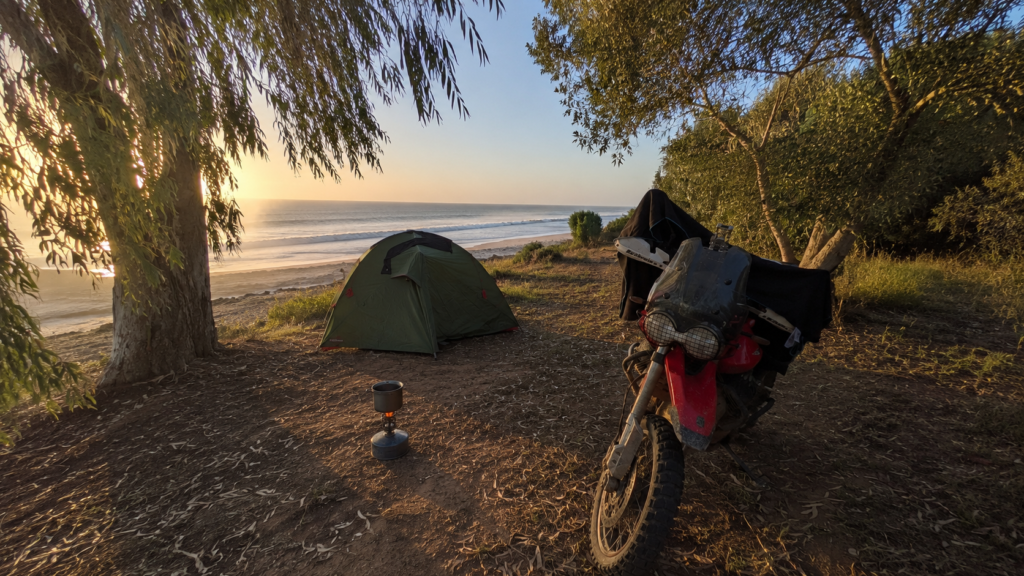
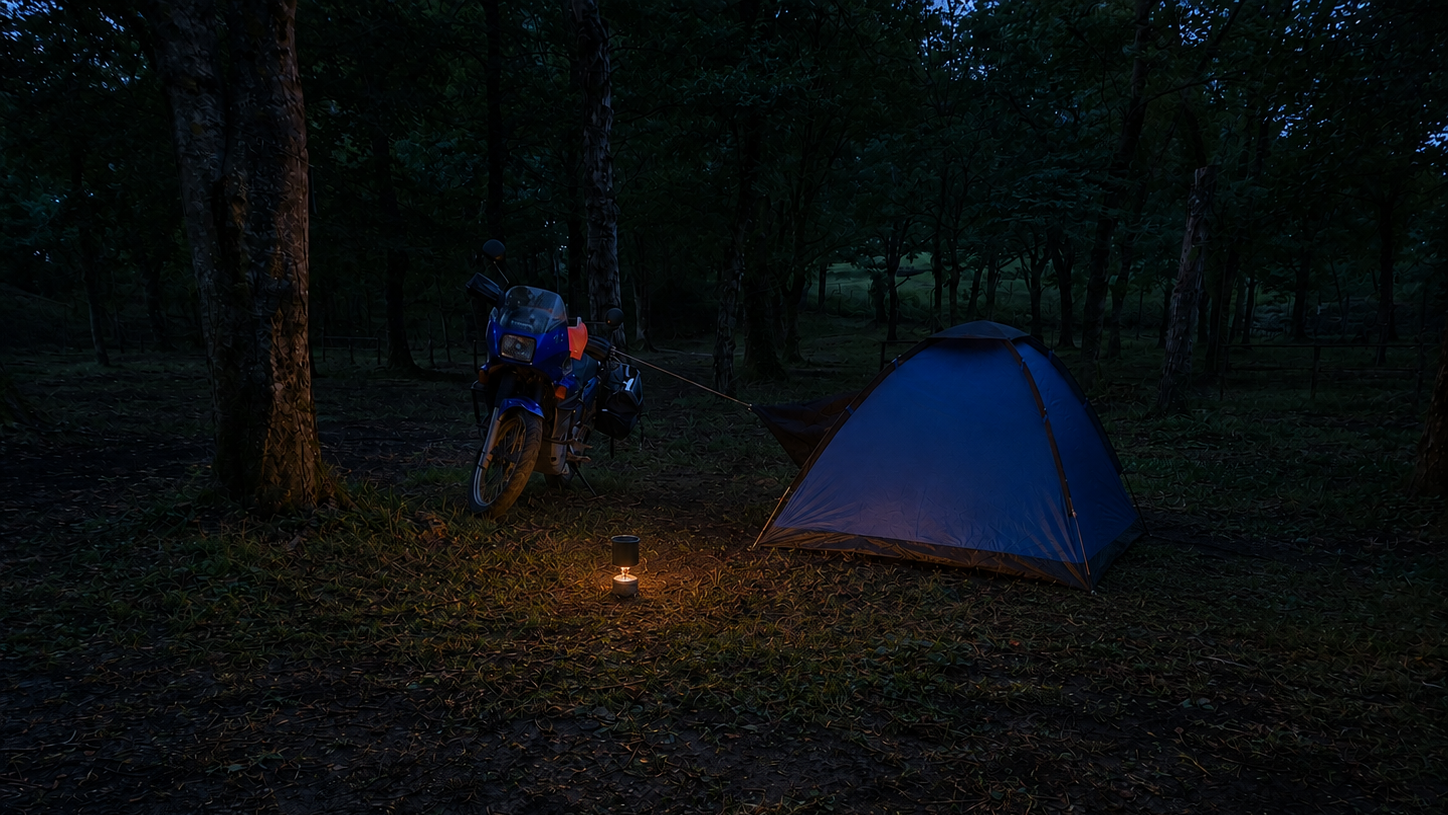
Wild camping costs nothing and, on a motorcycle, is more practical than it sounds. The bike reaches locations cars cannot, which means better spots and significantly less competition for them. A flat clearing above a mountain road, a forest edge three kilometres off the main route, a riverbank accessible only via a dirt track — these are motorcycle camping spots, not car camping spots. Arrive late, leave early, leave no trace. Legal in Scandinavia under allemansrätten, tolerated in rural areas across much of the rest of Europe, officially prohibited but rarely enforced in remote locations across the continent.
Established campsites run 10–25 € across most of Europe. Most charge motorcycle rates rather than vehicle rates, which are lower. The practical advantage beyond cost: the bike is usually visible from your sleeping position, which matters more after a long day than any facility the campsite offers.
Best Motorcycle Camping Gear for European Tours — what to carry for nights away from a roof
Hostels, Guesthouses, and Budget Hotels
Hostels run 15–30 € for a dorm bed across most European cities and are consistently underused by motorcycle tourers. Secure parking is rarely listed in the amenities but often exists — a locked courtyard, a garage used for storage, a covered space around the back. Ask directly on arrival rather than assuming it isn’t available.
Budget guesthouses and pensions are the practical core of cheap accommodation for motorcycle touring. Private room, usually a meal available, and a host who knows the local roads in a way no booking platform algorithm does. Direct booking beats any platform on price in almost every case — the platform commission comes off the rate, not off the host’s margin, and the host knows it. A direct call or message before you arrive costs nothing.
Agriturismos and Farm Stays
Farm-based accommodation exists under different names across Europe — agriturismo in Italy, finca in Spain, ferme auberge in France — and is consistently underrepresented on the major booking platforms. The best ones are found from a roadside sign rather than a search result, which suits motorcycle tourers better than most travellers.
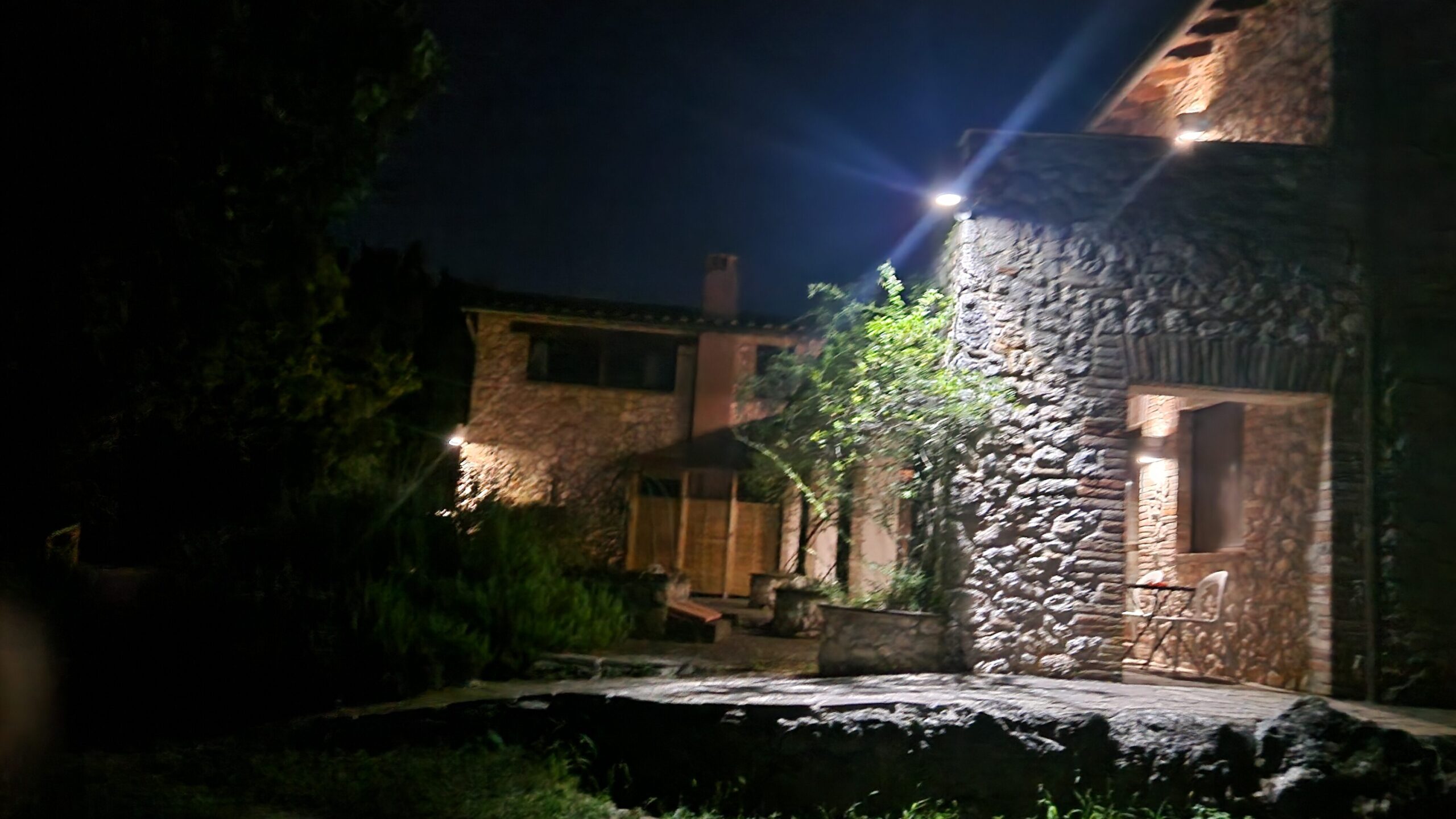
South of Orvieto, somewhere in the 60–100 km range, I turned off the main road following an agriturismo sign with no particular plan. The place was run by a former bank employee from the UK who had moved to Italy to build an off-grid, self-sustaining property. He’d spent the weekend presenting the concept to a group of guests — I arrived as they were leaving, which made me the only person staying. He showed me around the whole property, explained the concept from the beginning, and in the evening we sat together with his family. It cost significantly less than the hotels I’d passed on the way down and felt nothing like a hotel. Worth turning off for a sign like that when you see one.
Booking Strategies That Work
Two approaches consistently outperform platform searching for cheap motorcycle touring accommodation — one requires a phone call, the other requires flexibility.
Book Direct
Calling or messaging a guesthouse directly removes the platform commission and opens a conversation that no booking platform allows. A rider who explains they’re touring on a motorcycle gets a different response than an anonymous booking reference — the host understands what the bike needs before you arrive, and the negotiation, if there is one, starts from a better place. Ask about parking at the same time as the rate. The two questions together signal that you’re a serious enquiry rather than a speculative one.
Near Postojna, on a Balkans trip with Derviša, I called a guesthouse directly rather than booking through the platform I’d found it on. The rate dropped from 45 € to 35 €. More usefully, the owner — a rider herself — offered a locked garage for the bike without being asked and gave me route recommendations to the Weaver Caves and Cerkniško jezero on unpaved forest roads that weren’t on any map I had. Neither the price nor the garage nor the routes appear on any booking platform. They came from a five-minute phone call.
Arrive and Find
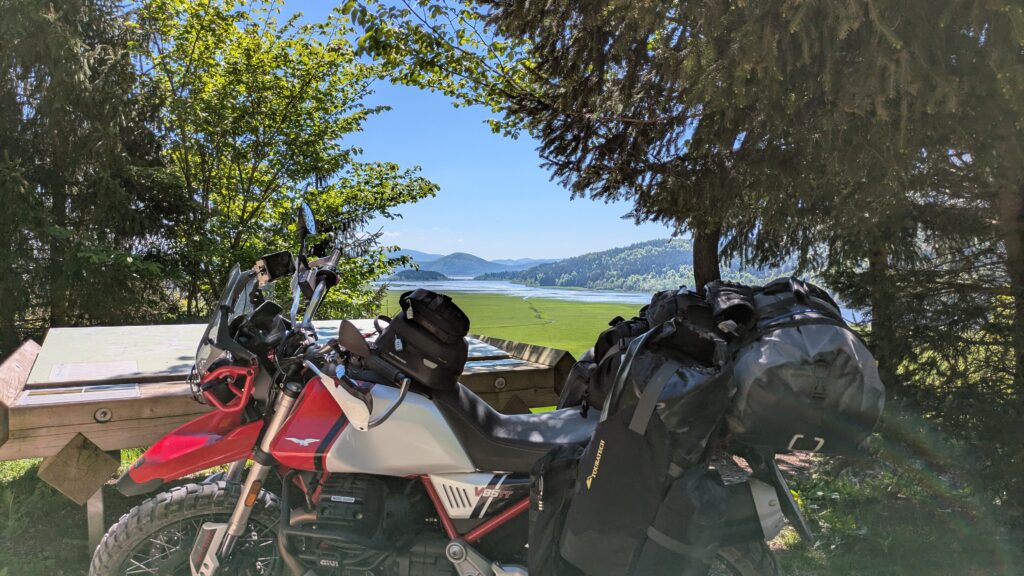
The strategy that unsettles riders on their first international tour and becomes second nature after the third or fourth. It works significantly better outside peak season and away from tourist centres, where the inventory of empty rooms on any given evening is real rather than theoretical. The motorcycle advantage is direct: you can keep moving until something appears rather than being committed to a booking 80 km ahead. Arriving at 17:00 gives options. Arriving at 21:00 in a small village after dark gives considerably fewer.
Community Networks
Two platforms exist specifically for the touring community — not general budget travel apps adapted for riders, but networks built around the idea that people who tour are worth hosting.
Warmshowers and Bunk-a-Biker
Warmshowers was built for cycle tourers and consistently welcomes motorcycle tourers within its community. Bunk-a-Biker is motorcycle-specific — hosts are riders, guests are riders, and the shared context is immediate. Both offer free stays with local hosts. Both require advance planning and direct communication, which means they work best as deliberate choices rather than last-minute fallbacks.
Worth registering on both before a long tour even if you don’t use them on every trip. A host on either platform knows what a loaded touring bike needs better than any hotel receptionist, and the conversations that start from that common ground are frequently the most valuable part of the stay.
One honest note: the pre-planning both platforms require doesn’t suit the way I tour — loose waypoints, flexible daily targets, no fixed schedule. No personal experience with either as a result. The community reputation for both is consistently strong and they earn their place here on that basis.
Motorcycle Parking
Parking security changes the accommodation decision in ways that don’t apply to any other form of travel. A cheaper option with uncertain street parking may cost more in anxiety — and occasionally in damage or theft — than a slightly more expensive one with a locked courtyard. The rate comparison between two accommodation options is only meaningful once the parking question is answered.
Ask before you commit: covered parking or lockable courtyard? CCTV? Is the bike visible from the room? Most hosts respond well to a direct question and some will find a solution that wasn’t initially offered. The conversation about parking is worth having — the worst outcome is that nothing is available and you make the decision knowing that, rather than discovering it after check-in.
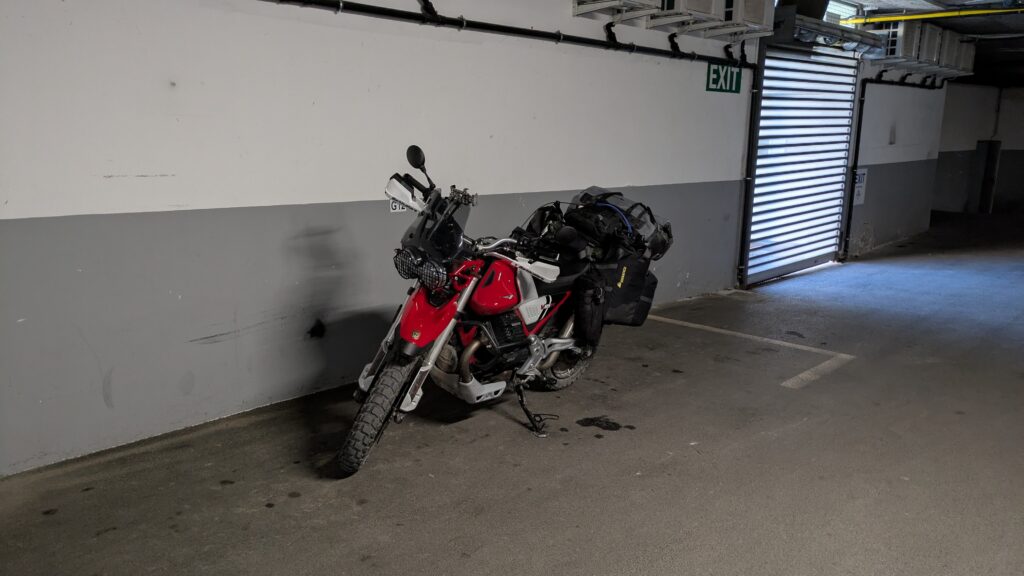
In Naples, on a standalone trip with Isolde, the parking situation on the street outside the hotel didn’t feel right. I raised the concern directly with the host rather than checking in and hoping for the best. He thought about it for a moment, made a call, and offered his brother’s garage two streets away for 5 € extra. I slept without thinking about the bike once. The conversation produced a solution that wasn’t on offer until I asked for it.
Red Flags and When to Turn Around
Budget accommodation research creates one specific blind spot: the temptation to accept warning signs because the price justifies it. A review that mentions thin walls and a noisy street is one thing. A physical arrival that produces a genuine gut reaction is another. The two are not the same decision, and budget pressure has a way of making the second feel like the first.
End of April, Slovenia, Derviša. The day had already gone wrong several times — mountain passes between Austria and Slovenia still blocked by late-season snow, repeated turnarounds, kilometres lost. I kept pushing toward the original daily target anyway, reasoning that reaching it would set up the next day’s interesting section properly. By the time I reached the Vipava area it was dark and I had no mobile service.
Local signs pointed uphill toward accommodation. The signs led to a small gathering of farmhouses at the end of a track. The exterior looked nothing like accommodation — a farmhouse, some sheds, a pigsty. The hosts seemed friendly. I paid for one night. The room was on the second floor of the pigsty: no window, no lock on the door. I had no mobile service and no way to know whether anyone would notice if something went wrong. I sent my wife a message via satellite communicator — “Arrived” with coordinates — and that was it for the night.
Nothing happened. The hosts were fine and I left the next morning without incident. But the honest lesson isn’t about the accommodation — it’s about the decision made three hours earlier to keep pushing after the third closed pass. That decision eliminated the margin that would have allowed me to turn around at the farmhouse gate, which is what I would have done with time and light and mobile service available. Budget touring is supposed to give you more freedom on the road, not less. The moment cost pressure or a tight daily target removes the option to turn around and try somewhere else, it has stopped being a budget decision and become a constraint. The goal is always to have options — including the option to leave.
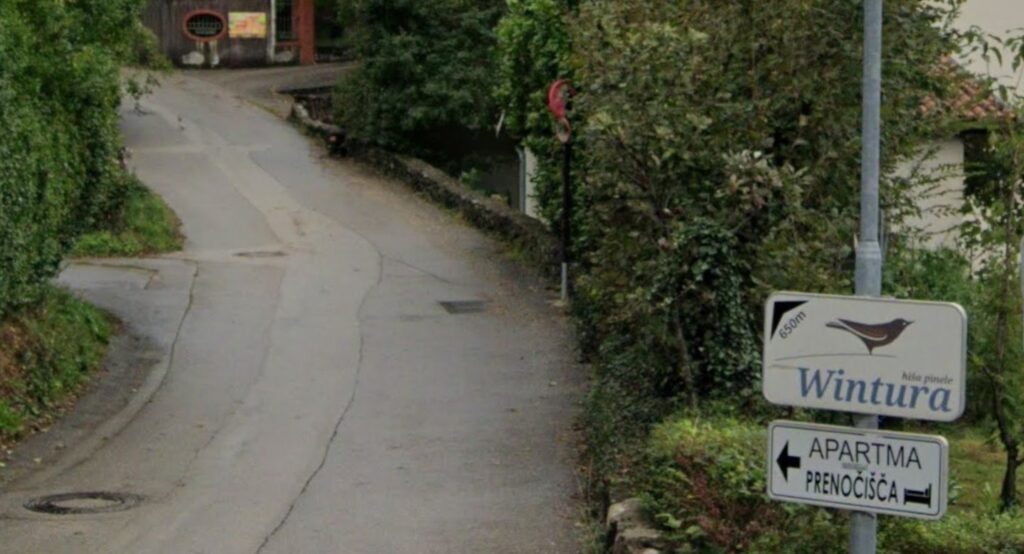
The specific combination worth turning around for: no way to communicate your location, no lock on the room, no route back in the dark. Any one of these might be acceptable in isolation. All three together is the moment to leave, regardless of how dark it is or how far the next option might be.
Seasonal and Geographic Strategies
Two adjustments that reduce accommodation costs without changing how you travel.
Shoulder season — May, June, and September — consistently returns 20–40% lower prices than peak summer across seasonal destinations. The roads are also better: lighter traffic, cooler temperatures, the same scenery. Timing a tour to avoid July and August in Mediterranean and Adriatic destinations costs nothing and saves significantly across every accommodation tier.
Geographic weighting: route the tour to spend more nights in cheaper regions and treat expensive countries as transit rather than extended destinations. One night in Switzerland is a budget event regardless of strategy. Five nights in Albania at the same total cost is a different trip entirely. The two approaches — seasonal and geographic — compound when applied together.
The Best Finds Are Rarely Planned
The agriturismo south of Orvieto appeared from a roadside sign. The guesthouse near Postojna offered roads that weren’t on any map because the owner happened to ride them herself. None of these were found on a platform, planned in advance, or the result of any strategy more sophisticated than stopping when something looked right and asking when something looked uncertain.
The strategies in this guide make the asking easier and the stopping less stressful. The best accommodation finds tend to take care of themselves from there.
By Fritz