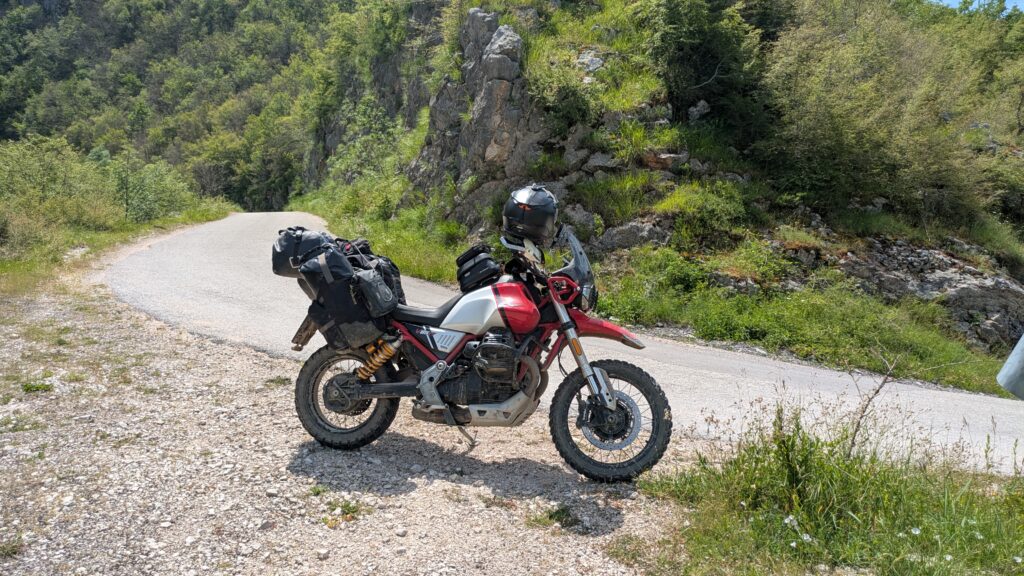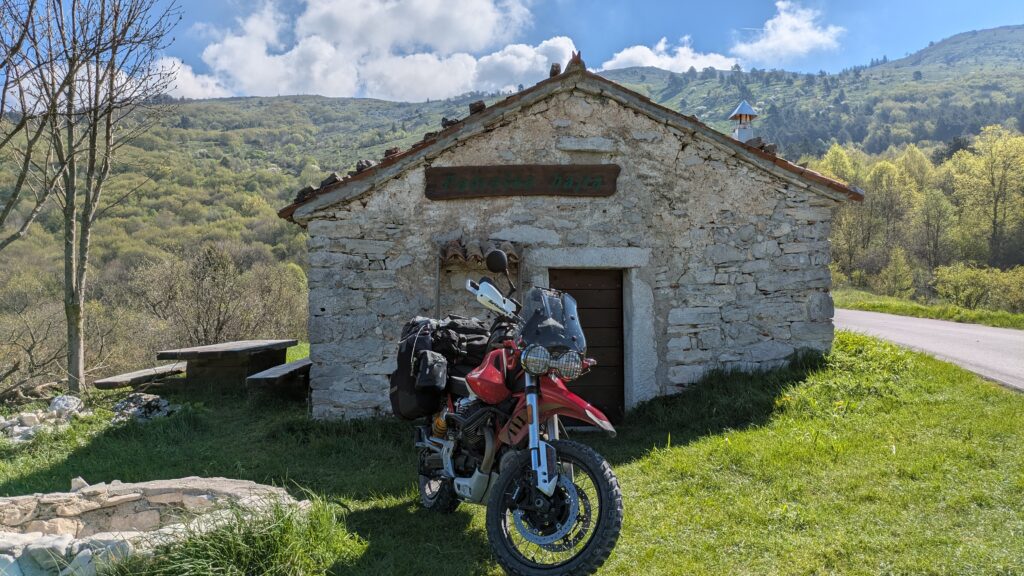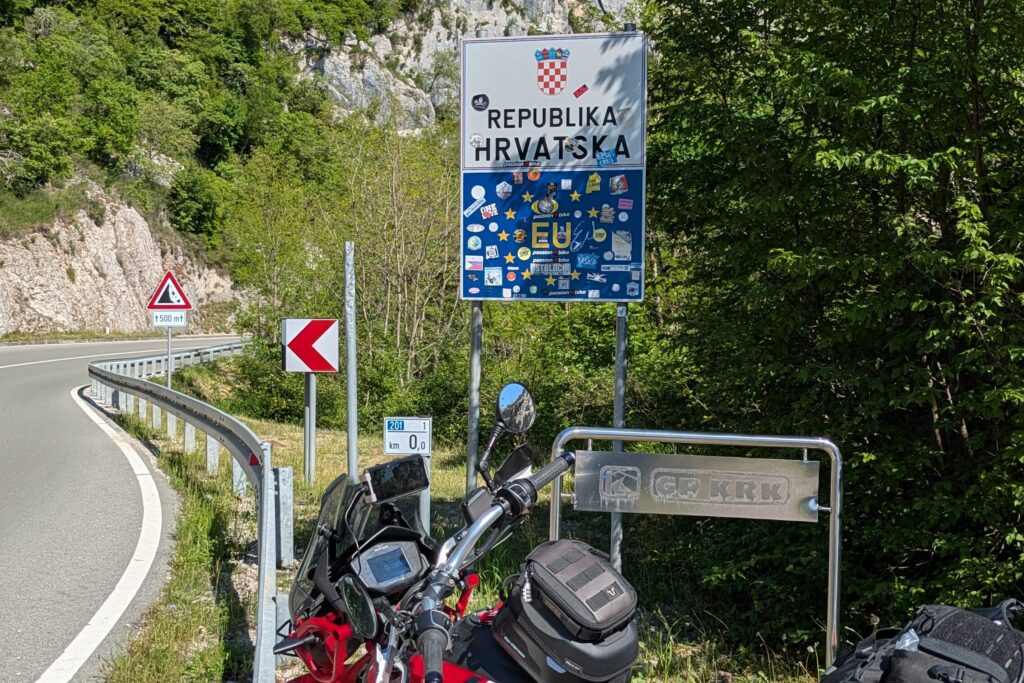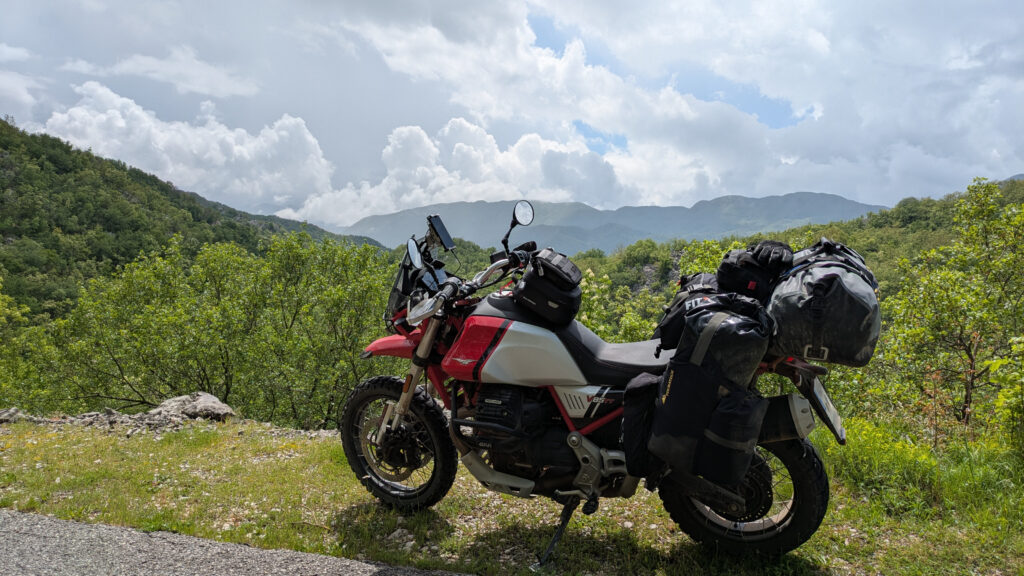
There’s a moment somewhere on the road between Kotor and the Albanian border when it hits you. The tarmac is perfect, the canyon walls are closing in on both sides, there’s nobody ahead of you and nobody behind, and you realise you’ve been riding for three hours without checking your phone, your watch, or your GPS. The Balkans do that to you. They pull you in and slow you down in the best possible way, and most riders who come here once spend the following winter planning how to come back.
This 2-week Balkan motorcycle route is the itinerary I’d recommend to any experienced tourer looking for the best value adventure riding in Europe. It covers six countries, roughly 3,000–3,500 km, and enough variety — coast, canyon, mountain pass, ancient city, and genuine wilderness — to fill a month if you let it. Think of it as a framework rather than a rigid schedule. The Balkans reward flexibility, and something will always take longer than planned. That’s not a problem. That’s the point. Not sure when to take the trip? Check out our Post about the best times to visit the Blakans.
Why the Balkans Deserve More Than a Passing Visit
Western Europe does motorcycle touring beautifully. The Alps are spectacular, the roads are impeccable, and everything works exactly as expected. But there’s a predictability to it that the Balkans simply don’t have. Here, the landscape shifts dramatically every hundred kilometres. You ride from Venetian hilltop towns in Slovenia to Ottoman bazaars in Bosnia to Albanian mountain villages where the 21st century feels like a rumour. All of it connected by roads that range from genuinely world-class to memorably chaotic.
The cost advantage is real and significant. Daily budgets in Bosnia and Albania run at roughly half what you’d spend in Austria or Switzerland. Accommodation is affordable, fuel is cheaper, and a full meal at a local restaurant rarely exceeds 10 €. For the same money a week in the Swiss Alps costs, you can ride the entire Balkan route with budget to spare.
Road quality is honest rather than consistent. Slovenia and Croatia are excellent. Montenegro varies by route but rewards you with scenery that justifies any rough patch. Bosnia has canyon roads that would be famous if they were anywhere near Western Europe, alongside surfaces that require attention. Albania is the wild card — some stretches are surprisingly good, others demand respect and a tyre in solid condition. Go in with realistic expectations and you’ll have no complaints.
Planning Your Balkan Motorcycle Route — Before You Go
Get this sorted before you leave and the route runs smoothly. Miss any of it and you’ll spend time fixing problems that didn’t need to exist.
Documents: Green card insurance is essential for all non-EU countries on this route — Bosnia, Albania, and North Macedonia. Carry your vehicle registration document and passport even when crossing from EU country to EU country. Border guards at smaller crossings occasionally ask anyway.
Navigation: Download offline maps before you go. Google Maps works adequately in Croatia and Slovenia but becomes unreliable in rural Albania and parts of Bosnia. Maps.me and OsmAnd both have solid Balkan coverage and work without data. Don’t rely on mobile coverage in the Albanian Alps or Durmitor in Montenegro — it ranges from patchy to nonexistent.
Bike preparation: Tyre condition matters more on this route than anywhere in Western Europe. The road surfaces in Albania and rural Bosnia will find any weakness in an ageing tyre quickly. Carry a tyre repair kit and know how to use it. A basic tool roll, chain lube, and a spare clutch and brake lever round out what you need. For a full motorcylce check before a long trip go here.
Currency: Slovenia, Croatia, and Montenegro all use the Euro. Bosnia uses the Convertible Mark (roughly 0.51 € to 1 BAM — effectively pegged). Albania uses the Lek. North Macedonia uses the Denar. Card acceptance is reasonable in cities but cash is king in rural areas across all non-EU countries on this route. Withdraw local currency at ATMs in the first major town after each border.
The 2-Week Balkan Motorcycle Route — Day by Day
Days 1–2: Slovenia — Gateway to the Balkans
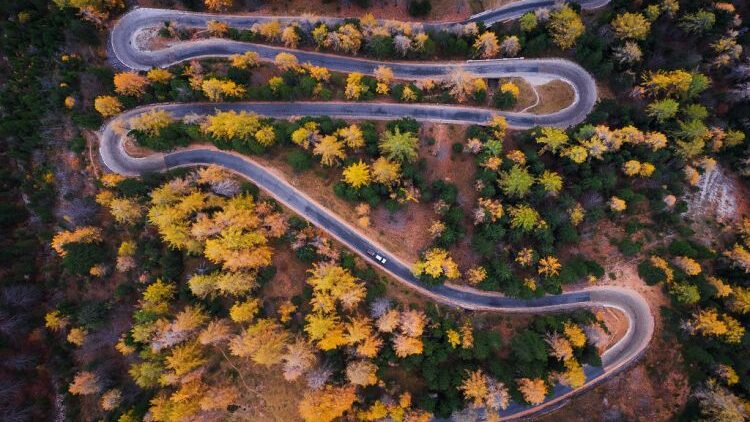
Start in Ljubljana or cross directly from Austria or Italy into the Julian Alps. Day one is one of the best riding days of the entire route — Ljubljana to Bovec via Vršič Pass. The 50 numbered hairpins of Vršič are the ideal warm-up for what follows, and the descent into the Soča Valley delivers that first proper Balkan moment: turquoise river, limestone walls, empty road. Spend night one in Bovec — good value, perfectly placed, and genuinely beautiful.
Day two: Mangart Saddle in the morning if conditions allow — Slovenia‘s highest road and worth the detour — then south along the Soča Valley through Kobarid and across the border into Croatia. Around 280 km over two days, but don’t rush it.
Days 3–4: Croatia — Coast and Interior
Cross into Croatia and head for Plitvice Lakes for a mid-morning stop — allow two hours minimum and don’t skip it. Then south toward Split and the coast. Day three ends somewhere in the Split area. Day four is the Dalmatian Coast in full — the D8 south from Split to Dubrovnik via Makarska and the Pelješac Peninsula. Plan an overnight between Makarska and Ploče to avoid Dubrovnik’s accommodation pricing. The Pelješac Peninsula detour adds an hour and is worth every minute of it.
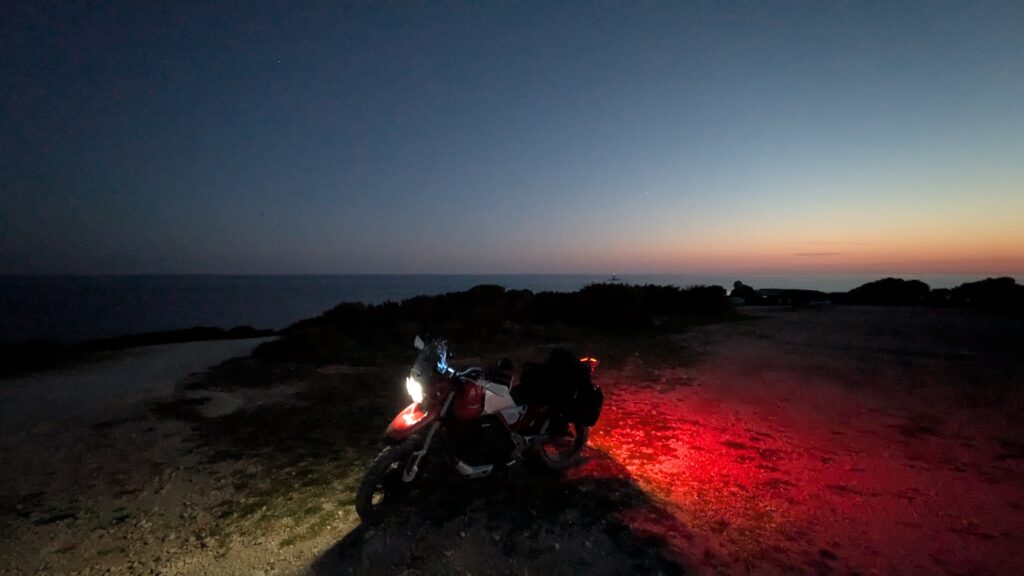
Total distance days three and four: approximately 450 km, but with stops it fills two full days comfortably.
Days 5–6: Bosnia — Mostar and the Canyon Roads
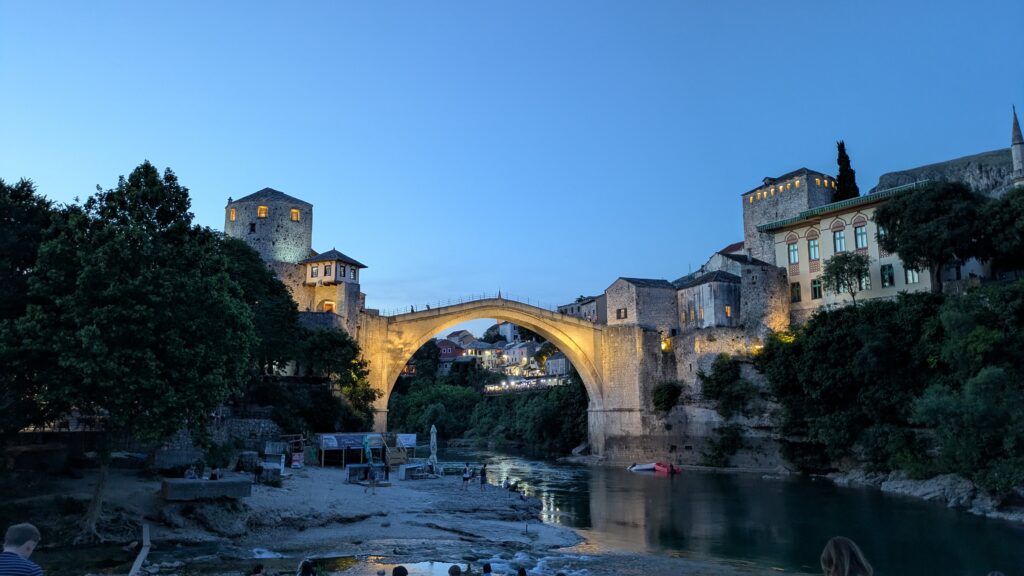
Cross into Bosnia from the coast near Metković — a straightforward border, rarely more than fifteen minutes. Day five is Mostar. Arrive mid-morning, park near the old town, and allow yourself to be slowed down. The Stari Most bridge, the bazaar streets, the call to prayer echoing off limestone walls — Mostar is one of the most atmospheric stops on the entire balkan motorcycle route. Lunch at a riverside restaurant, then south to Blagaj for the tekke at the river source before finding accommodation in the Mostar area.
Day six heads north through the Neretva canyon — genuinely spectacular riding that would have a Michelin star if it were in France — through Jablanica and Konjic, then a decision: push into Sarajevo for a city evening, or stay in the canyon area and cross into Montenegro early on day seven. Either works. Sarajevo is worth it if you have the time.
Days 7–8: Montenegro — Kotor and the Mountains
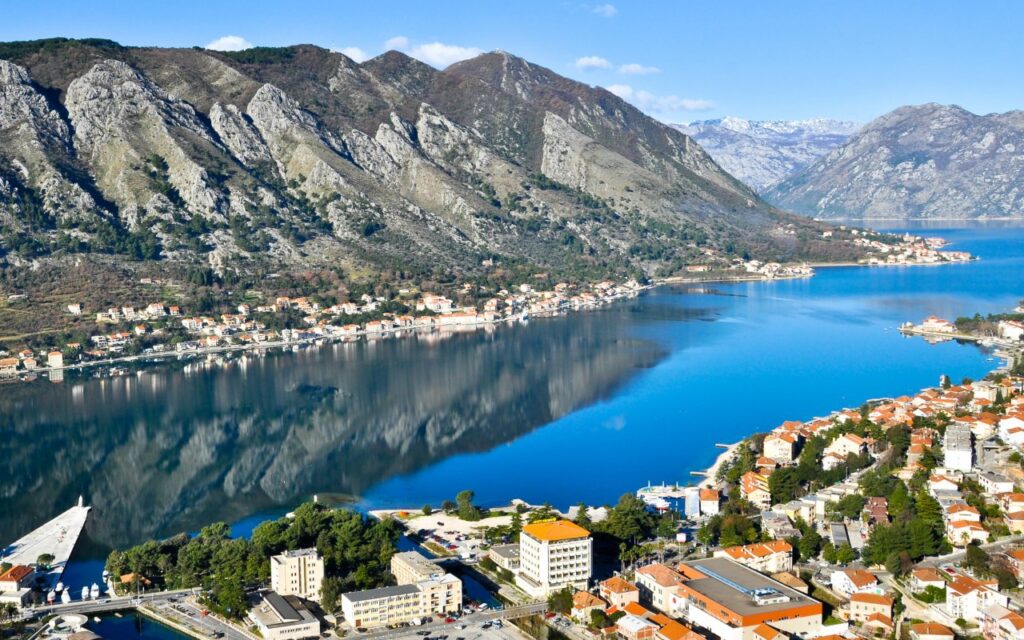
The Bay of Kotor hits differently when you arrive by motorcycle. You descend from the border on a road that winds down through terraced hillsides with the bay spreading out below, and then you’re riding along a waterfront that feels entirely out of place — baroque churches, Venetian fortifications, superyachts, all of it squeezed between mountains and sea. Park the bike and walk the old town walls if your legs will allow it after the riding day.
Day eight climbs out of Kotor on the legendary serpentine road — 25 hairpins up the face of Mount Lovćen with views back over the bay that justify stopping at every single one — then through Cetinje and northwest toward Durmitor. The landscape shifts completely: from Adriatic coast to high mountain plateau in under two hours. Žabljak is the natural overnight base for the Durmitor region.
I wasn’t fully prepared for Durmitor. After two days on the Montenegrin coast — spectacular as it is — the climb up onto the Durmitor plateau feels like entering a completely different country. Every corner opens onto something more dramatic than the last: black pine forests, glacial lakes, limestone peaks pushing above 2,500 metres. Žabljak is a small town but a perfect base, and if you have a spare morning, ride the road around the Black Lake before the day starts. It’s one of those places that makes you question every future holiday decision that doesn’t involve a motorcycle.
Days 9–10: Albania — The Wild Card
The Montenegro–Albania border crossing at Sukobin or Muriqan is rarely busy. Cross in the morning and you’re in Shkodër by late morning — a genuine Albanian city with a functioning old bazaar, a lakeside castle, and the kind of energy that tells you immediately this is a different country. Fuel up here, withdraw Albanian Lek, and check your tyres.
Day nine’s routing depends on ambition and bike type. The northern option heads into the Albanian Alps via Theth and the Valbona Valley — one of the most dramatic landscapes in Europe, roads that vary from good to very rough, and virtually no other tourists. The southern option follows the SH1 coastal road toward Tirana — better surfaces, more services, equally beautiful in its own way. Both are valid balkan motorcycle route choices and both deliver an Albania that stays with you.
Day ten is flexible — either deeper into Albania, a push toward the North Macedonia border, or beginning the return north depending on your remaining time and energy.
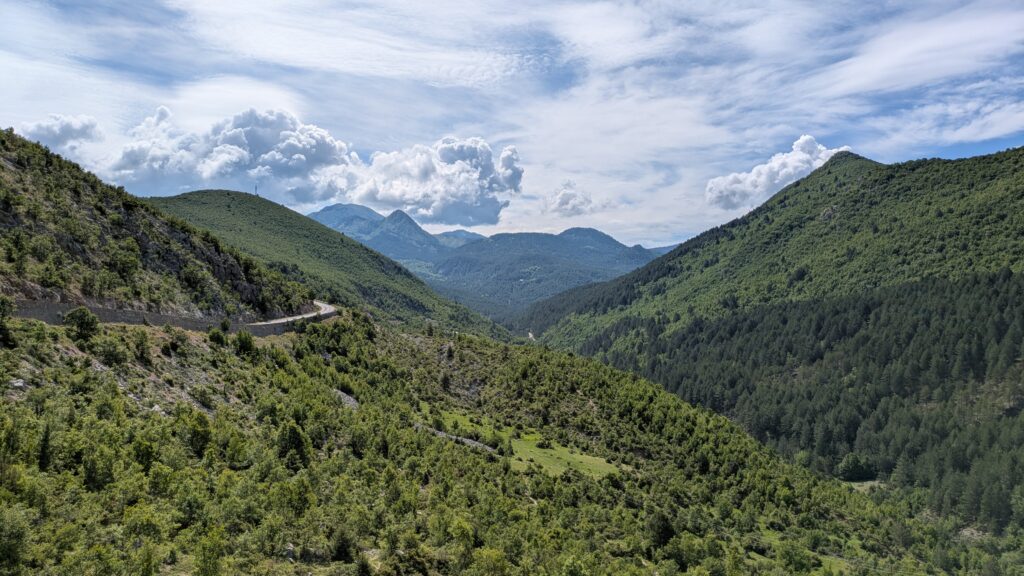
What Albania gives you depends almost entirely on the decision you make at Shkodër. Stay close to the coast and the SH1 and you get good roads, regular towns, the occasional tourist, and a ride that feels adventurous but manageable. Head east into the mountains and the experience shifts completely. The roads narrow, the villages shrink, and the traffic thins out to almost nothing. The people you do meet out there are rarely other travellers — more likely a shepherd moving his flock across the road, or a mining truck grinding up a pass that you’ll have entirely to yourself otherwise. It’s raw in a way that very little motorcycle touring in Europe still is, and that’s precisely why it’s worth it.
Days 11–12: North Macedonia or Return North
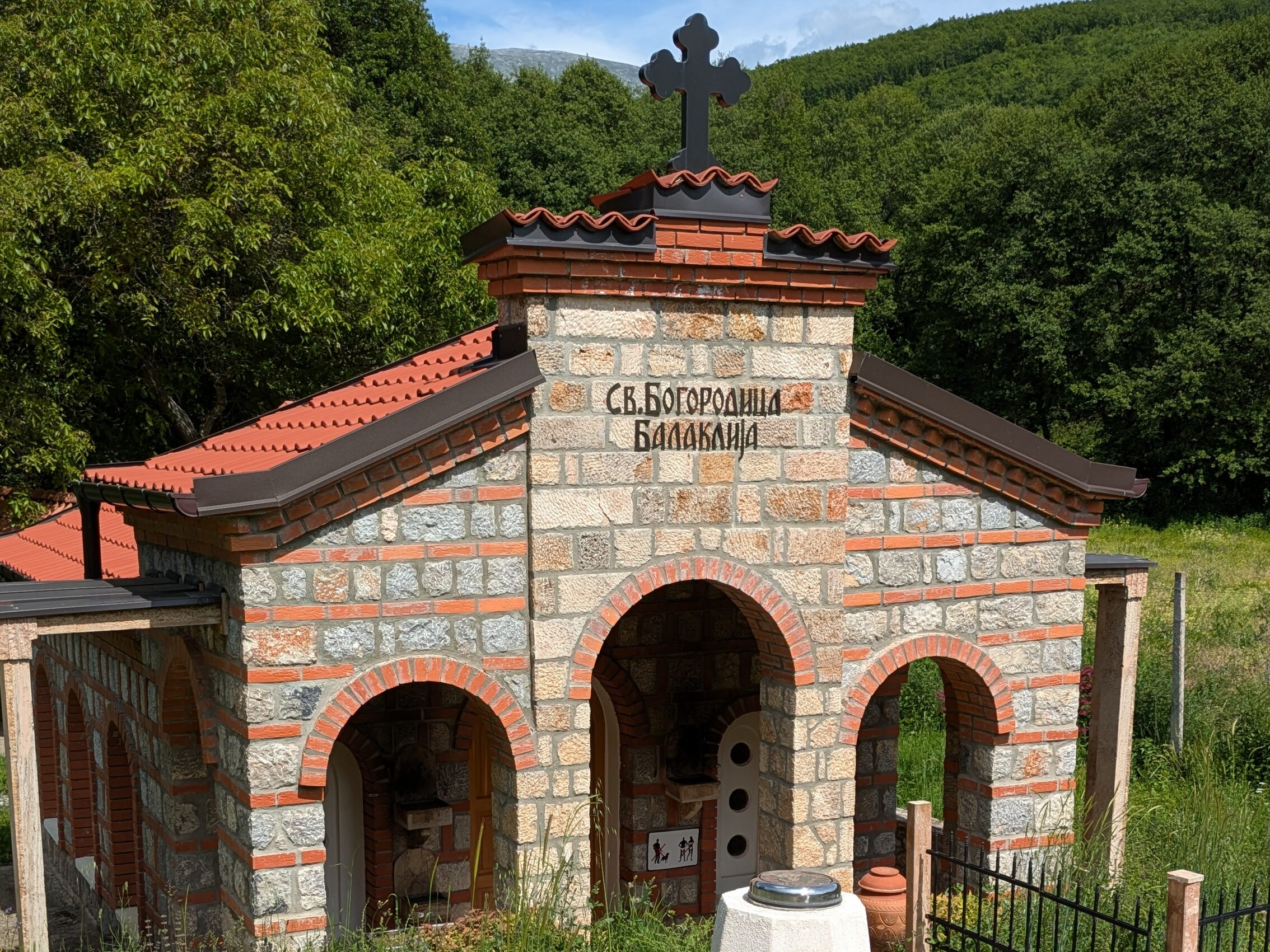
If time and energy allow, crossing into North Macedonia adds Lake Ohrid — one of Europe’s oldest and deepest lakes, surrounded by mountains and Byzantine churches — and the Mavrovo National Park roads to the route. From Ohrid, the return north through Albania and Montenegro is a different line from the outward journey and feels like a new route entirely.
If the two-week timeline is tightening, begin the return from Albania through Montenegro and back into Croatia, picking up the coastal road northward. Either way, days eleven and twelve should be treated as flexible — this is where the buffer you built into the schedule earns its place.
Days 13–14: Return Route North
The final two days of the balkan motorcycle route are about choosing your line home rather than racing it. A different stretch of the Montenegrin coast, a detour through the Soča Valley again, or a night in a Slovenian hilltop town you missed on the way out. Day fourteen is the border crossing back into Austria or Italy, which after two weeks in the Balkans feels startlingly orderly.
Build the buffer in. Something always takes longer than planned — a border queue, a road closure, a conversation with a farmer who insists you stay for lunch. These are not inconveniences. They are the trip.
Border Crossings on This Route
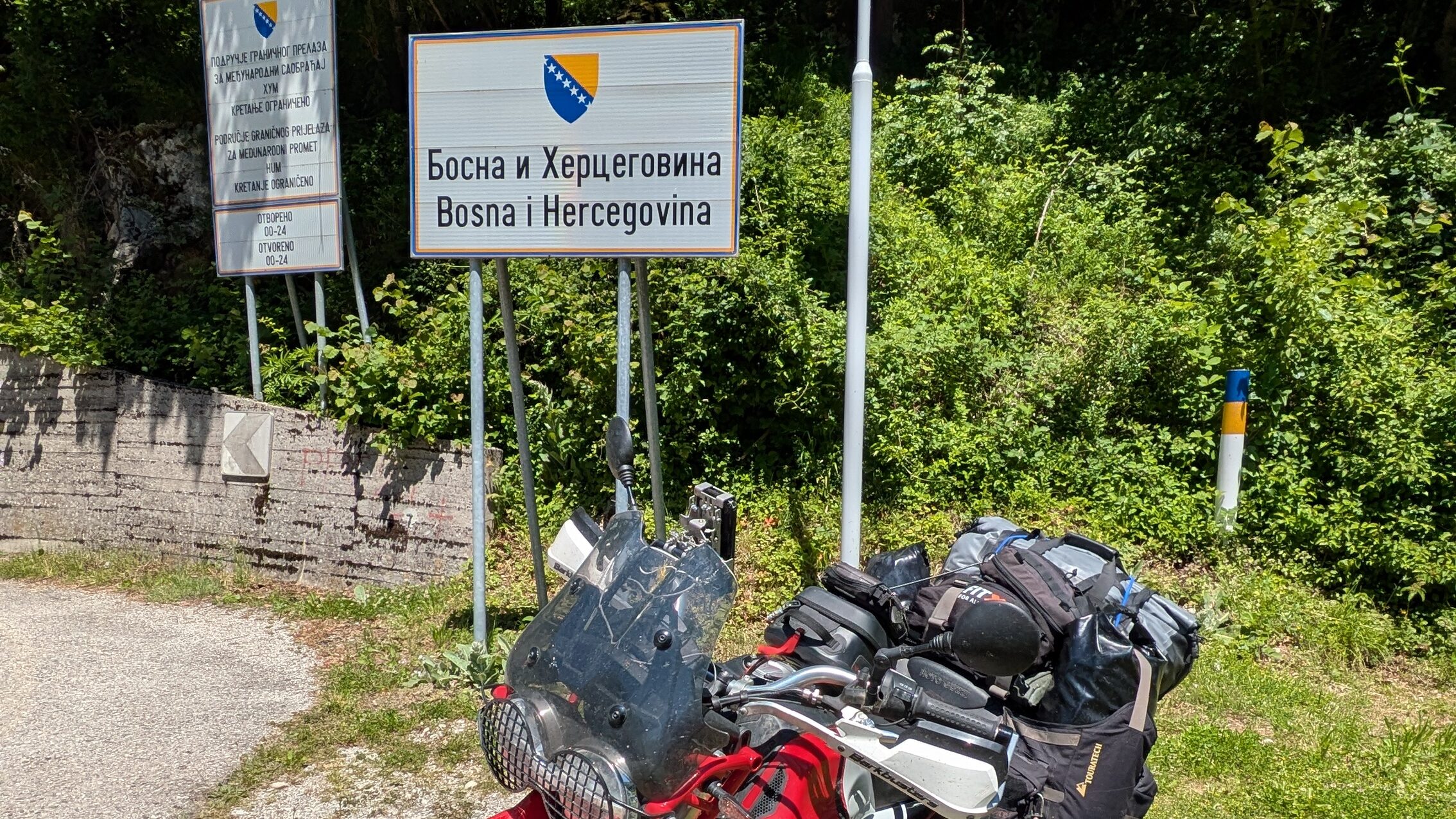
The Schengen crossings — Slovenia to Croatia, Croatia back into Slovenia — are invisible. The non-EU crossings are where you budget time. Croatia into Bosnia near Metković is typically ten to fifteen minutes. Bosnia into Montenegro is similar. Montenegro into Albania at Sukobin or Muriqan runs smoothly in the morning and can back up in summer afternoons. Albania into North Macedonia at Qafë Thanë is rarely busy.
Practical rules that apply everywhere: cross before 10am, have all documents out before you reach the booth, keep your helmet on until the guard indicates otherwise, and be patient and polite regardless of how long it takes. A motorcycle rider who looks organised and relaxed moves through faster than one who is visibly frustrated.
Budget Breakdown for the Full 2-Week Route
Across the full route, 55–80 € per day covers accommodation, food, and fuel comfortably. Slovenia sits closest to Western European pricing at 70–90 €/day. Croatia runs 60–80 €/day, higher in peak season on the coast. Bosnia and Albania are the budget highlights — 30–50 €/day is realistic and includes proper meals and decent accommodation. Montenegro sits in the middle at 55–75 €/day.
Total trip cost for two weeks excluding gear, ferry crossings, and major attractions: 800–1,200 €. For a riding holiday of this quality and variety, that is exceptional value by any European standard.
Final Thoughts
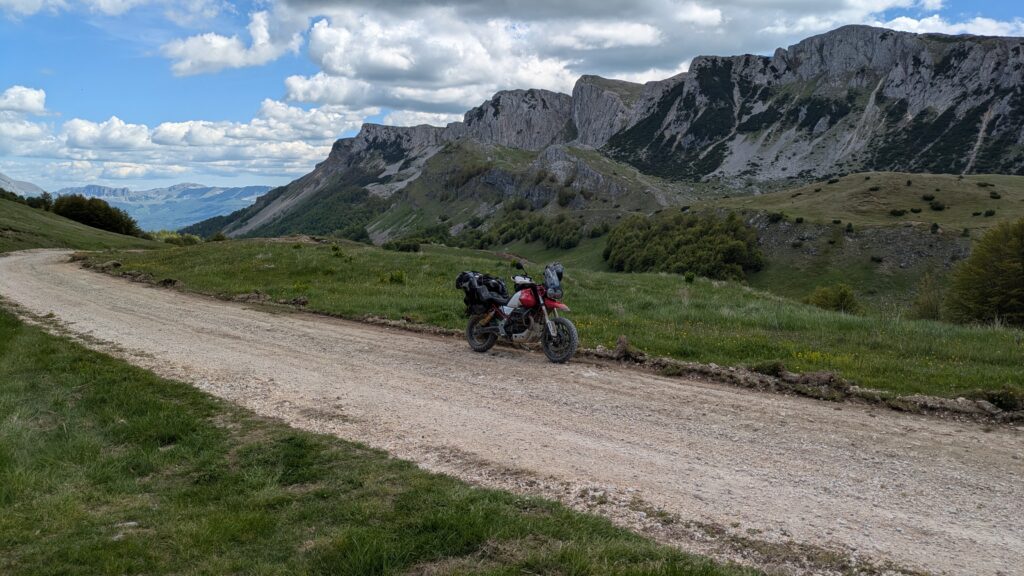
The 2-week balkan motorcycle route is the best value adventure riding in Europe. It’s not the easiest or the most comfortable, and it will test your tyres, your navigation, and occasionally your patience at border crossings. But it delivers something that’s increasingly hard to find on a motorcycle in Europe: roads that feel genuinely discovered rather than curated, landscapes that haven’t been packaged for tourism, and the particular satisfaction of riding through six countries in a fortnight and feeling like you’ve barely scratched the surface.
Most riders who complete this route start planning the return trip somewhere around day ten. You have been warned.
Have you ridden the Balkans? Drop your own route variations and tips in the comments — there’s always someone planning their first Balkan motorcycle trip who’ll benefit from the experience.