Every rider who comes back from Albania Motorcycle Travel says the same thing: I had no idea. No idea the roads were that good. No idea the scenery was that dramatic. No idea the food would cost almost nothing and the people would be that welcoming. Albania has spent decades as Europe’s most overlooked country, sealed off from the world under one of the most isolated communist regimes in history and slow to shake the reputation that followed. But for motorcycle travel, that history has produced something increasingly rare on this continent — a country that still feels genuinely undiscovered.
This albania motorcycle travel guide covers everything you need to plan a trip: the best routes from the Adriatic coast to the Albanian Alps, honest road quality assessments, daily costs, border crossing practicalities, and the specific details that make the difference between a frustrating experience and an unforgettable one. Albania is not the easiest Balkan destination. But it is consistently one of the most rewarding.
Why Albania Belongs on Your Motorcycle Radar
The case for albania motorcycle travel starts with geography. In a country roughly the size of Wales, you have the Albanian Alps in the north — peaks above 2,500 metres, glacial valleys, and mountain roads that feel genuinely remote. A long Adriatic coastline running the full western edge. A dramatic interior of canyon roads, river valleys, and mountain passes connecting it all. The variety per kilometre rivals anywhere in Europe.
Then there’s the cost. Albania is the cheapest country in Europe for motorcycle touring, and it isn’t close. A full restaurant meal costs 5–8 €. Budget guesthouse accommodation runs 15–25 € per night. Fuel prices sit consistently below the European average. A comfortable day of riding in Albania costs roughly what a bare minimum day in Switzerland does, and the riding is arguably better.
The authenticity factor is real and worth acknowledging honestly. Tourism exists in Albania — the coast in summer is busier than it once was, and Theth has become known internationally — but the country hasn’t been packaged and curated in the way that most Western European destinations have. Rural Albania feels genuinely rural. Mountain villages feel genuinely remote. The encounters you have on the road here don’t feel staged, because they aren’t.
Best Time to Ride Albania by Motorcycle
May and June are the best overall window for albania motorcycle travel. Temperatures are warm without being punishing, the Albanian Alps roads are clear of snow, and the coastal areas haven’t reached peak summer busy-ness. This is when the country is at its best across all regions simultaneously.
September and October are an equally excellent alternative. Summer heat has passed, the mountain roads are at their most accessible, and the tourist presence on the coast has thinned significantly. The light in September is extraordinary for photography.
July and August work well in the mountains but the coastal road and Riviera become genuinely crowded by Albanian standards. Heat in the interior can be significant — plan riding for early morning and late afternoon. April is possible in the south and on the coast but the Albanian Alps passes may still carry snow on higher sections — check conditions before committing to northern mountain routes.
Albania’s Best Motorcycle Routes
The SH1 Coastal Road
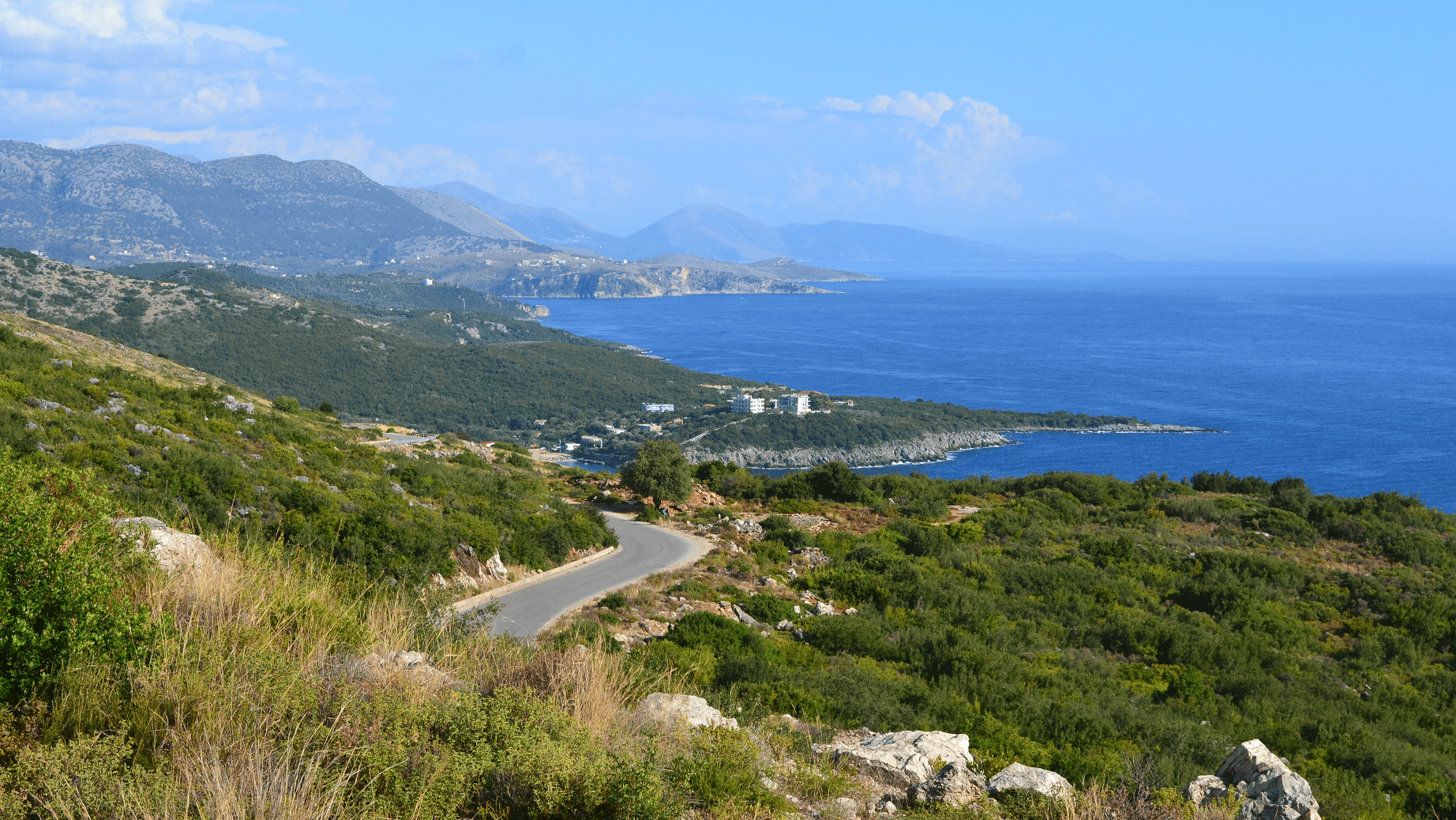
Albania’s most accessible route runs the full length of the Adriatic coast from Shkodër in the north to Sarandë in the south — roughly 450 km of road that has improved dramatically in recent years. The northern sections around Lezhë and Durrës are busy with local traffic but manageable. South of Vlorë the road transforms into something spectacular: the Albanian Riviera, a clifftop road above a coastline that genuinely rivals the Amalfi in visual drama while carrying a fraction of the traffic.
Key stops on the coastal route: Shkodër for orientation and supplies before heading north or south, Vlorë for the point where the Adriatic meets the Ionian, and Sarandë in the far south with views across to Corfu. Card payments are more reliable along the coast than inland — still carry cash but the coastal towns have ATMs and card terminals in most restaurants and hotels.
The SH1 suits riders who want comfort, consistent road quality, and scenery without committing to the rougher mountain routes. It’s also the logical first day if you’re entering from Montenegro and planning to head inland from a southern base.
The Albanian Alps — Theth and Valbona Valley
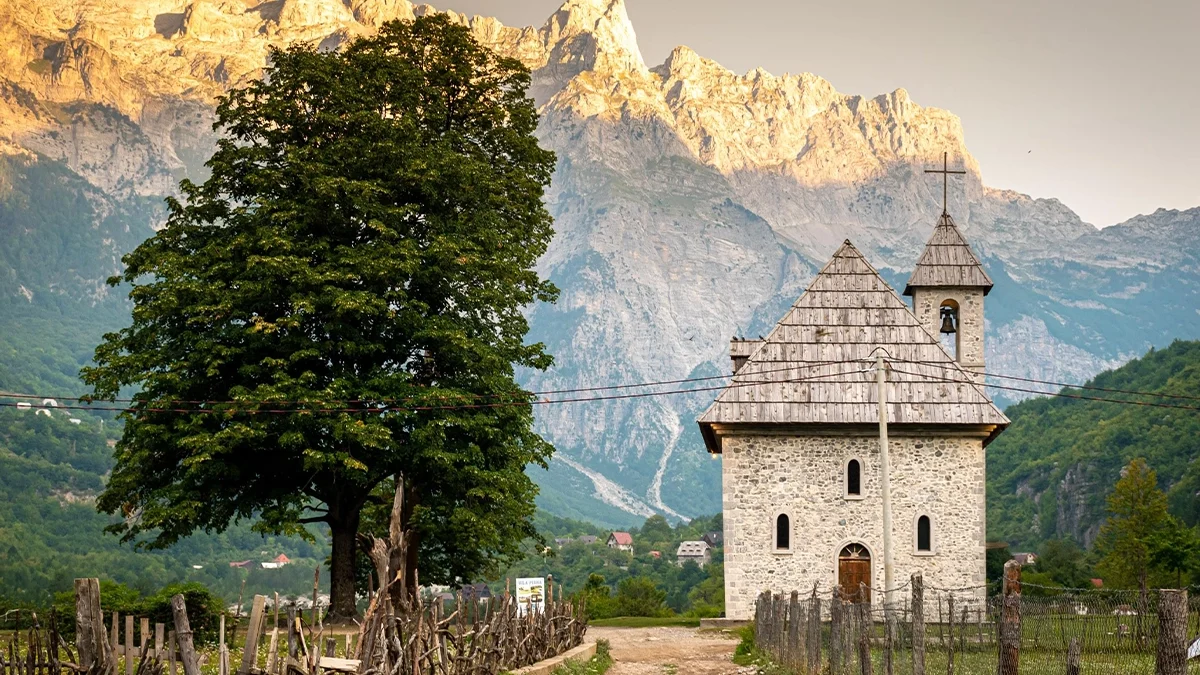
This is the crown jewel of albania motorcycle travel and the route that stays with riders longest. The road to Theth climbs from Shkodër into the Accursed Mountains — the Albanian Alps — through a series of valleys that become progressively more dramatic with every kilometre. Road surfaces are rough in places and require attention, but nothing beyond what a standard touring bike handles comfortably with good tyres.
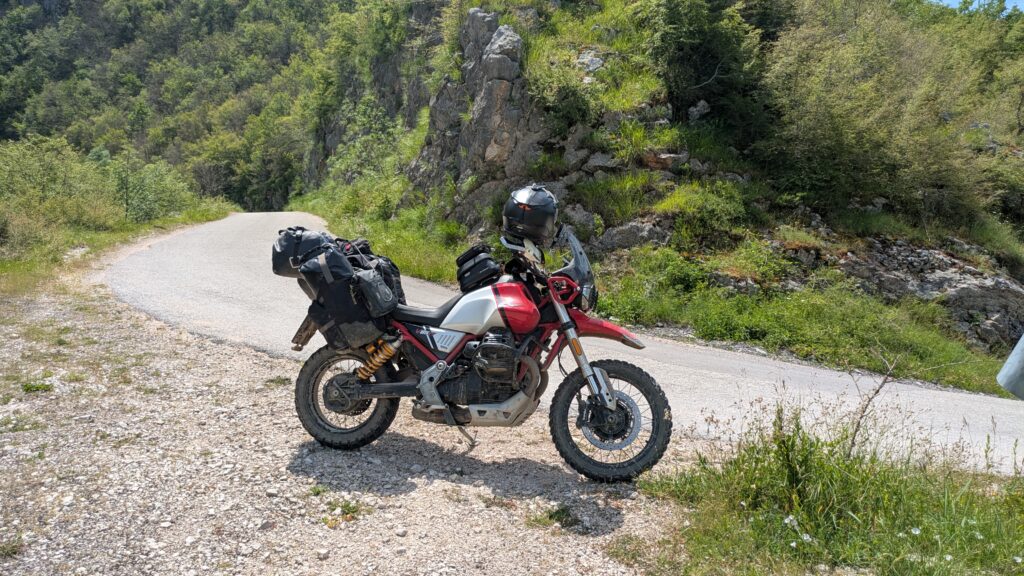
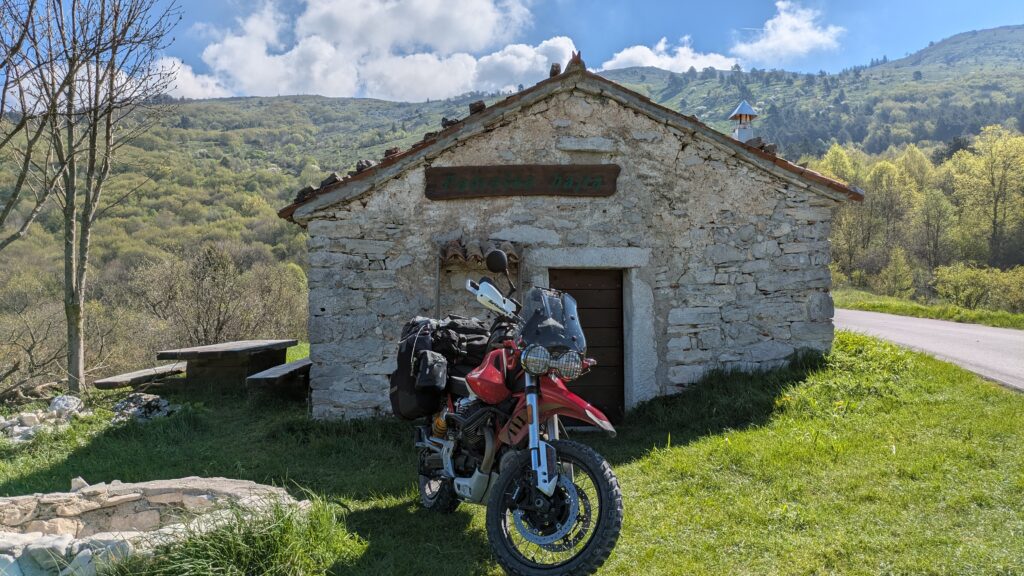
My favourite Albania memory didn’t happen on a famous road or at a scenic viewpoint. Riding through a small village in the rural east, an old shepherd waved me down — not to ask for anything, but because he’d never seen a motorcycle with two cylinders sticking up out of the engine like my V85 TT. What followed was twenty minutes of hand gestures, genuine curiosity on both sides, and the kind of conversation that needs no shared language to work. He invited me to stay the night with his family. I left the next morning with a few Albanian words I still remember, a route circled on my map by someone who actually knew the roads, and the sort of memory that no amount of travel planning ever produces on purpose.
Valbona Valley is the natural companion to Theth — a long, flat-bottomed valley flanked by peaks that rise almost vertically from the valley floor. The guesthouses in both Theth and Valbona are simple, affordable at 20–30 € per night including dinner, and run by families who’ve been hosting travellers for generations. Stay at least one night in the mountains rather than riding through in a day. The evenings here are something else entirely.
The South — Gjirokastër and the Blue Eye
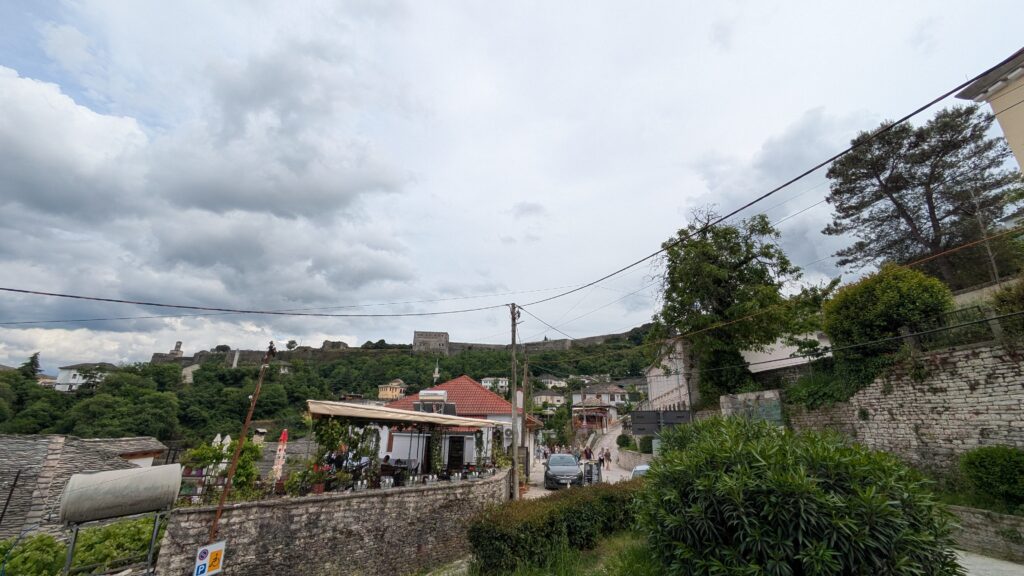
The road from Sarandë to Gjirokastër is one of Albania’s best — excellent surface, dramatic mountain backdrop, and light traffic throughout. Gjirokastër itself is a UNESCO-listed Ottoman city built on a hillside, all grey stone towers, cobbled lanes, and a castle that looks over the valley below. It deserves more time than most riders give it.
Fifteen kilometres from Sarandë, the Blue Eye — Syri i Kaltër — is a natural spring where water of an impossible blue-green colour wells up from an underground river. Entry costs 8 € and the site is genuinely worth it. The road to it from Sarandë is excellent. Combine the Blue Eye with the Butrint archaeological site nearby and you have a full southern Albania day that costs almost nothing.
The south also provides the natural exit route into Greece via the Kakavijë border crossing — a logical endpoint for riders completing a full Albania loop before continuing into Greece or heading back north.
The Interior Mountain Roads
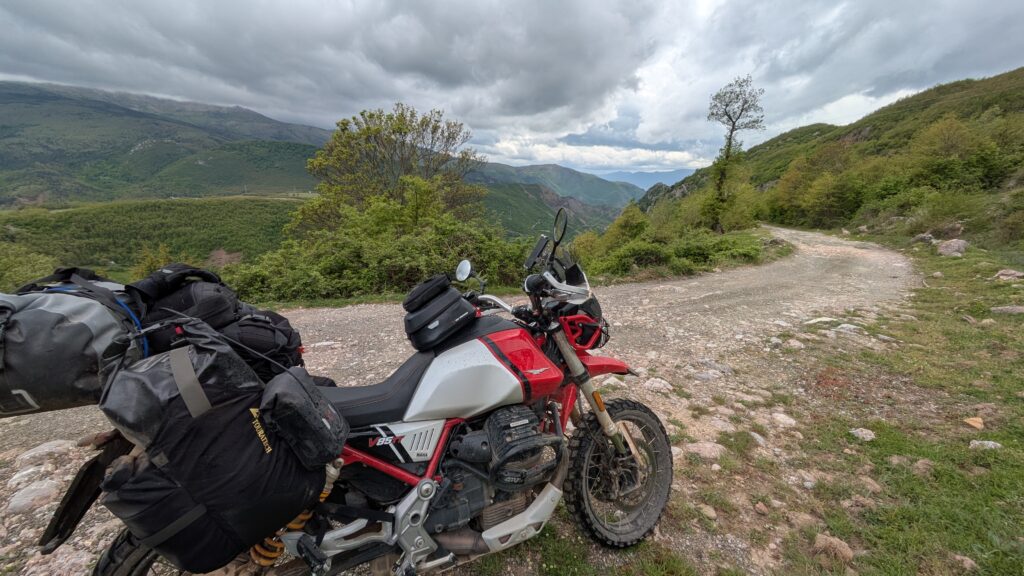
What Albania gives you depends almost entirely on the decision you make at Shkodër. Stay close to the coast and the SH1 and you get good roads, regular towns, the occasional tourist, and a ride that feels adventurous but manageable. Head east into the mountains and the experience shifts completely. The roads narrow, the villages shrink, and the traffic thins out to almost nothing. The people you do meet out there are rarely other travellers — more likely a shepherd moving his flock across the road, or a mining truck grinding up a pass that you’ll have entirely to yourself otherwise. It’s raw in a way that very little motorcycle touring in Europe still is, and that’s precisely why it’s worth it.
Albanian Roads — An Honest Assessment
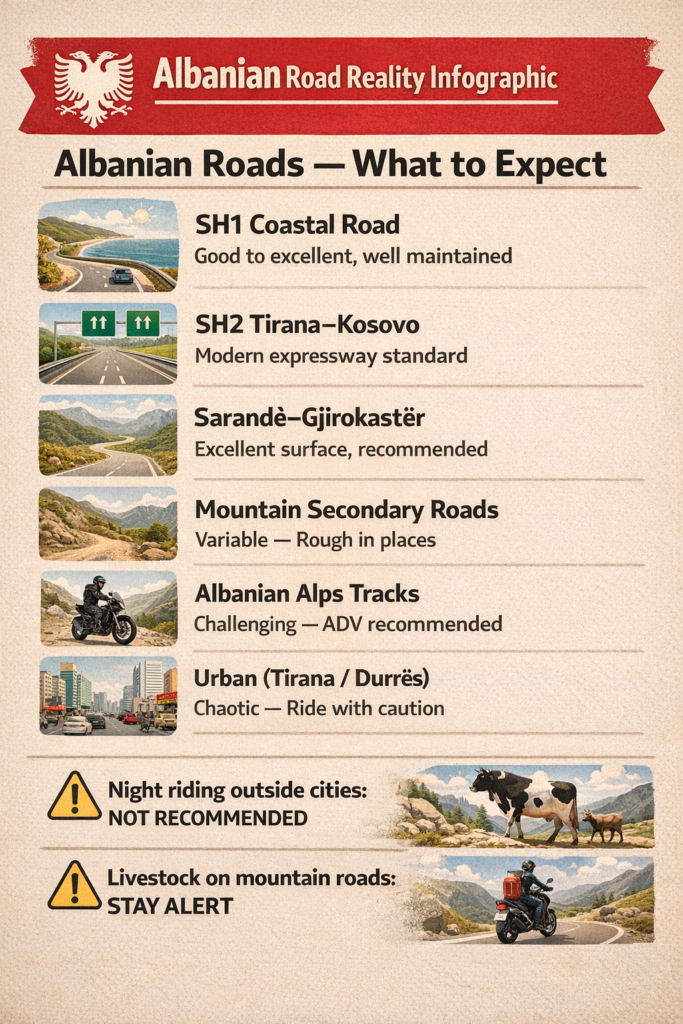
The reputation Albanian roads carry among riders who haven’t been is significantly worse than the reality in 2026. Substantial infrastructure investment since 2015 has transformed the main national routes. The SH1 coastal road, the SH2 connecting Tirana to Kosovo, and the Sarandë to Gjirokastër road are all good to excellent. The expressway sections around Tirana and Durrës are modern and well-maintained.
Secondary and mountain roads are a different conversation. Surfaces vary from surprisingly good to genuinely challenging, sometimes within the same ten kilometres. Road markings are faded or absent in many areas. Potholes appear without warning. Livestock — sheep, goats, and cattle — cross mountain roads without any interest in your schedule. These are not reasons to avoid Albania. They are reasons to ride attentively, keep speeds moderate on unfamiliar mountain roads, and ensure your tyres are in strong condition before crossing the border.
Night riding outside major cities is strongly advised against. Roads are unlit, animals are invisible, and the combination of poor road markings and darkness creates unnecessary risk. Plan to be at your overnight destination before sunset.
Budget and Daily Costs in Albania
Albania is the most affordable country in this albania motorcycle travel guide series by a significant margin. Fuel prices typically sit at 1.40–1.55 € per litre — among the lowest in Europe. A full meal at a local restaurant costs 5–8 €. A byrek — the flaky pastry filled with cheese or spinach that functions as Albania’s national street food — costs 0.50–1 €. Coffee runs 0.80–1.20 €. Budget guesthouses charge 15–25 € per night; a proper hotel room rarely exceeds 35–50 € outside Tirana and the Riviera in peak season.
Three daily budget tiers:
- Budget: 25–35 €/day — guesthouses, self-catering some meals, minimal attractions
- Comfortable: 40–55 €/day — budget hotels, one restaurant meal per day, occasional entry fees
- Mid-range: 60–80 €/day — better hotels, regular restaurant meals, full flexibility
Currency is the Albanian Lek. Card acceptance has improved significantly in Tirana, Shkodër, and coastal towns but cash remains essential in mountain areas and rural Albania. Withdraw enough Lek in Shkodër before heading into the Albanian Alps — ATMs in Theth and Valbona do not exist.
Border Crossings into Albania
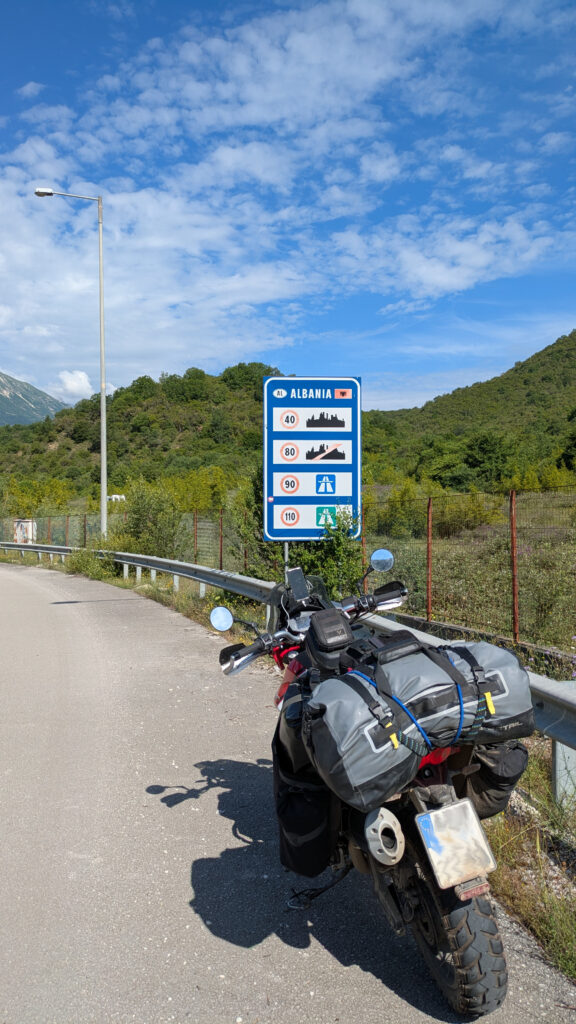
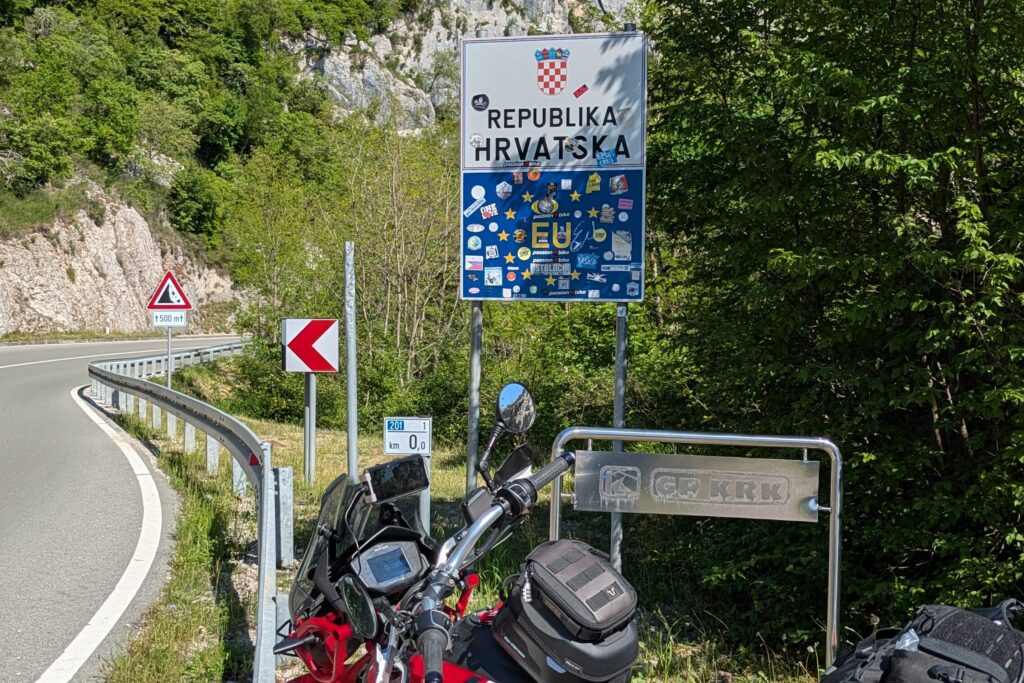
From Montenegro: the Sukobin or Muriqan crossings are the most common entry points for riders on the Balkan route. Both are efficient in the morning and can back up in summer afternoons. Cross before 10am and budget fifteen to twenty minutes.
From Kosovo: the Morinë crossing is straightforward and rarely busy. Good road quality on both sides of the border.
From North Macedonia: Qafë Thanë is a mountain crossing with dramatic scenery on both approaches. Efficient and rarely congested.
From Greece: Kakavijë is the busiest crossing and the one most likely to have summer queues. Morning crossings are significantly faster.
Green card insurance is essential for Albania — standard EU policies do not automatically cover it and some insurers exclude it specifically. Check your policy before leaving home and arrange Albanian coverage if needed. Carry your original vehicle registration document, not a copy. Passport is required at all crossings regardless of EU membership status.
Practical Riding Tips for Albania
Speed limits are 40 km/h in urban areas, 80 km/h on rural roads, and 110 km/h on expressways. Traffic police are present on main routes and document checks are not uncommon — have everything accessible. Mandatory equipment mirrors the rest of the Balkans: reflective vest, warning triangle, and first aid kit.
Mobile coverage is reliable on the coast and in cities and becomes patchy in the Albanian Alps. Download offline maps before entering the country — Maps.me has solid Albanian coverage including mountain tracks.
Albanian hospitality is genuine and occasionally overwhelming in the best possible way. An invitation for coffee, raki, or food from a local in a mountain village is not something to hurry past. These encounters are consistently among the most memorable moments of albania motorcycle travel. Slow down and accept them.
Combining Albania with Neighbouring Countries
Albania works best as part of a broader Balkan loop rather than a standalone destination, though it absolutely justifies a standalone trip for riders with limited time.
The Montenegro–Albania combination is the most natural pairing on the Balkan route — two countries that couldn’t feel more different despite sharing a border, within two days’ riding of each other. Albania and Kosovo is an underrated combination heading east. Albania and North Macedonia with Lake Ohrid as the endpoint provides a complete southeastern loop. Crossing south into Greece from Sarandë — with the option of a short ferry crossing to Corfu — connects albania motorcycle travel naturally into a broader Mediterranean tour.
Final Thoughts
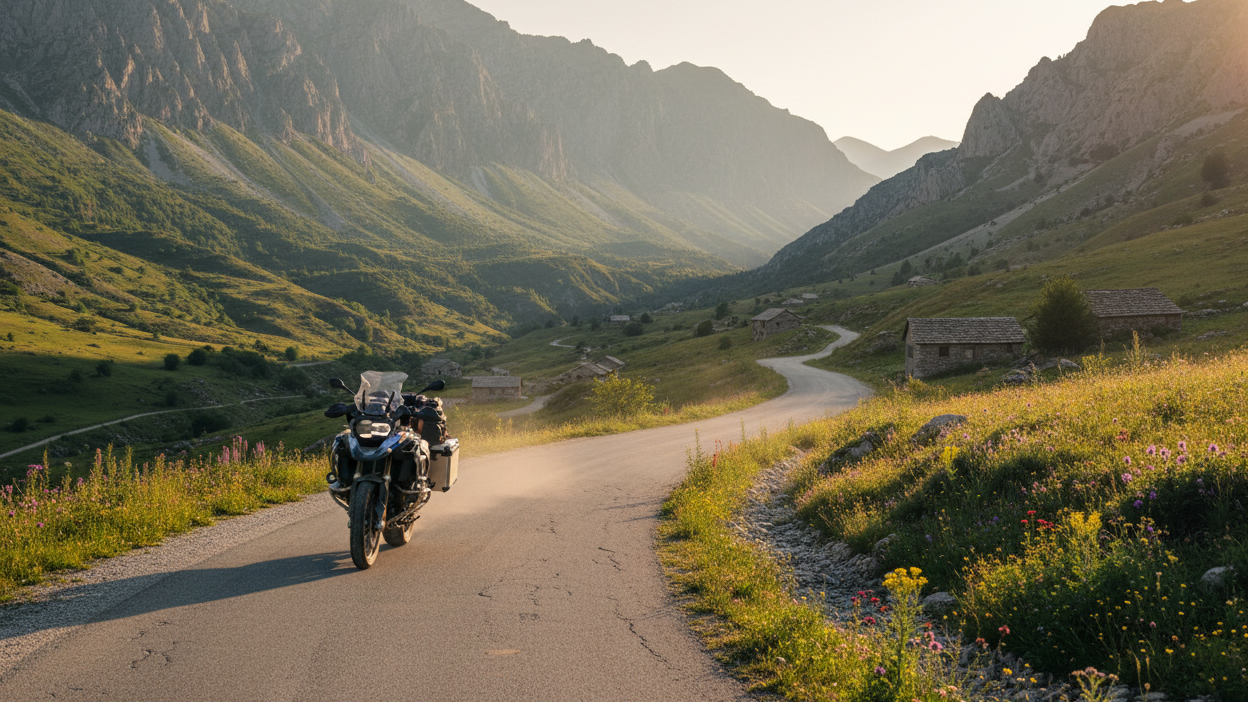
Albania rewards the riders willing to look past a reputation built on outdated information. The roads are better than you’ve heard. The scenery is more dramatic than you’ve imagined. The cost is lower than anywhere else on the continent. And the sense of riding somewhere that hasn’t been fully discovered yet — which is increasingly hard to find in Europe — is still entirely intact.
Visit before it loses its edge. Every year the roads improve, the tourist infrastructure expands, and the gap between Albania and the rest of the Balkans narrows slightly. Right now, in 2026, it still feels like the most rewarding secret in European motorcycle travel.
Have you ridden in Albania or are you planning a trip? Drop your questions or route tips in the comments — fellow riders planning their first albania motorcycle travel adventure will appreciate the real-world intel.