
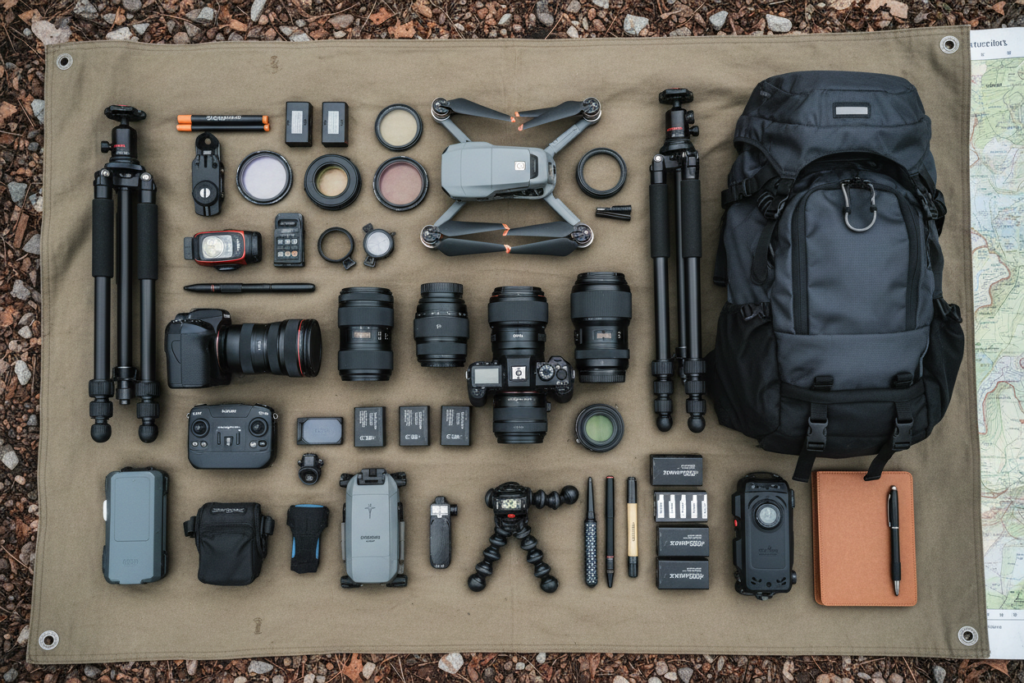
Motorcycle travel creates incredible photographic opportunities—dramatic mountain passes at sunrise, winding coastal roads, ancient villages, and the bike itself in stunning locations. But capturing these moments while traveling on two wheels presents unique challenges. Your camera gear needs to survive vibration, fit in limited luggage space, withstand weather exposure, and be accessible enough that you’ll actually use it instead of leaving it packed away.
I’ve toured with everything from smartphones to full-frame DSLRs with multiple lenses, and I’ve learned that the “best” camera for motorcycle travel photography isn’t about megapixels or technical specs—it’s about finding the balance between image quality, portability, durability, and convenience that matches your priorities. The camera that stays in your pannier because it’s too much hassle doesn’t matter how good it is. The camera you have with you and actually use beats the one that’s technically superior but always packed away.
This guide covers camera options from smartphones to professional systems, essential lenses for motorcycle travel photography, protective gear to keep equipment safe from vibration and weather, and the accessories that actually matter when you’re shooting while traveling. Whether you’re documenting your journey for social media or building a serious portfolio, understanding what gear works helps you capture memories without the equipment becoming a burden!
Understanding Camera Gear Constraints for Motorcycle Travel
Limited luggage space means every item competes for room in your panniers. That camera bag taking up half your top case forces compromises on clothing or other gear. Constant vibration affects delicate electronics—lens stabilization systems, sensor shift mechanisms, and mounting screws all suffer from hours of shaking. Weather exposure including dust, rain, and temperature extremes challenges equipment not designed for such conditions.
Security concerns matter when expensive gear sits on your bike while you explore a town. Weight considerations affect handling—every kilogram of camera equipment changes how your motorcycle feels. The accessibility trade-off is real: gear packed deep in panniers stays safe but never gets used, while easily accessible gear risks theft or damage. Solo travel presents challenges since you can’t hand someone your camera for photos of you with the bike.
Balancing riding and photography is crucial. You’re there primarily to ride, and stopping constantly for photos disrupts the touring experience. Power and charging limitations exist—accommodation might be your only charging opportunity for days. Backup and storage on the road requires planning since you can’t just download everything to your home computer. These constraints shape every decision about camera gear for motorcycle travel photography.
Camera Options: Finding Your Balance
Smartphone photography has transformed motorcycle travel documentation. You’re already carrying your phone anyway, adding zero extra weight or space. Modern phones deliver excellent image quality with computational photography features like HDR and night mode providing results that rival dedicated cameras in many situations. Phones are always accessible in your pocket, allowing quick shots without unpacking gear. Instant editing and sharing work perfectly for social media-focused documentation.
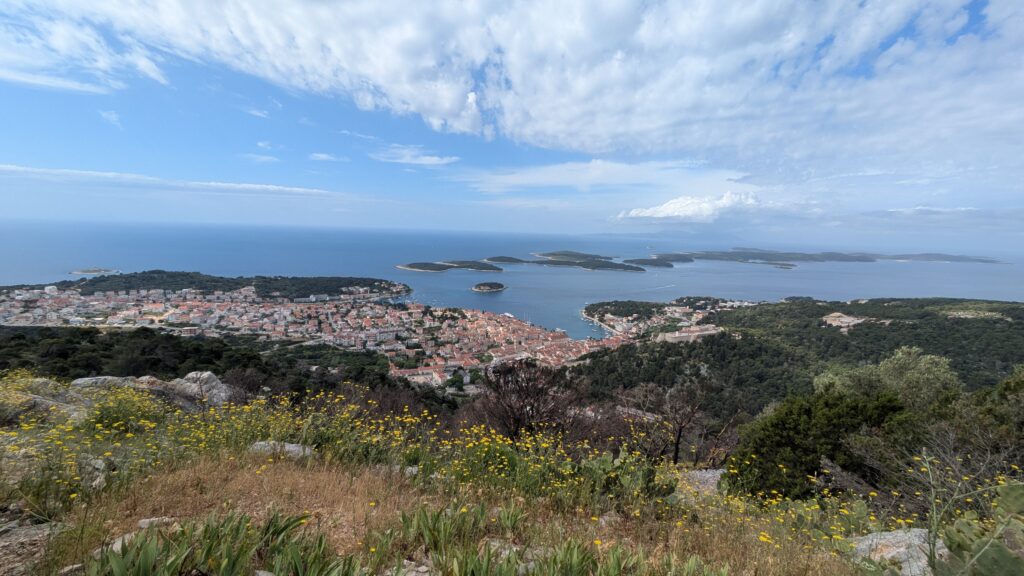
The limitations include restricted zoom capabilities and smaller sensors that struggle in extreme light conditions. Less manual control limits creative photography, and battery drain affects your navigation and communication device. Capturing motion shots is difficult, and wide-angle limitations affect certain compositions. Despite these constraints, smartphones excel for convenience and work perfectly as backups even when carrying dedicated cameras.
Action cameras like GoPro, DJI, and Insta360 serve a distinct purpose from smartphones. These extremely compact and lightweight devices are designed specifically for vibration and weather, mounting to helmets or bikes for riding footage. Wide-angle lenses capture environmental context, and impressive stabilization technology creates smooth video even on rough roads. Waterproof and rugged construction handles conditions that would destroy other cameras.
Action cameras focus primarily on video rather than stills. Limited zoom means wide-angle only, and small screens make composition challenging. Lower image quality for still photos compared to dedicated cameras is expected. Short battery life of 2-3 hours requires multiple batteries for day-long riding. Some models have fisheye distortion. But for motorcycle travel photography focused on video content and riding sequences, action cameras are essential specialized tools.
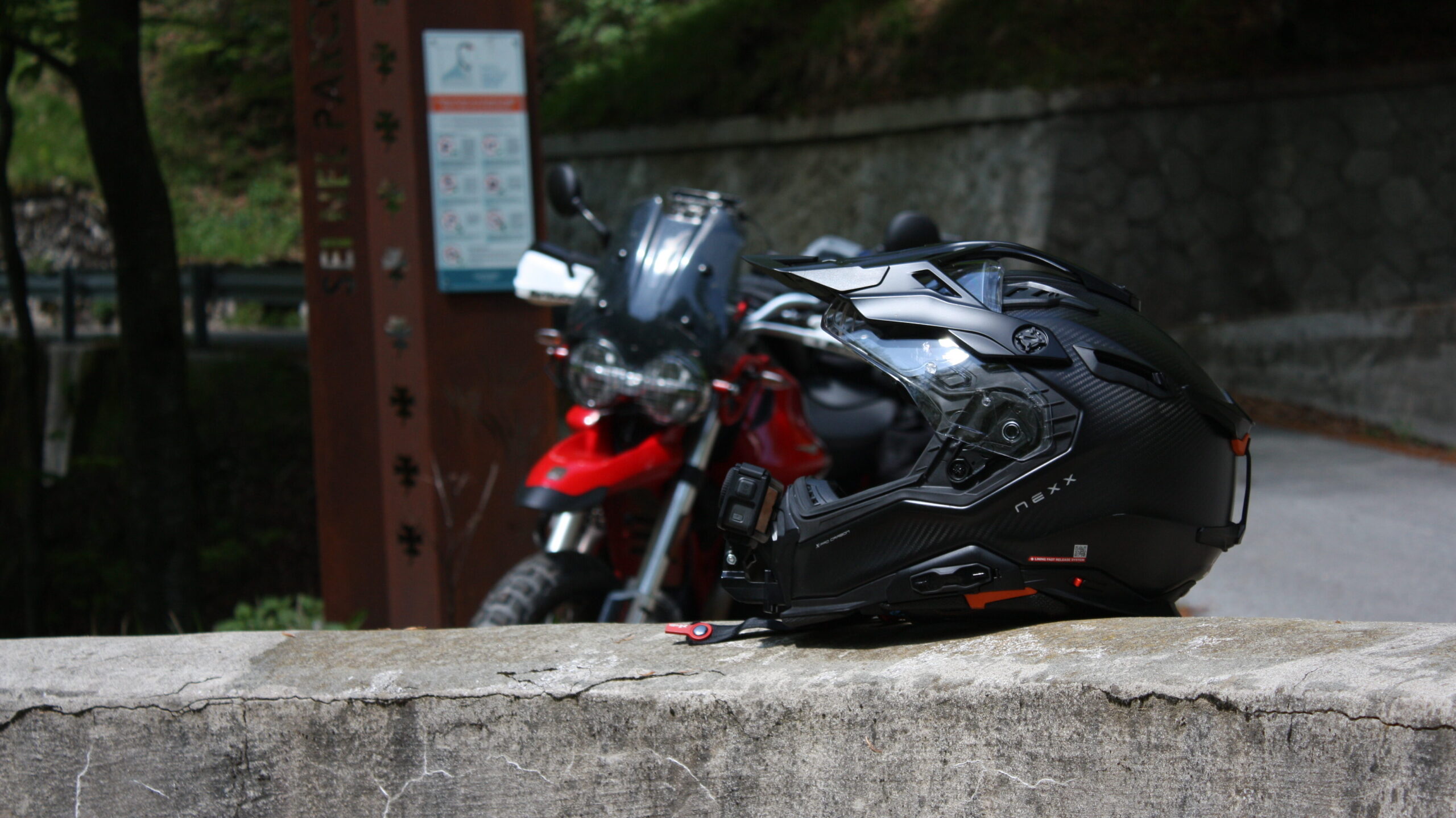
Compact point-and-shoot cameras fill the middle ground. Pocketable convenience with better image quality than phones appeals to many riders. Optical zoom capabilities extend creative range beyond phone limitations. Dedicated camera controls provide faster operation than phone apps. Good low-light performance on higher-end models competes with larger cameras. Weather-sealed options exist on premium models.
The limitations include fixed lenses that can’t be changed and sometimes limited manual control depending on the model. Smaller sensors than mirrorless cameras affect quality. For many users, phones have become so capable that compact cameras feel redundant. Premium compacts with 1-inch sensors like Sony RX100 series justify their existence, but budget compacts struggle to differentiate from phones.
Mirrorless cameras represent the best option for serious motorcycle travel photography. Excellent image quality from larger sensors, interchangeable lenses providing versatility, and compact size compared to DSLRs make them ideal. Great low-light performance, fast autofocus, 4K video capabilities, weather sealing on many models, manual control for creative shooting, and raw file format for editing flexibility all support serious work.
The trade-offs include higher costs than compacts and required protective gear for vibration. Mirrorless systems take luggage space, and multiple lenses add weight and bulk. Battery management becomes important on multi-day rides. Careful packing and security measures are essential. But for riders prioritizing image quality and building portfolios or professional work, mirrorless cameras deliver results that justify the compromises.
DSLR cameras still work but are being superseded by mirrorless technology. Excellent image quality, mature lens ecosystems, optical viewfinders some prefer, excellent battery life, and affordable used market options exist. However, DSLRs are larger and heavier than mirrorless, more vulnerable to vibration due to mirror mechanisms, bulkier in limited luggage, and represent aging technology. Riders who already own DSLR systems can continue using them, but new purchases should focus on mirrorless systems for motorcycle travel photography applications.
Recommended Camera Approach for Most Riders
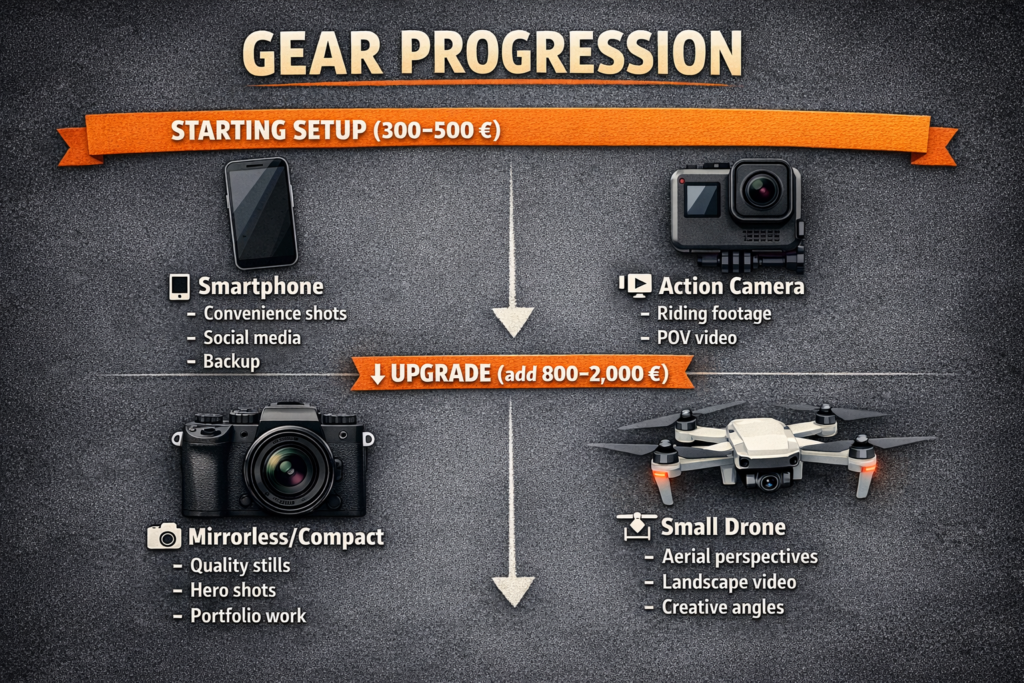
Start with a smartphone and action camera combination. Your smartphone handles convenience shots, social media documentation, and serves as backup. The action camera focuses on riding footage and POV video content. This combination covers different purposes without overlap—phone for stills, action camera for riding video. Minimal luggage impact since action cameras are tiny, and total investment is just 300-500 € assuming you already have a smartphone.
Why this starting setup works: your phone handles stills and casual documentation excellently, the action camera captures the riding experience with video focus, both devices are accessible and easy to use, no delicate gear requires protection from vibration, and everything remains light and compact. This is the perfect foundation for motorcycle travel photography.
Once comfortable with this basic setup, consider adding a mirrorless or premium compact camera for quality stills. Now you have three distinct tools: phone for convenience, action camera for riding video, and dedicated camera for hero shots and portfolio work. Each device serves its purpose without redundancy. This upgrade adds 800-2,000 € investment for the quality stills camera and necessary accessories.
Advanced riders might add a small drone to extend filming possibilities. Compact models like DJI Mini series under 250 grams travel easily on motorcycles. Aerial perspectives of routes and landscapes create dramatic content. However, drones require practice and knowledge of local drone regulations which vary significantly across European countries. This addition represents 400-800 € investment for an entry-level drone.
This progression works because you start simple with tools you’ll definitely use every ride. You add capability as you discover what you actually need rather than assumptions about what you might want. Each addition serves a different creative purpose—phone for convenience, action camera for riding footage, mirrorless for quality stills, drone for aerial perspectives. You upgrade based on experience with simpler setups, not on gear lust.
I started my motorcycle travel photography with just my phone and a basic DIJ Action Cam. After two tours, I realized I wanted better quality stills for prints and my website, so I added a used DSLR camera with one lens. That combination served me perfectly for years. Only after I started creating video content seriously did I add a better action camera and eventually a small drone. Each upgrade came from understanding what I was actually missing, not from buying everything upfront and hoping I’d use it. This progressive approach saved money and prevented my luggage from filling with unused gear.
Essential Lenses for Motorcycle Travel Photography
For mirrorless and DSLR systems, lens choice dramatically affects your results and luggage requirements. The one-lens solution for most riders is a 24-70mm f/4 equivalent lens. This versatile range covers most situations—wide enough for landscapes with your bike, long enough for compression shots. Constant f/4 aperture provides sufficient light-gathering for travel photography. Weather-sealed versions exist from major manufacturers. This lens balances size and capability perfectly without requiring multiple lenses.
If carrying two lenses, choose complementary ranges. A 16-35mm f/4 wide zoom handles landscape and scenic riding shots, environmental context with your bike, interior architectural shots, nightscape and star photography, and dramatic foreground emphasis. Pair this with a 24-105mm f/4 standard zoom covering the most versatile range for 80% of shooting situations. This combination handles travel documentary style, portraits and detail shots, and general touring documentation.
The prime lens alternative suits minimalist approaches. A single 35mm f/1.8 or 28mm f/2 lens is compact and lightweight with fast aperture for low light situations. This forces creative composition since you can’t zoom, sacrificing versatility for simplicity. Some riders prefer this constraint, finding it focuses their vision rather than limiting it.
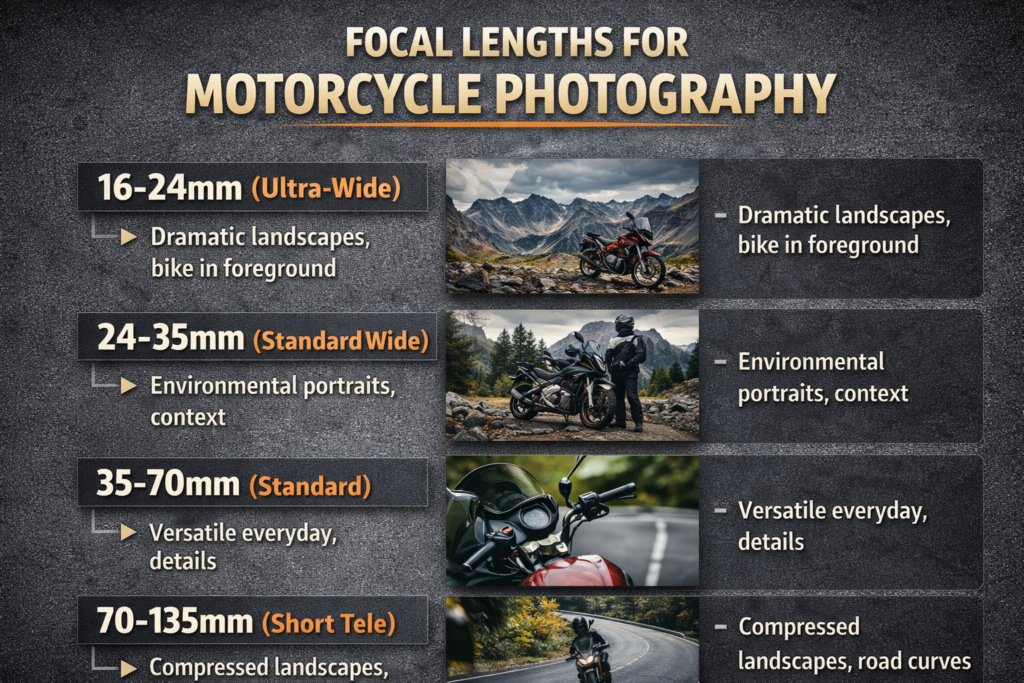
Understanding focal lengths helps choose lenses for motorcycle travel photography. Ultra-wide 16-24mm captures dramatic landscape shots, places your bike in foreground with vista behind, works in tight spaces like narrow village streets, and exaggerates perspective. Standard wide 24-35mm handles environmental portraits of you and your bike, travel documentary work, storytelling with context, and natural perspective without distortion.
Standard 35-70mm range provides versatile everyday shooting for details and close subjects with compression without distortion. Portrait orientation works naturally in this range. Short telephoto 70-135mm compresses landscapes effectively, isolates subjects from backgrounds, layers mountain ridges beautifully, and captures curves in roads from distance.
What you don’t need for motorcycle travel photography: super telephoto lenses are too specialized and heavy, multiple prime lenses add too much weight for touring, macro lenses rarely get used while traveling, and specialized optics remain home where they belong. Focus on one or two versatile zooms rather than a complete prime lens collection.
Protecting Camera Gear from Vibration and Weather
Motorcycle vibration damages cameras over time through various mechanisms. Lens stabilization systems are vulnerable to constant shaking. Sensor shift mechanisms suffer from sustained vibration. Screws loosen from persistent movement. This isn’t theoretical—camera manufacturers have documented damage from motorcycle mounting and vibration exposure.
Padded camera inserts protect gear effectively. Foam-lined camera cubes fit inside panniers, separating cameras from hard case walls while cushioning against vibration. Removable when needed for other uses, these inserts are essential protection. Wrap protection adds another layer—Domke wraps, Tenba BYOB inserts, and neoprene sleeves all work.
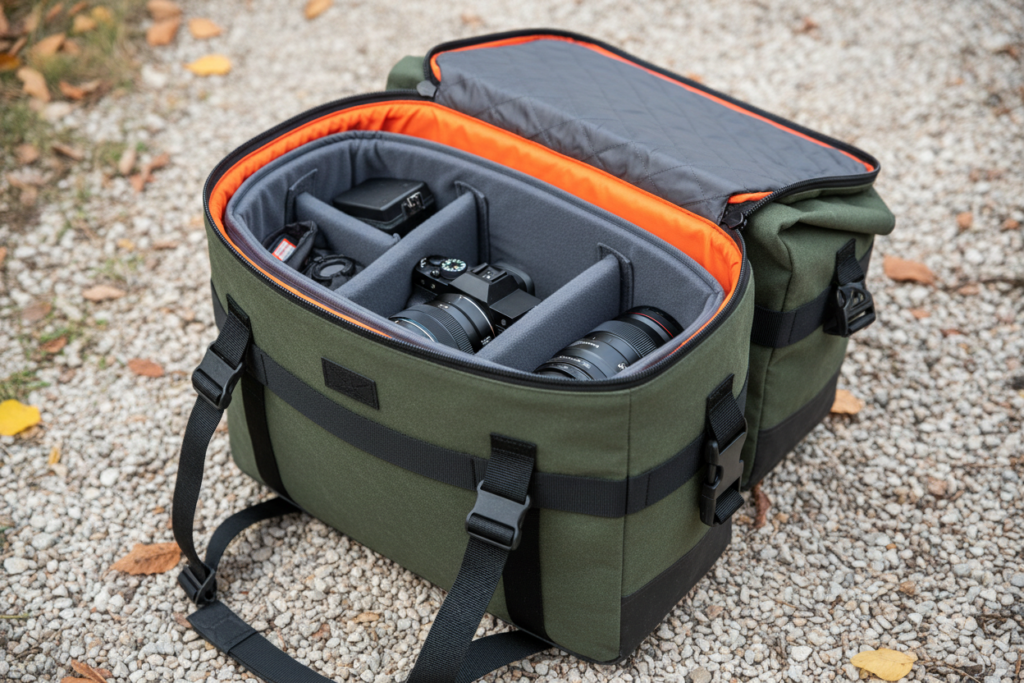
Never permanently mount cameras to motorcycles. Handlebar mounts work only for action cameras designed for vibration. Remove all cameras when riding, either hand-carrying during stops or packing securely. Storage location matters significantly—soft luggage absorbs vibration better than hard cases. Place cameras in the center of panniers away from walls. Top cases often experience less vibration than side panniers. Never mount cameras to fairings or rigid mounting points.
Weather protection starts with rain covers. Dedicated rain covers exist for specific camera models. Peak Design Shell offers versatile universal coverage. Simple plastic bags work in emergencies. Keep lens cloths always in pockets for quick cleaning. Between rides, cameras should live in dry bags inside panniers for extra protection even with waterproof luggage.
Operational protection matters during actual shooting. Weather-sealed cameras and lenses are strongly preferred. UV filters protect front lens elements from scratches and impacts. Lens hoods deflect rain while improving contrast. Microfiber cloths must be accessible for quick wiping. Dust and dirt protection requires sensor cleaning kits for long trips. Rocket blowers remove dust without contact. Avoid lens changes in dusty conditions whenever possible. Keep caps on lenses when not actively shooting.
During one Balkans tour, I ignored my own advice about vibration protection. My mirrorless camera rode in a hard pannier without proper padding, just wrapped in a jacket. After five days of rough roads, the camera’s sensor stabilization developed a rattle. Repair cost 400 € because I was too lazy to pack properly. Since that expensive lesson, I never skip padded inserts regardless of how much hassle they seem. The few minutes of extra packing effort saves hundreds in repairs and prevents losing your camera mid-trip.
Essential Accessories for Motorcycle Travel Photography
Power management requires planning for motorcycle travel photography. Carry 2-3 spare batteries minimum for your camera. Charge overnight at accommodations since that’s your only reliable power source. Power banks can charge some cameras via USB, extending shooting time. Remember that cold weather drains batteries significantly faster than specifications suggest—keep a spare battery in a warm pocket during winter touring.
Charging solutions need versatility. Wall chargers work at accommodations. USB charging cables for cameras supporting this feature reduce charger count. Large power banks with 20,000+ mAh capacity handle multiple device charges. Some riders use motorcycle USB adapters, though this works better for phones than cameras.
Memory cards require careful selection for motorcycle travel photography. Use 64GB minimum capacity per card as your standard. Multiple smaller cards prove better than one large card—prevents total loss if a card fails. Fast cards enable burst shooting and are essential for 4K video. Look for U3 or V30 rating minimum. Backup strategy means multiple cards distributed in different luggage locations. Copy important images to phone or cloud storage when possible. Never reformat cards until backed up at home.
Filters serve specific purposes. UV or protection filters protect front lens elements—better to scratch a filter than your expensive lens. Minimal image quality impact with modern filters justifies constant use. Polarizing filters reduce reflections and glare, enhance sky and water in landscapes, and prove useful for scenic shots. The screw-on installation slows shooting. Neutral density filters are optional for most riders, useful only for long exposure effects like waterfalls or motion blur. Skip ND filters unless you specifically need these techniques for your motorcycle travel photography style.
Tripod considerations balance utility against bulk. Full tripods are heavy and bulky, taking significant luggage space. They’re useful for long exposure work and self-portraits but only justified if photography is your primary trip focus. Lightweight carbon fiber travel tripods offer compromise on stability while keeping weight to 1-2 kg range. Most riders skip tripods entirely, using Gorillapods with flexible legs for improvised mounting, tabletop tripods for small setup, or natural supports like walls and rocks.
Cleaning and maintenance kits need to be minimal but effective. Multiple microfiber cloths handle various cleaning needs. Small bottles of lens cleaning solution work for serious smudges. Rocket blowers remove dust without contact. Lens pens provide portable cleaning for quick touch-ups. On the road, clean gear regularly to prevent buildup. Check for loose screws from vibration after rough riding days. Inspect weather sealing before riding in rain. Address sensor dust if it appears in images.
Photography Workflow and Budget Considerations
Shooting strategy for motorcycle travel photography prioritizes morning and evening when light is best. Plan your stops during golden hour rather than midday harsh light. Midday riding hours waste poor light productively. Early starts capture beautiful morning light before roads get busy. Balance spontaneous and planned photography—don’t stop at every viewpoint since that exhausts you and delays arrival. Choose hero locations worth extended stops while taking quick grab shots with your phone between major stops.
Solo shooting presents challenges since no one can photograph you with your bike. Self-timer techniques work but require tripods or stable surfaces. Asking other travelers usually results in happy cooperation. Action cameras excel at capturing you riding since they’re hands-free. For motorcycle travel photography, accepting these limitations shapes your shooting approach realistically.
File management on the road starts with daily downloads. Copy files to phone or tablet each evening for quick review. Cull obviously bad shots to reduce memory card pressure. This allows sharing to social media and provides basic backup. Cloud backup when possible—upload to Google Photos, iCloud, or Dropbox using accommodation WiFi. This protects against theft or loss but takes hours for raw files. Keep memory cards until backed up at home rather than reformatting after viewing. Bring more cards than estimated needs to avoid running out during important shoots.
Budget considerations shape realistic choices. A starting setup of 500-800 € includes your current smartphone (already owned), a GoPro Hero or DJI Action camera for 300-400 €, accessories and mounts for 100-150 €, and memory cards and batteries for 50-100 €. This works for riders prioritizing luggage space, social media focus, and casual documentation.
Mid-range setup of 1,200-2,000 € includes an APS-C or Micro Four Thirds mirrorless body for 700-1,000 €, 24-70mm equivalent lens for 400-700 €, protective case or insert for 50-100 €, extra batteries, cards, and filters for 100-200 €, plus optional action camera for 300-400 €. This suits serious photography alongside touring, building portfolios, and balanced approaches between touring and photography.
Premium setup of 2,500-4,000+ € includes full-frame mirrorless body for 1,500-2,500 €, two lenses covering wide and standard ranges for 1,000-1,500 €, protective gear and accessories for 200-300 €, action camera for 300-400 €, and backup compact or premium phone for 600+ €. Professional photographers, photography-focused tours, and maximum quality priority justify this investment.
Used gear opportunities exist throughout. Camera bodies work well used—check shutter count as usage indicator. Lenses purchased used should be inspected carefully for fungus growth and element scratches. Accessories like bags and filters are safe used purchases. However, buy memory cards new since reliability is critical for irreplaceable images. Purchase batteries new since capacity degrades with age and use. Protective cases should fit your specific gear exactly, limiting used market options.
Conclusion
The best camera gear for motorcycle travel photography balances image quality with practicality. While a full-frame mirrorless with multiple lenses produces stunning images, it also takes luggage space, requires careful protection, and might spend more time packed away than in use. Meanwhile, a smartphone and action camera combination captures 90% of your moments with minimal hassle and zero luggage impact.
Most riders find success starting with smartphone and action camera—one for stills and casual shots, one for riding video. This foundation costs minimal money, takes almost no space, and covers different creative purposes. Add a mirrorless or compact camera later when you understand what you’re actually missing from your photography. Each device should serve a distinct purpose rather than overlapping capabilities.
Protect whatever cameras you carry from vibration with padded inserts, from weather with dry bags, and from theft by packing discreetly. Focus on capturing memories rather than perfect technical shots. The photograph you actually take with your phone beats the one you didn’t take because your DSLR was too much hassle to unpack. Start simple, learn what you actually use versus what stays packed away, and refine your setup over multiple trips. The goal is documenting your adventure, not carrying a photography studio on two wheels.
What camera setup do you use for motorcycle travel photography? Have you found the right balance between quality and convenience? Share your gear choices and lessons learned in the comments to help fellow riders choose their equipment!