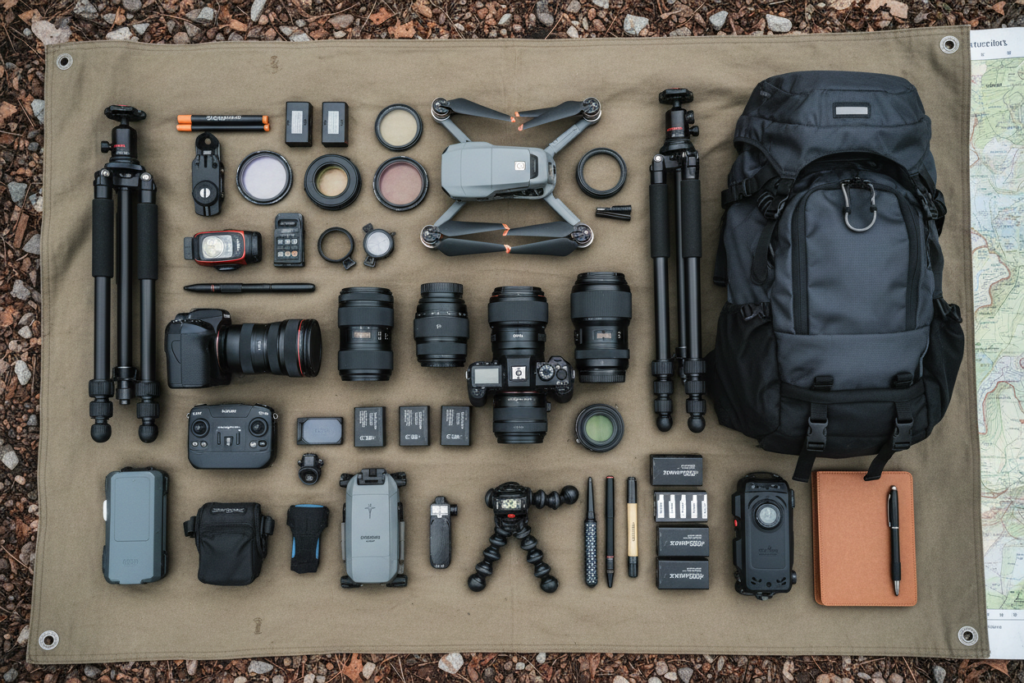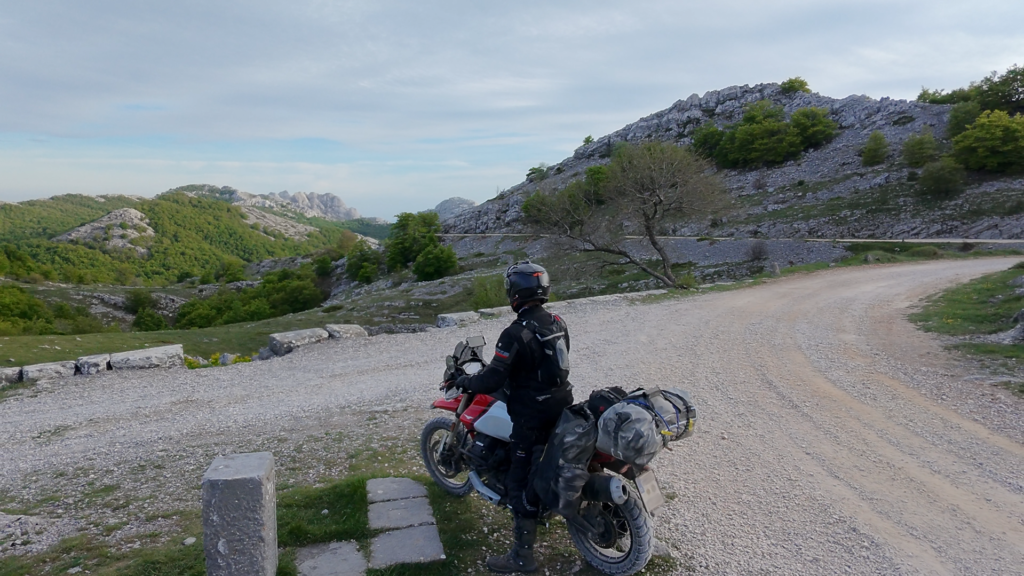
Here’s the fundamental problem with motorcycle self-portrait photography when solo travelling: the best shots have a rider in them, and there’s nobody there to press the shutter. You can photograph the road, the landscape, the bike parked at a viewpoint — and all of those have their place — but the image that tells the complete story of a solo tour is the one with you in it, helmet on, bike loaded, road stretching behind you into the distance. Getting that shot when you’re travelling alone requires a different approach entirely.
Motorcycle self portrait photography is slower and more deliberate than shooting with a companion. Every image requires setup time — tripod out, camera positioned, framing checked, remote trigger in hand — and then several attempts before you get one worth keeping. On a good day that’s fifteen minutes per shot. On a bad day, with difficult light and a location that doesn’t cooperate, it’s longer. But the results justify the effort. A well-composed self-portrait on a solo motorcycle tour tells a story that no landscape shot and no action camera clip can replicate. This guide covers the gear, the technique, and the workflow that makes it achievable without turning every photography stop into an hour-long production.
The Core Challenge — Why Solo Motorcycle Photography Is Different
Riding with a companion means photography happens spontaneously. One person rides ahead, the other stops and shoots. Positions swap. The whole process takes thirty seconds and produces a natural, unposed result. Solo touring produces none of that. Every shot is premeditated. Nothing happens by accident.
The mindset shift this requires is worth acknowledging early: solo motorcycle self portrait photography is not documentation, it’s composition. You’re not capturing what happened — you’re constructing an image that represents what the tour felt like. That’s a different and in many ways more satisfying creative process, but it requires treating photography stops as planned events rather than spontaneous moments.
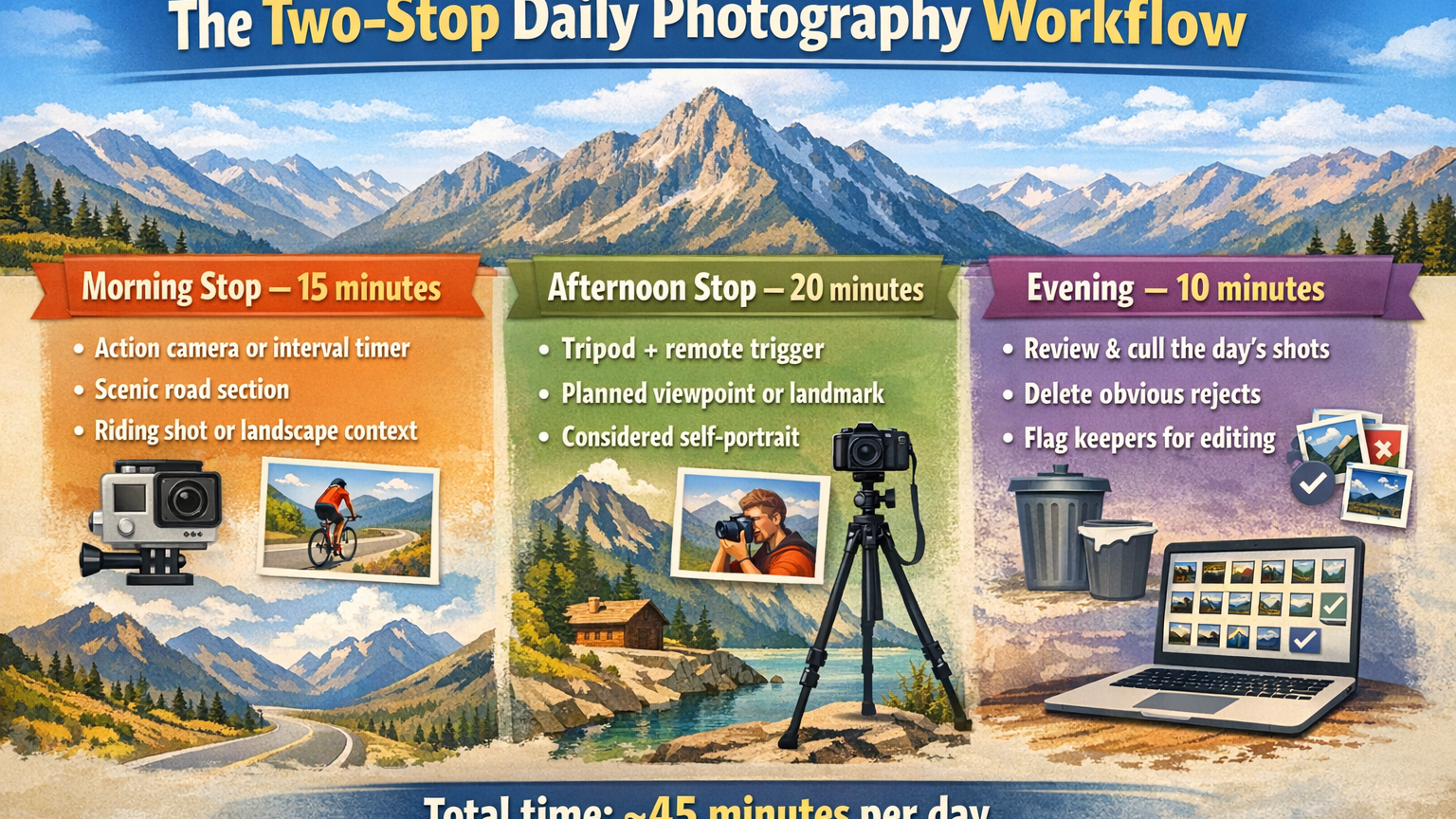
The practical implication is time. Building two or three deliberate photography stops into a riding day — each taking fifteen to twenty minutes — adds forty-five minutes to an hour to your schedule. Plan for it rather than treating it as an interruption, and the process becomes part of the rhythm of the day rather than a frustration.
Essential Gear for Motorcycle Self-Portrait Photography
Tripod Options for Motorcycle Tourers
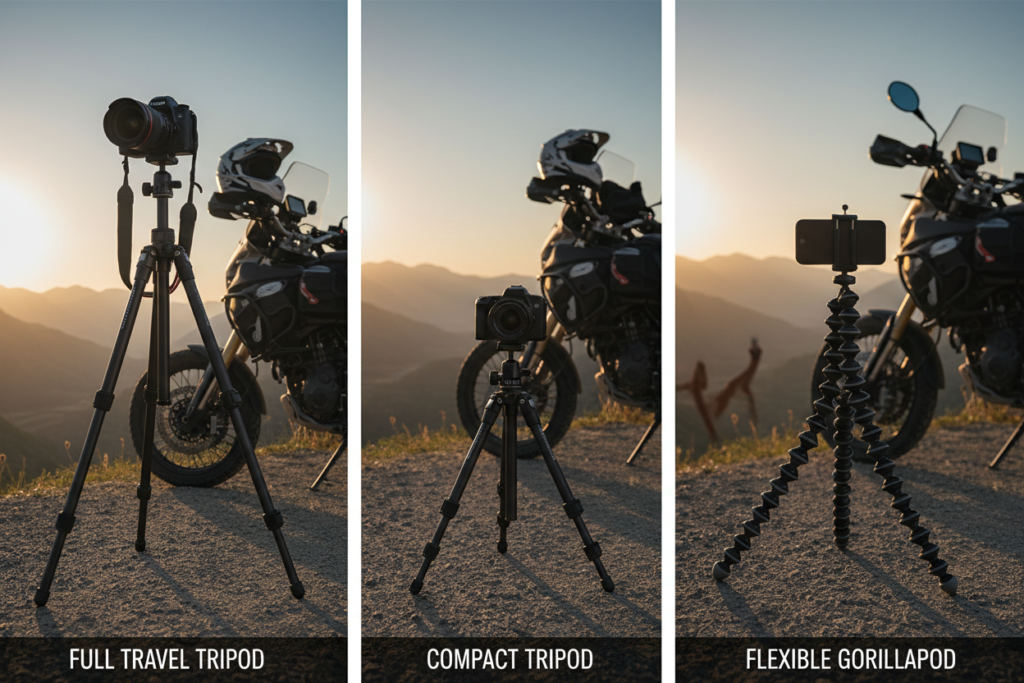
The tripod is the foundation of motorcycle self portrait photography and the piece of gear most riders underinvest in. Three options cover most touring situations:
A full-size travel tripod — carbon fibre if budget allows — provides maximum stability and height flexibility. It’s the right choice if you’re carrying a mirrorless system and want the best possible image quality. The trade-off is weight and pack size: a full travel tripod adds 1–1.5 kg and takes up significant pannier space.
A compact travel tripod in the 600–900 g range is the most practical choice for most motorcycle tourers. It handles mirrorless cameras comfortably, packs into a medium-sized stuff sack, and provides enough height and stability for the majority of touring shots. Expect to pay 60–120 € for a quality compact travel tripod that won’t fail on uneven ground.
A flexible gorilla pod is the lightweight addition worth carrying regardless of which main tripod you use. It wraps around fence posts, barriers, and tree branches, attaches to the bike itself, and fits situations where a standard tripod can’t be placed stably. At 200–300 g it adds almost nothing to your load and solves problems that a standard tripod can’t.
Remote Triggers and Smartphone Control
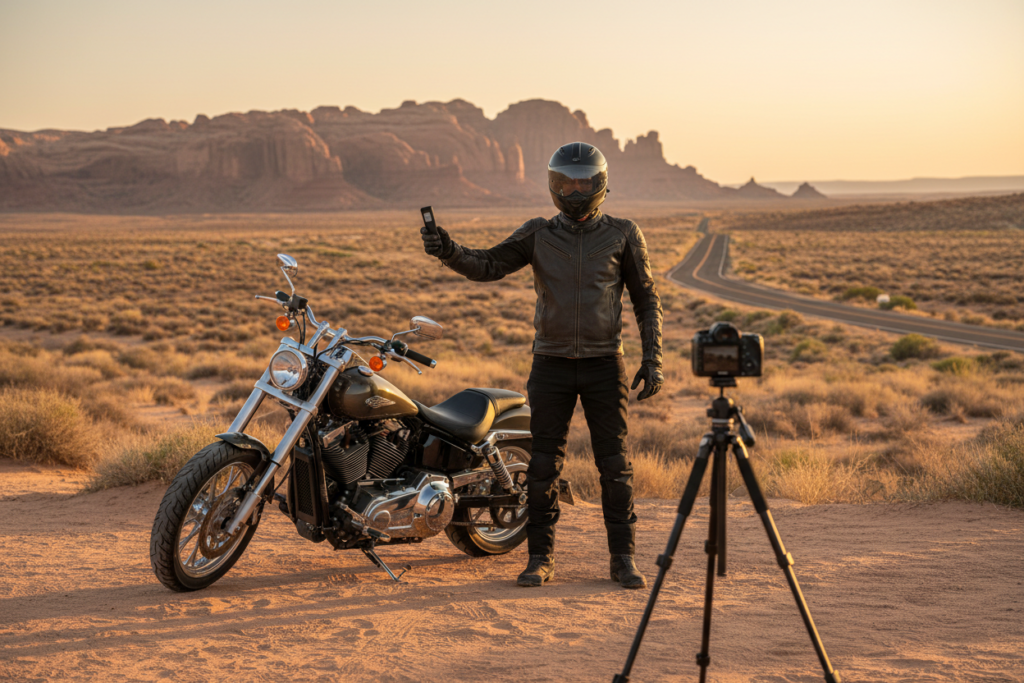
A Bluetooth remote shutter release is the single most important accessory for motorcycle self portrait photography and costs almost nothing — 8–15 € for a reliable unit that connects to both cameras and smartphones. It allows you to trigger the shutter while standing in frame rather than sprinting back from the camera after setting a self-timer.
Most major camera manufacturers — Canon, Sony, Fuji, Nikon — have smartphone apps that provide full remote control including live view, so you can check your framing from where you’re standing before triggering. This removes the guesswork from positioning and dramatically increases the hit rate per setup. If you use a smartwatch, most Apple Watch and Wear OS devices can trigger your smartphone camera remotely — genuinely useful and easy to conceal in a riding glove.
Interval timers are built into most mirrorless cameras and provide an alternative to remote triggers: set the camera to shoot every eight to ten seconds for a minute, walk into frame, and you’ll have six to eight frames to choose from without touching the remote. Useful for action shots where triggering while moving isn’t practical.
Tripod Technique — Getting the Shot Without a Photographer
Scouting and Setting Up
Read the location before unpacking the tripod. Identify the light direction — where is the sun, and is it illuminating your face or creating a silhouette? Identify the background — is the road, landscape, or landmark you want in the shot actually visible from where the camera needs to be? Identify the foreground — is there anything between the camera and your position that adds depth or context?
Stable ground for tripod feet is more important than it sounds. Gravel slopes, soft verges, and uneven rock surfaces all create instability that ruins sharp images. Find solid flat ground or bring a small sandbag to weight the tripod centre column. In wind — common on mountain passes and coastal roads — extend the legs fully and keep the centre column as low as possible.
Framing Without Being in Frame
The biggest challenge in motorcycle self portrait photography setup is knowing where to stand before you’re standing there. Place your helmet, a jacket, or a stick at the exact point where you’ll position yourself in frame, then walk back to the camera and check the framing. Adjust the tripod position and angle until the marker is where you want to be in the final image. Only then walk back, remove the marker, and take the shot.
Pre-focusing on the marker position before you move solves the autofocus problem. Switch to manual focus after locking onto the marker, or use focus lock if your camera supports it. Autofocus hunting on a scene with no subject in frame is one of the most consistent causes of soft self-portrait images.
Getting Multiple Shots Efficiently
Set an interval timer at eight to ten seconds and let the camera run for sixty to ninety seconds. That gives you eight to twelve frames per setup with different micro-variations in your position and expression — far more efficient than repeated single shots. Review what you have before moving the tripod. If nothing works, adjust one variable — your position, the camera angle, or your pose — and run another sequence rather than starting from scratch.
Plan three to five attempts per location before moving on. If nothing is working after five attempts, the location or the light isn’t right. Move on rather than burning thirty minutes on a shot that won’t come together.
Composition Principles for Motorcycle Self-Portraits
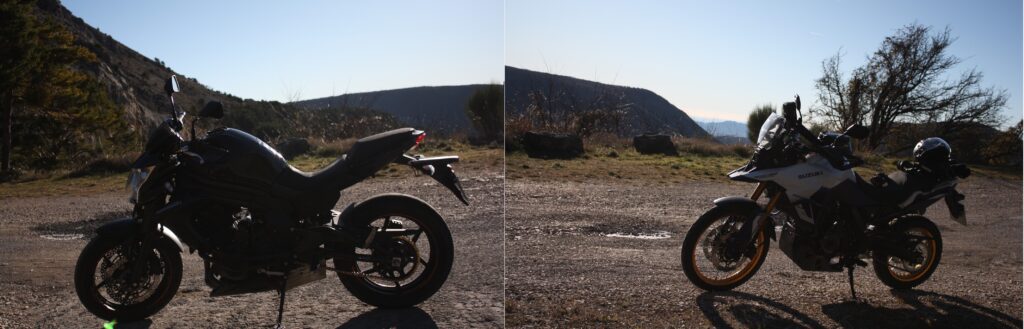
The rule of thirds applies as much to solo motorcycle self portrait photography as to any other genre: place yourself and the bike on a third rather than centred, and leave space in the direction you’re facing or the road is travelling. A rider positioned centre-frame with equal space on both sides produces a static, flat image. A rider on the left third looking right into open space produces movement and tension.
Leading lines are your most powerful compositional tool on a motorcycle tour. Roads, walls, fence lines, and river banks that draw the eye from the foreground toward the subject and background create depth that a flat composition can’t achieve. Position yourself where a leading line meets your third of the frame and you’ve done most of the compositional work already.
Scale matters in motorcycle travel photography more than in most other genres. A rider who fills the frame tells you nothing about where they are. A rider who occupies one third of the frame with a mountain range, a coastline, or a canyon stretching behind them tells you everything. Resist the instinct to fill the frame with yourself — the landscape is as much the subject as you are.
Silhouette setups are the most forgiving for solo photography because precise focus on the subject is less critical. Position yourself between the camera and a bright sky or sunset, expose for the background, and the result is a dramatic image that requires minimal setup time. Golden hour backlight produces a rim lighting effect — light catching the edge of your helmet and jacket outline — that works brilliantly even when the front of your figure is in shadow.
I’ll be straight with you: motorcycle self portrait photography is something I’m still actively figuring out myself. This guide is the result of trial and error across multiple tours rather than a mastered skill — some days the setup works and the shot is everything I hoped for, other days I pack the tripod away after three failed attempts and just ride. What I’ve found is that the technical side comes together relatively quickly once you commit to the workflow. The harder part is developing the compositional instinct for which locations are worth stopping for and which aren’t — and that, as far as I can tell, only comes from stopping a lot and getting it wrong often enough to start getting it right. If you’re at the beginning of that process, you’re in good company.
Lighting for Solo Motorcycle Photography
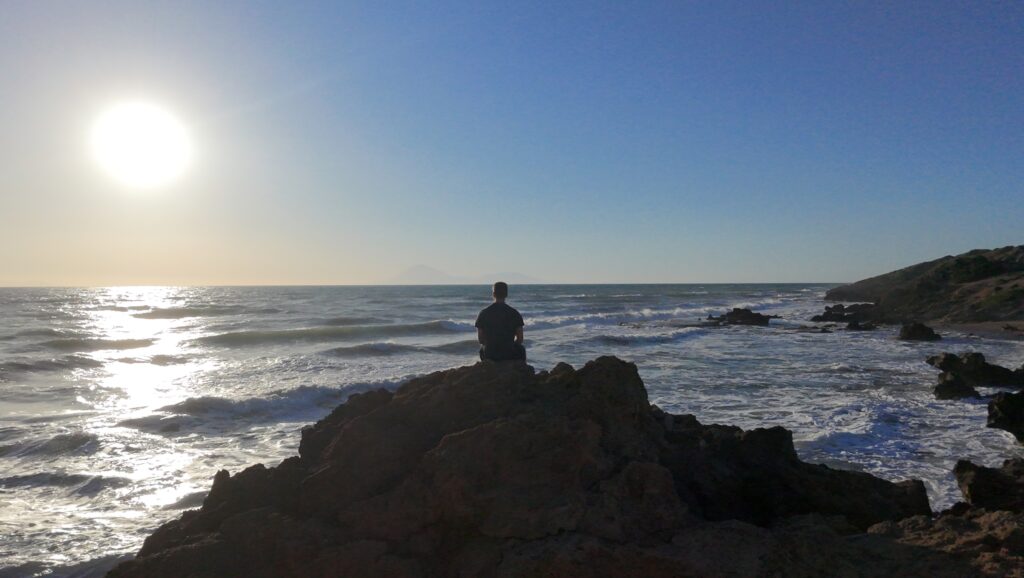
Golden hour — the hour after sunrise and the hour before sunset — produces light that makes average compositions look good and good compositions look exceptional. The low angle creates long shadows, warm colour temperature, and the rim lighting effect on helmet and gear that no other time of day replicates. Planning one riding stop per day to coincide with golden hour is the single highest-impact change most motorcycle photographers can make.
Overcast light is significantly underrated for motorcycle self portrait photography. Clouds act as a giant softbox, eliminating harsh shadows on faces and under helmet brims that make midday shots unflattering. Colours are more saturated, details in both highlights and shadows are preserved, and the results require less editing. If the sky is overcast and the rain holds off, shoot.
Midday light between 10am and 3pm is the enemy. Overhead sun creates harsh shadows under helmet brims that obscure faces, blows out bright surfaces, and produces a flatness that no amount of editing fully recovers. When you’re stuck shooting in midday light, position yourself in open shade — the shadow side of a cliff, a building, or a treeline — for softer results.
Action Shots Without a Photographer
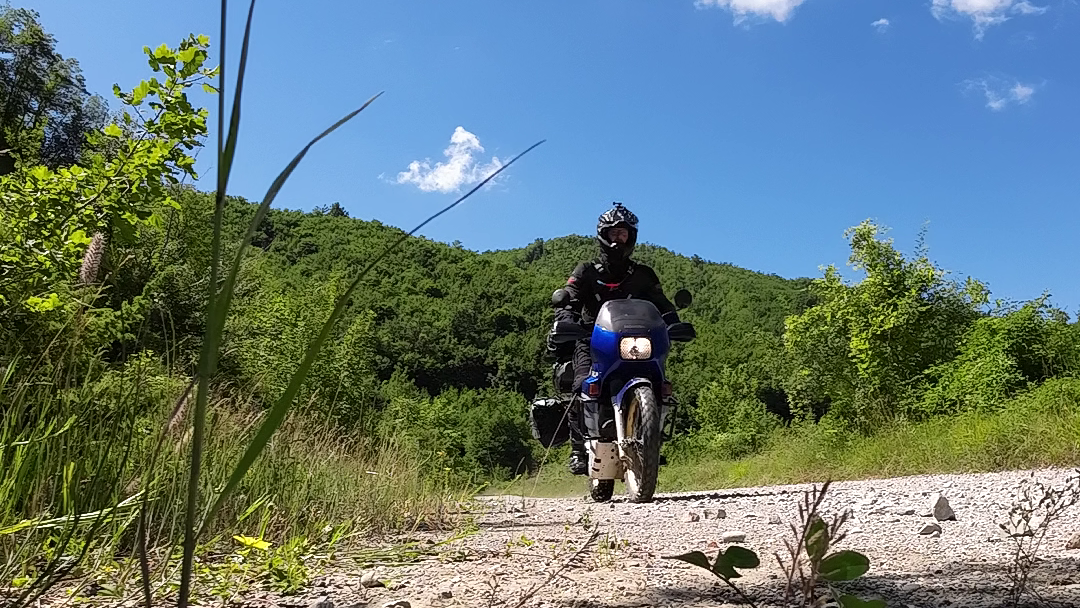
The passing shot is the closest a solo rider can get to a classic motorcycle action photograph. Set the camera on a tripod at road level or slightly elevated, aimed at a section of road fifty to one hundred metres ahead. Set an interval timer at two-second intervals. Ride past the camera position at normal touring speed. Review the sequence and identify the frame where you’re in the optimal position. Repeat two or three times from slightly different camera angles.
Road level positioning — tripod legs fully collapsed, camera twenty to thirty centimeters off the tarmac — produces a dramatic low perspective that exaggerates speed and makes even moderate pace look dynamic. It’s one of the most effective techniques in motorcycle self portrait photography and one that almost no casual motorcycle photographer uses.
Building a Self-Portrait Workflow Into Your Riding Day
The two-stop approach works well for most touring days: one quick action camera or interval timer setup at a scenic road section in the morning, one considered tripod self-portrait at a planned viewpoint or landmark later in the day. Together they take thirty to forty minutes and produce two usable images — enough to tell the day’s story without turning the tour into a photography expedition.
Review and cull images at the end of each riding day rather than accumulating thousands of frames across a two-week tour. Delete the obvious rejects immediately, flag the keepers, and move on. Storage management on the road is easier when it’s done daily rather than confronted at the end of the trip with ten thousand unsorted images.
When to skip the shot and keep riding is a judgement call worth making consciously. If energy is low, light is poor, and the location doesn’t inspire you, ride on. Forcing motorcycle self portrait photography when the conditions aren’t right produces images you won’t use and consumes time that would be better spent riding. The best shots come from locations that stop you instinctively — trust that instinct.
Final Thoughts
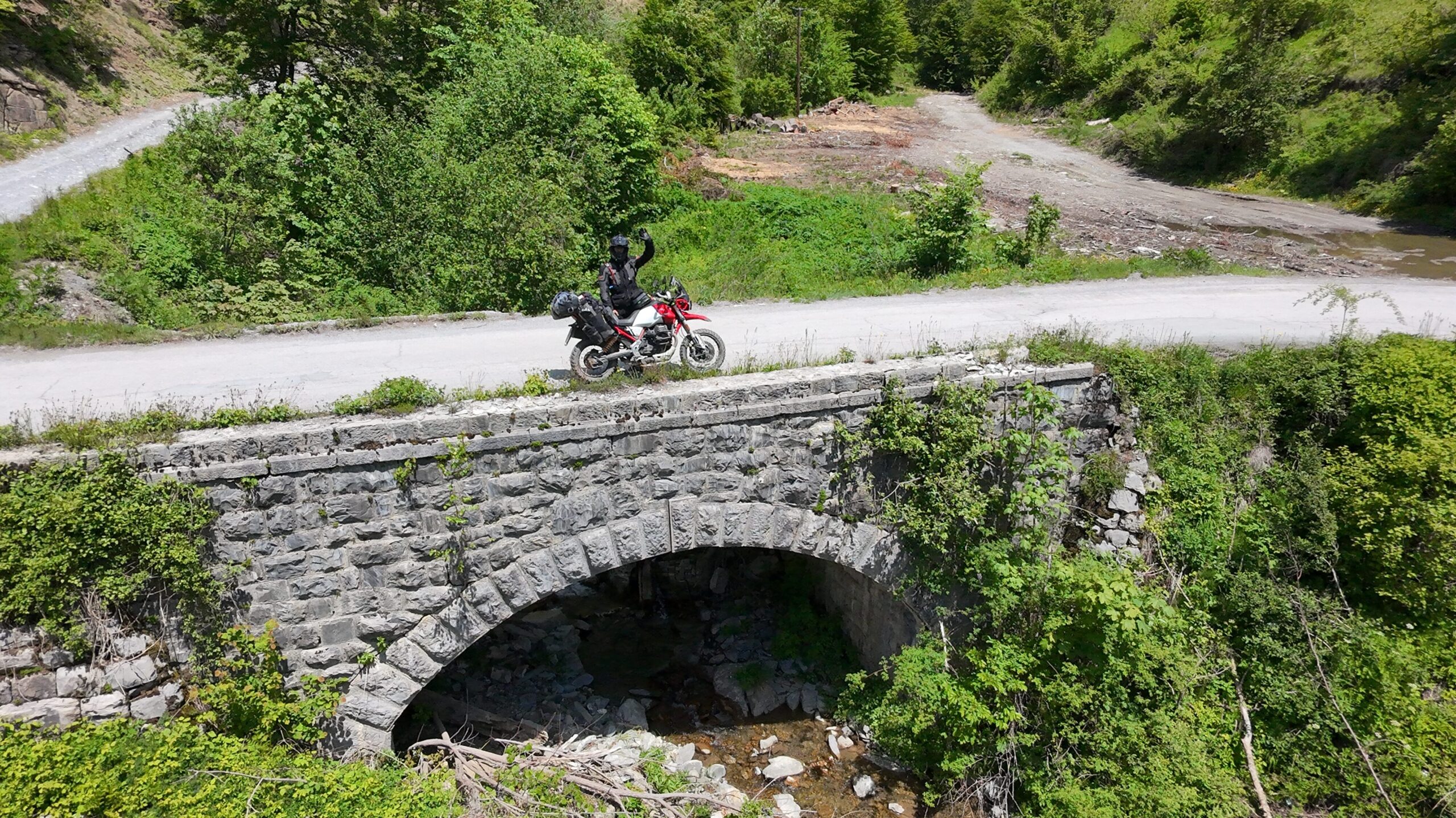
Solo motorcycle self portrait photography requires more patience and planning than any other aspect of travel photography. It also produces images that companion-assisted shooting rarely matches — because every frame was deliberate, every composition was considered, and every shot represents a moment you created entirely alone on a road somewhere that mattered to you.
Start simple: one compact travel tripod, one Bluetooth remote trigger, one considered shot per day. Build from there as the workflow becomes natural. The technical side is learnable in an afternoon. The compositional eye develops over thousands of kilometres and hundreds of setups.
What solo photography techniques have you found that work on the road? Share them in the comments — there’s always a solo rider planning their first long tour who’ll benefit from knowing what actually works in practice.