Slovakia is beautiful. The people are some of the most welcoming I’ve met on any trip. And if you’re planning a motorcycle holiday built around Slovakia specifically, I’d tell you to reconsider.
That’s not the verdict I expected to write when I planned this trip. But five days and roughly 1,578 kilometres later — through the High Tatras, the Slovak Paradise, down to the Low Tatras, and on to Bratislava — the pattern held: strict no-offroad enforcement and roads built to get you from one point to the next, not to give you a reason to enjoy the ride itself, make for a country that’s lovely to be in and only occasionally exciting to actually ride through. This is the honest version of that trip: what’s worth riding, what to skip, and why Slovakia works best as a stop on a longer route rather than a destination in its own right.
Slovakia — A Stop on the Way, Not the Reason to Go
The geography is varied — mountains in the north, wide river lowlands toward Bratislava, a scattering of castles and UNESCO villages between. The history is real too, though not every advertised sight lives up to it, and this guide won’t pretend otherwise.
What’s harder to get past is the riding itself. Slovakia enforces its no-offroad rules seriously, and that same instinct seems to shape the paved network too — roads here feel engineered to move traffic through the landscape without damaging it, not to reward a rider for taking the long way round. There are real exceptions, and this guide points to them directly. But taken as a whole, Slovakia isn’t a country that gives a motorcycle a reason to detour.
What it does have is position. Sitting between Austria and the Czech Republic on one side and the Balkans on the other, Slovakia works well as a corridor country — somewhere to ride through on the way to somewhere else, at a noticeably lower cost than Germany or Austria. Ride it because you’re passing through. Don’t build a two-week trip around it expecting Alpine-grade roads, because you won’t find them.
Best Time to Ride Slovakia by Motorcycle
Late spring through early autumn is the realistic window — mountain roads can still carry ice at altitude into April, and winter tourism traffic around the High Tatras resorts picks up from December.
I rode through in early May, deliberately overnighting in Liptovský Mikuláš so I could be on Route 537 first thing the next morning. It paid off in one very specific way: I had the road almost entirely to myself. What I hadn’t accounted for was the other side of shoulder season — several guesthouses that showed as bookable online simply weren’t staffed yet. It cost me a wet half hour a couple of days later, and it’s worth planning around.
Slovakia’s Best Motorcycle Routes
Six stretches of road, one region left unridden and flagged as such. Here’s what each one actually gave me.
The High Tatras and Route 537
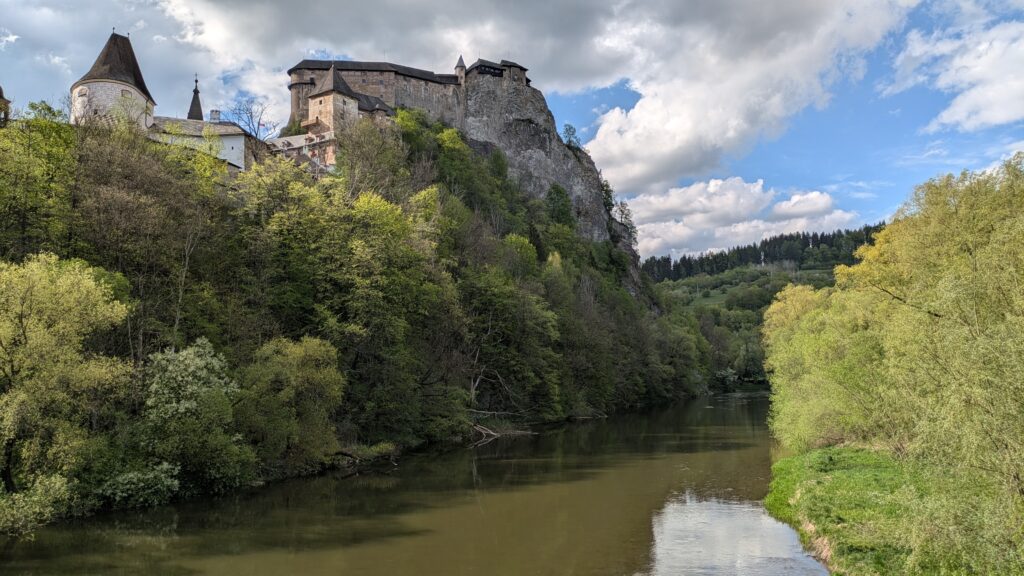
Orava Castle marks the start of this stretch — dramatically perched above the Orava river, and recognisable if you’ve ever seen Nosferatu, since this is where it was filmed. The road 584 is worth the detour on its own: demanding curves winding down into the valley with lake views most of the way. It’s a good introduction to the region before Route 537 itself.
Route 537 is where I have to be direct with you. It’s a nice road, with good scenery. It is not an extraordinary one. If you’re used to Alpine switchbacks, Route 537 will feel like a pleasant afternoon, not a highlight of the trip.
Riding it in early May, before the season properly started, I had almost no traffic at all — which helped, because it meant I could actually enjoy what the road offered without also fighting tour buses for space. Even with that in my favour, it didn’t match what I’d built up in my head beforehand.
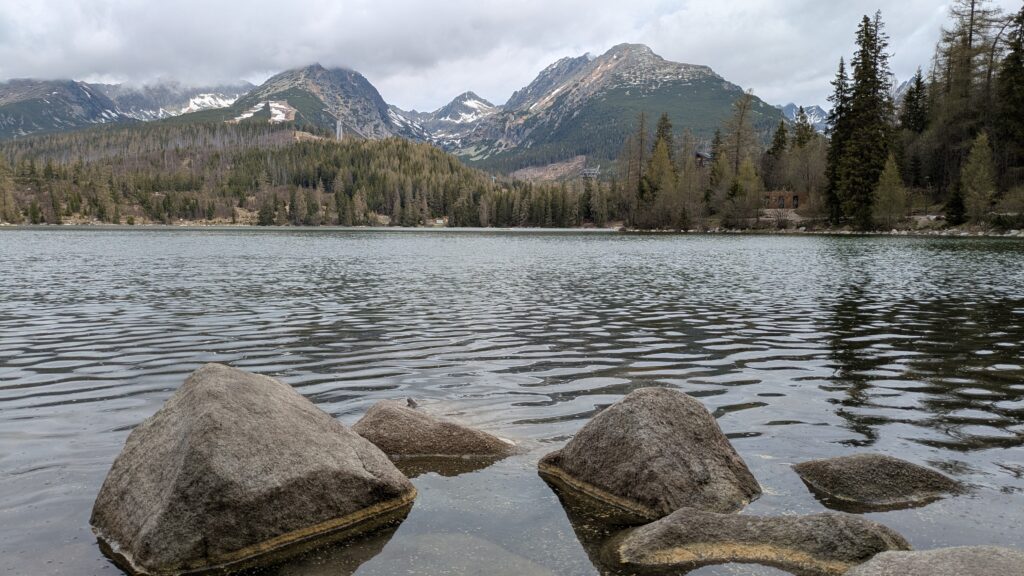
Skip Štrbské Pleso if you’re on two wheels. It’s a lovely alpine lake, but it’s built and run for hikers and bus tour groups, not for motorcycles — parking sits well back from the water itself, so expect at least a ten-minute walk in full riding gear just to reach the lake.
Slovak Paradise National Park
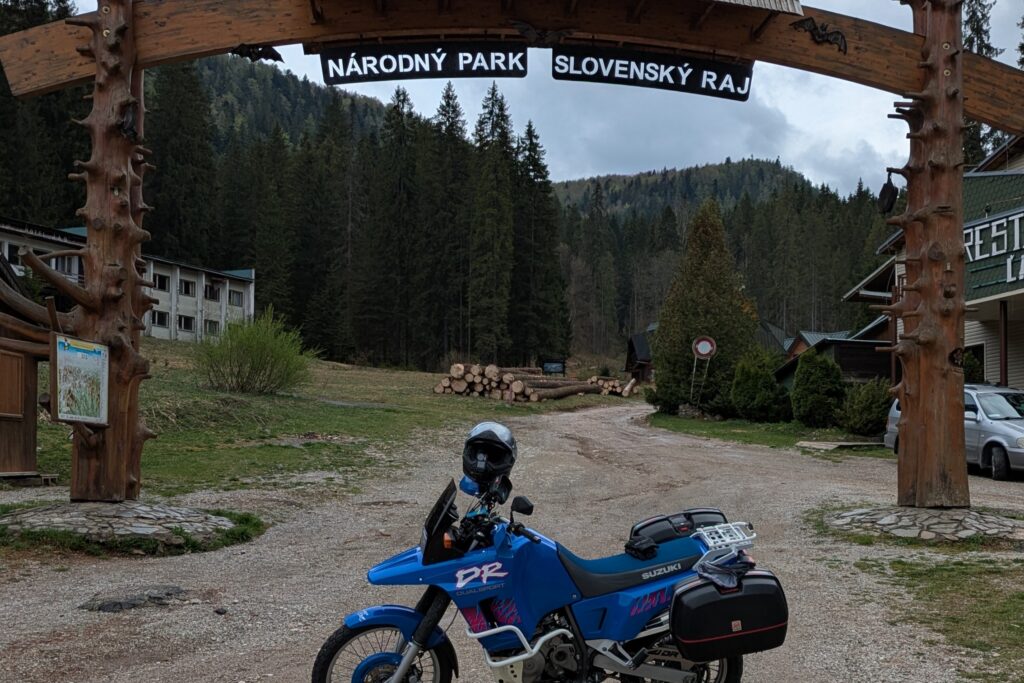
This is the actual recommendation of the day. The alternative route through the park — roads 533 and 535 — delivers exactly what Route 537 doesn’t: proper curves through dense forest, the kind of road that rewards riding it rather than just crossing it. The asphalt is mostly good, though watch for patched, repaired sections mid-corner, and keep an eye out for tour buses on the narrower stretches.
The Spiš Region
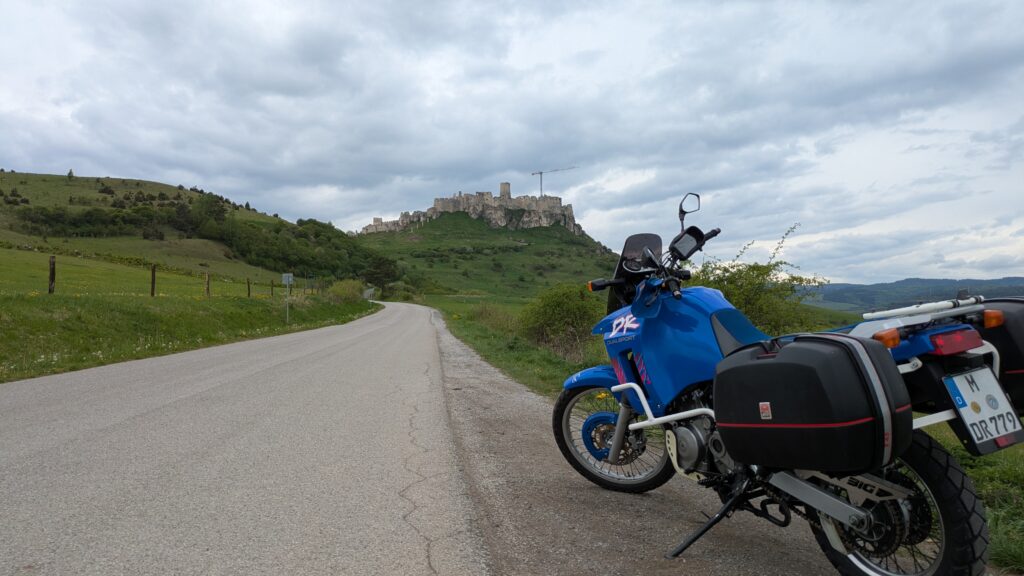
Spiš Castle is worth the stop — one of the largest castle complexes in Central Europe, and it looks the part from the road long before you reach the entrance. Entry runs 12 €, and it’s money well spent.
Levoča is more complicated. I rode through, saw the town gate, and kept moving — and I don’t think that did the place justice. If I went back, I wouldn’t try to see it from the saddle again. I’d stay overnight and actually walk it properly. A quick ride-through doesn’t give a medieval town like this a fair chance, and on this trip, that’s exactly what I gave it.
That decision — to keep the day moving rather than stop properly in Levoča — is part of what led to the next few hours going sideways.
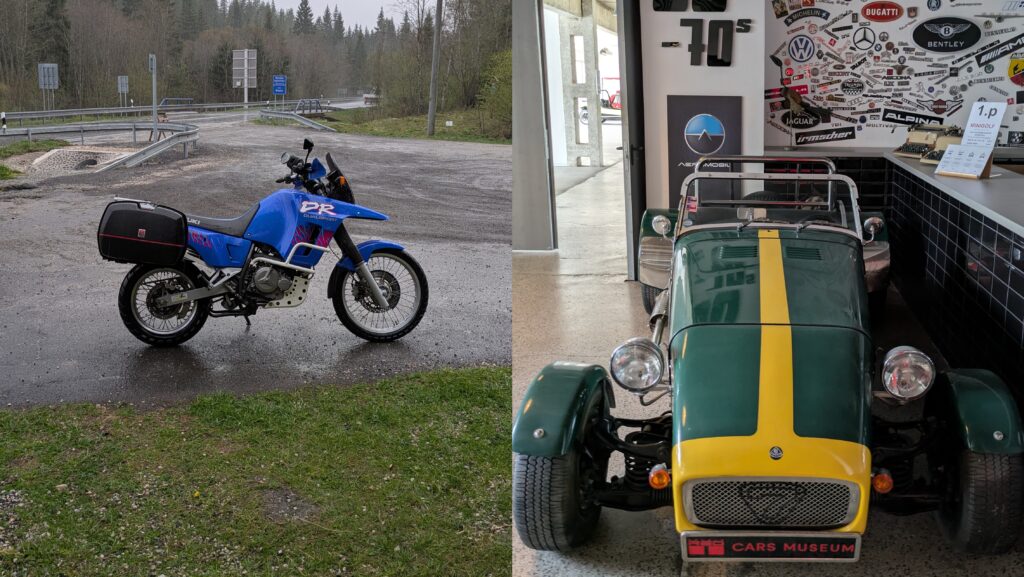
Somewhere in the Slovak Paradise, I found a small unmarked road that pulled me off my planned route and looped back toward Poprad instead. It looked worth the detour, so I took it — and paid for it heading south afterward on road 66, between Vernar and Pusté Pole, when the sky opened up properly. I’d scouted a small guesthouse in Helpa over lunch and had it pencilled in as the end of the day, only about thirty minutes out when the rain started. I got the rain gear on and pushed through. By the time I arrived, it was already dark, nobody answered the door, and the phone number posted outside didn’t pick up either — despite the place showing as available on the booking site that morning. Early May meant most other accommodation nearby was still closed for the season, so there wasn’t a simple backup. I ended up riding on to Brezno, soaked, where I found a hotel that turned out to double as a small vintage car museum — a strange, oddly perfect way to end a day that had gone completely off script.
The Low Tatras, Banská Bystrica, and the Detour That Actually Mattered
Road 524, between Banská Štiavnica and Bohunice, is the real find of this stretch — lightly trafficked, technically demanding in places, and one of the more satisfying rides of the whole trip. Of everything in this section, it’s the one I’d go out of my way to ride again.
Donovaly Pass was the planned high point of this day, and it simply didn’t deliver. For a pass, it’s unspectacular — ride it if it happens to be on your way, but don’t plan a route specifically to include it, because there isn’t much there to justify the detour.
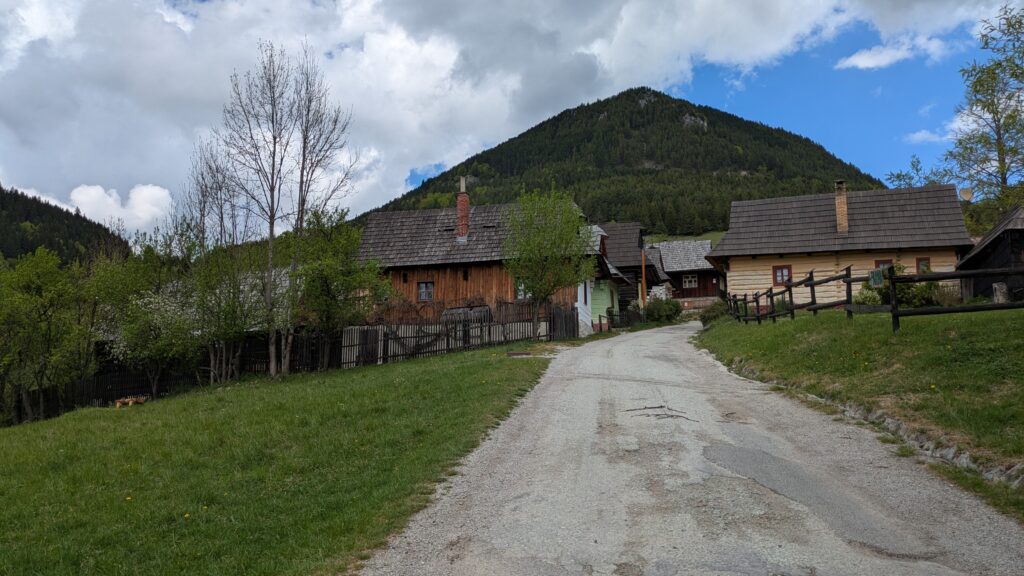
Vlkolinec, the UNESCO-listed wooden village near Ružomberok, is a similar story. It’s a well-preserved example of traditional Slovak architecture, and entry is 8 €. But set against its reputation, it underwhelmed — smaller and quicker to see than the reputation suggests, and not somewhere I’d plan a whole afternoon around.
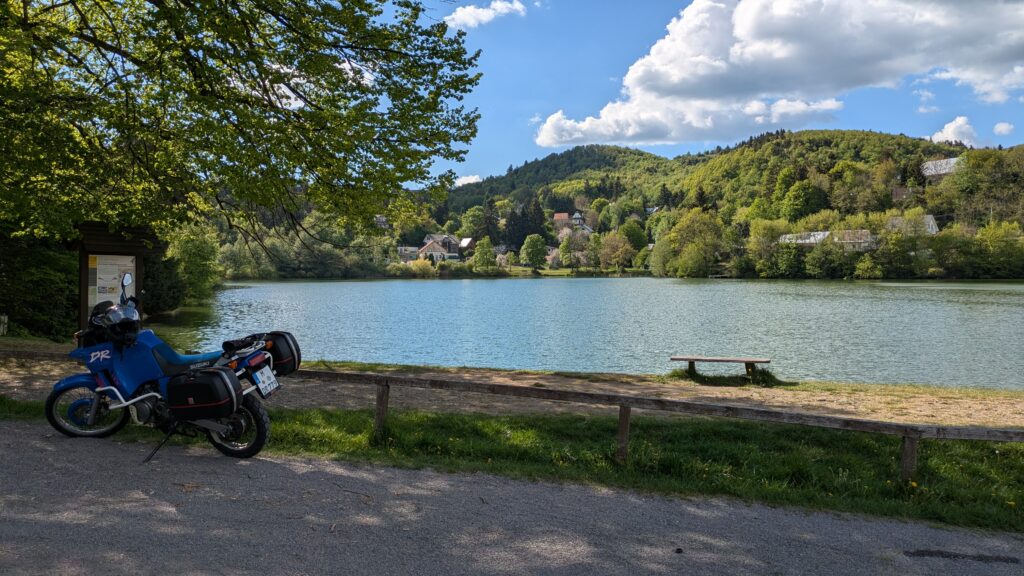
The two disappointments cost real time — time I didn’t get back until I stumbled, entirely by accident, onto the actual highlight of the day: the town of Banská Štiavnica and the lake at Tajch Veľká Vindšachta just outside it. Neither was on my plan. Both were better than anything the “must-see” list had promised. If there’s one lesson from this whole trip, it’s this one: the advertised attractions in Slovakia are frequently disappointing, and the best finds are the ones you stumble into after you’ve stopped trying to tick off a list.
The Slovak Karst — Southern Border Roads
The Slovak Karst, along the Hungarian border, is home to the Domica and Gombasecká cave systems and a distinctly different landscape from the mountain regions further north — limestone plateaus rather than forested peaks. I didn’t ride this region on this trip, so I can’t give you a first-hand verdict on the roads themselves. It’s included here because the research suggests it’s worth investigating, not because I’ve tested it.
Bratislava and the Danube Region
This was the best ending this trip could have had.
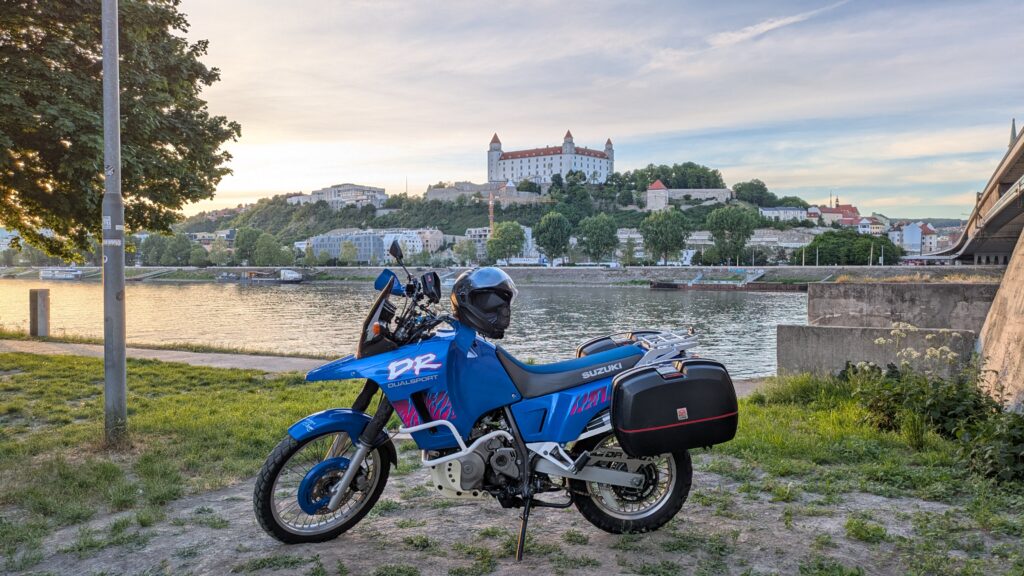
I stayed at Centrum Salvator, a converted monastery near the old town — comfortable, quiet, and comparatively cheap at 63.50 € including breakfast. I spent the evening strolling through Bratislava’s old town, and caught the sunset over the Danube with a clear view of the castle and the UFO Tower bridge together. It’s a good way to close out a trip through this part of Europe. I’d planned to also make it out to Devín Castle, dramatically set at the confluence of the Danube and Morava rivers on the Austrian border, but ran out of daylight — so I can’t give it a first-hand verdict, only pass it along as a well-documented, likely worthwhile side trip for anyone with an extra half-day in the city.
Budget and Daily Costs in Slovakia
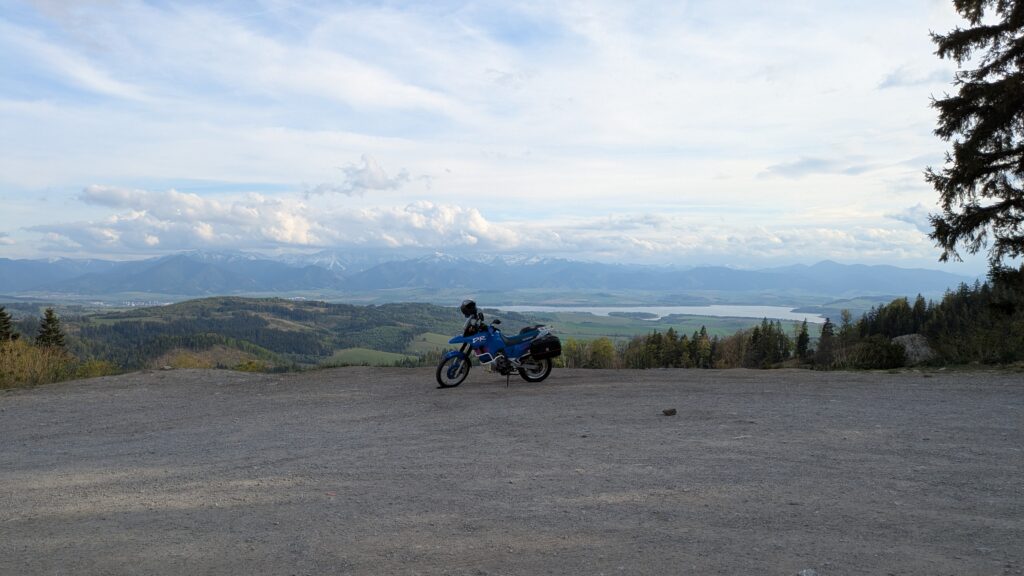
Two honest caveats before the numbers. First, I rode this trip on Ludmila, my 1994 Suzuki DR 800 S, whose older engine isn’t compatible with E10 fuel. In Slovakia, the only E5-equivalent option is Super — 98 octane or higher — which runs noticeably more expensive than regular unleaded. If your bike can run E10, expect to pay less than the figures below.
Second, this wasn’t a budget-conscious trip. I stayed in guesthouses and hotels throughout, ate normally, and made no effort to minimise cost. A rider camping and cooking their own meals could reasonably spend significantly less than what’s shown here.
| Day | Route | Accommodation | Total spent |
|---|---|---|---|
| Day 2 | Mikulov → Liptovský Mikuláš (via Orava Castle) | Penzión Atlas — 51.50 € | 108.62 € |
| Day 3 | Liptovský Mikuláš → Brezno (via Route 537, Slovak Paradise, Spiš, Levoča) | Hotel with car museum, Brezno — 48 € incl. breakfast | 102.00 € |
| Day 4 | Brezno → Bratislava (via Donovaly, Vlkolinec, Banská Štiavnica) | Centrum Salvator, Bratislava — 63.50 € incl. breakfast | 145.44 € |
That’s an average of roughly 118.70 € per day across the three Slovakia-based days — fuel, food, and comfortable (not budget) accommodation included. For context on planning a realistic trip budget beyond just Slovakia, the full breakdown of how to build a trip budget from scratch is worth reading before you go.
Border Crossings and Entry Requirements
Slovakia is a Schengen and EU member state, so crossing from Austria or the Czech Republic is a non-event — no passport checks, no border stop. A digital vignette is required for motorways and expressways, purchased online or at petrol stations near the border, and it’s worth having before you’re actually on motorway tarmac rather than trying to sort it at speed. Standard EU motor insurance (green card not required within the EU, but worth carrying anyway) and a valid driving licence are all you need beyond that.
Practical Riding Tips for Slovakia
Two lessons from this trip are worth carrying into your own.
If you’re riding an older or carburetted bike, plan your fuel stops with real care. Super Plus and other high-octane E5-equivalent fuel isn’t guaranteed at every rural station, particularly in the mountain regions — I ended up on an emergency splash of E10 near Polomka out of necessity, which an engine like Ludmila’s really shouldn’t be running on. Know your bike’s actual range, and don’t let the tank get low in areas without a confirmed next station.
The second lesson is the accommodation one from the Spiš section above: shoulder season means some guesthouses that appear bookable online simply aren’t staffed yet. If you’re travelling in April, May, or October, call ahead rather than trusting the booking site alone — or build in enough daylight buffer that a closed guesthouse doesn’t turn into a dark, wet scramble for a backup.
Combining Slovakia with Neighbouring Countries
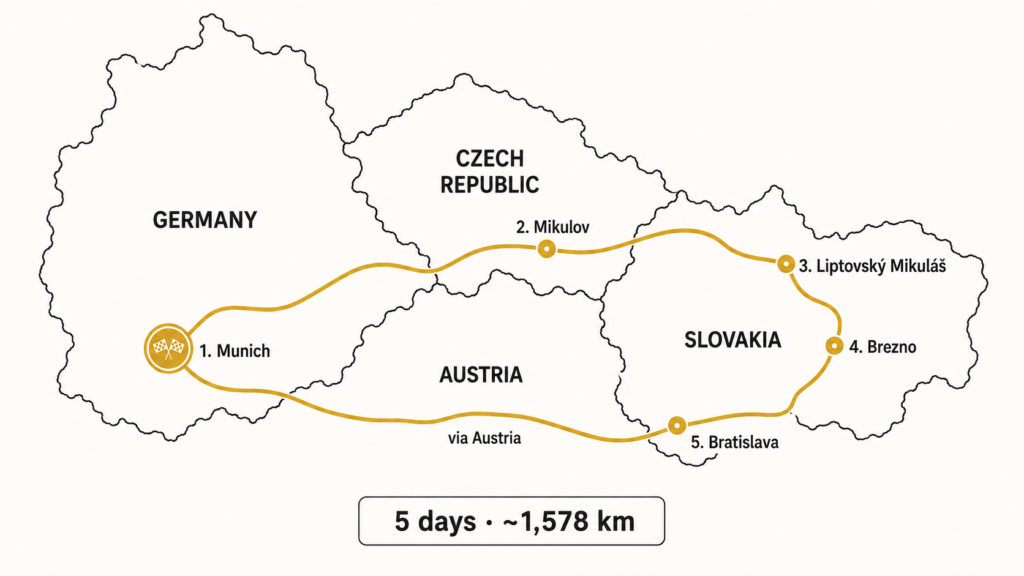
The approach through the Czech Republic, via Šumava, was enjoyable in its own right — road 39 through Horní Planá, with a small ferry crossing and the Lipno reservoir alongside the route, offers gentle, well-surfaced curves and real scenery without ever asking too much of the rider. It’s a good reminder that this whole trip works better read as a route than as a single destination.
The return through Austria did the same job on the other end. I passed close to Vienna, stopping briefly at the Kahlenberg viewpoint, then adjusted the route north to dodge a thunderstorm front building near the Gesäuse National Park — new stops at Gmunden and Mattighofen instead. None of it was in the original plan, and most of it was better for it.
Motorcycle Travel in Europe: Complete Guide — planning a multi-country route across borders
Conclusion
Slovakia is a beautiful, welcoming country. But it isn’t a destination worth building a dedicated motorcycle trip around on its own. Treat it as a two- to four-day stop on a longer Central European route — between Austria or the Czech Republic and the Balkans, say — and it earns its place completely. The real value, more often than not, is in what you find by accident once you stop chasing the list of advertised highlights.
By Fritz