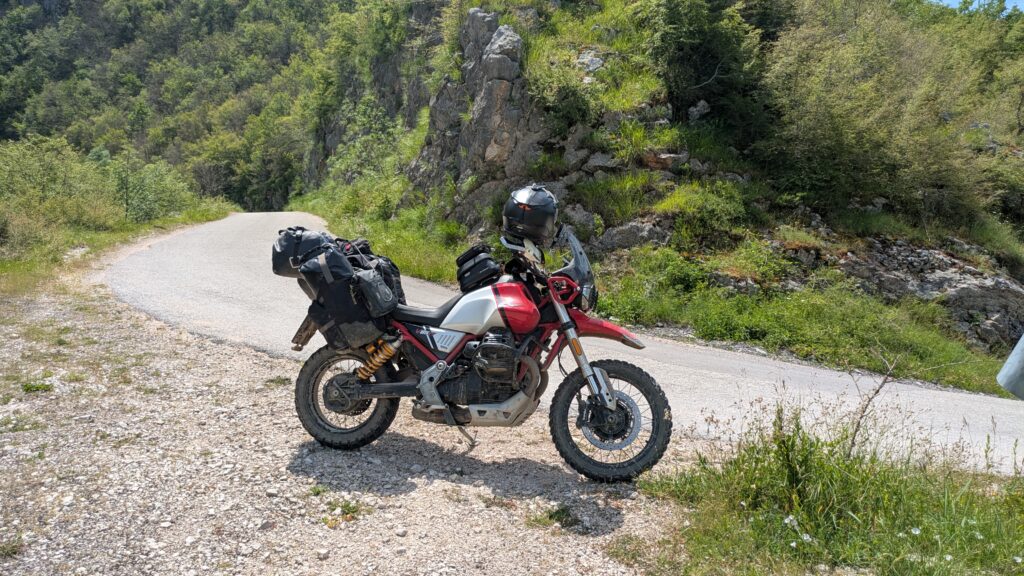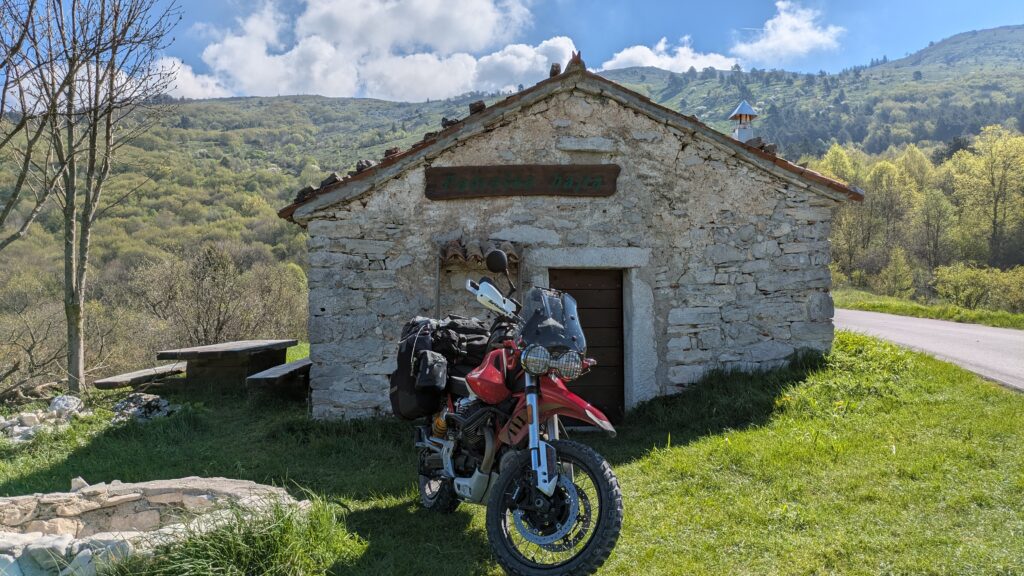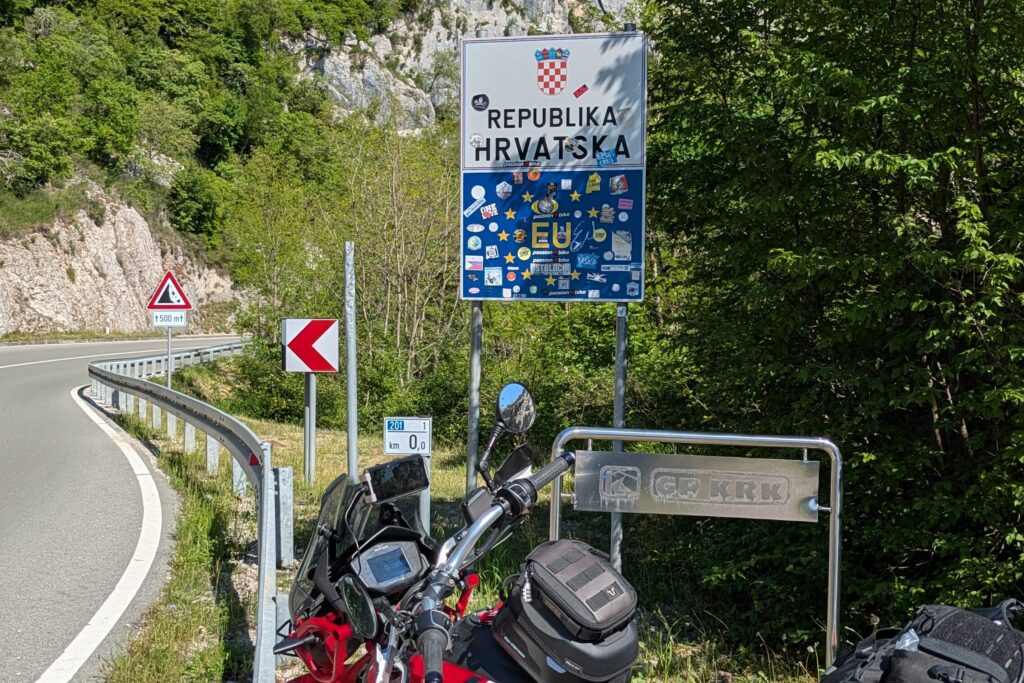
The German-Austrian border on the B307 south of Munich doesn’t announce itself dramatically. A sign changes. The road stays the same tarmac, the bike stays the same bike, and the first practical thought crossing into Austria is usually: where do I get fuel that isn’t E10? Not exactly the stuff of motorcycle travel folklore — but that’s precisely the point. Travelling Europe by motorcycle is more accessible, more manageable, and less complicated than most riders assume before their first international tour.
What that first Schengen crossing actually teaches you is that border crossing is not the hurdle it sounds like. The hurdle is the assumption that it is. Once that assumption goes, the rest of Europe opens up — forty-plus countries within riding distance of Central Europe, road infrastructure that ranges from excellent to extraordinary. Landscapes that shift from Alpine to Mediterranean to Balkan canyon to Scandinavian fjord within a week’s riding. Ancient cities, empty mountain passes, coastal roads above seas that are somehow always the right colour. And a planning process that is, once you understand the basics, considerably simpler than most guides suggest.
Living in Munich, Austria is the natural first border — and it barely registers as one. Schengen means no passport control, rarely any check at all, and the only genuine transition is the fuel situation. What crossing that border repeatedly has shown me is that international touring isn’t a category of riding separate from ordinary riding. It’s just ordinary riding with a different sign at the side of the road, until you push further and find the crossings that do require documents — and discover those are manageable too.
This guide covers everything that makes travelling Europe by motorcycle work: documents, insurance, border crossings, money, route planning, bike preparation, regulations, and accommodation. It links to every country guide and planning resource on this blog, so you can move from overview to specific detail on any destination or topic that applies to your particular tour.
Why International Motorcycle Travel in Europe Is More Accessible Than You Think
The Schengen Area changed the practical reality of European motorcycle touring more than anything else in the last thirty years. Twenty-nine countries — from Portugal in the west to Finland in the north, Estonia in the east to Greece in the south — with no passport controls between them. You ride from Germany into Austria, Slovenia, Italy, France, and back without stopping once for a border check. The administrative friction that defined international travel for earlier generations of riders has been largely eliminated within the Schengen zone.
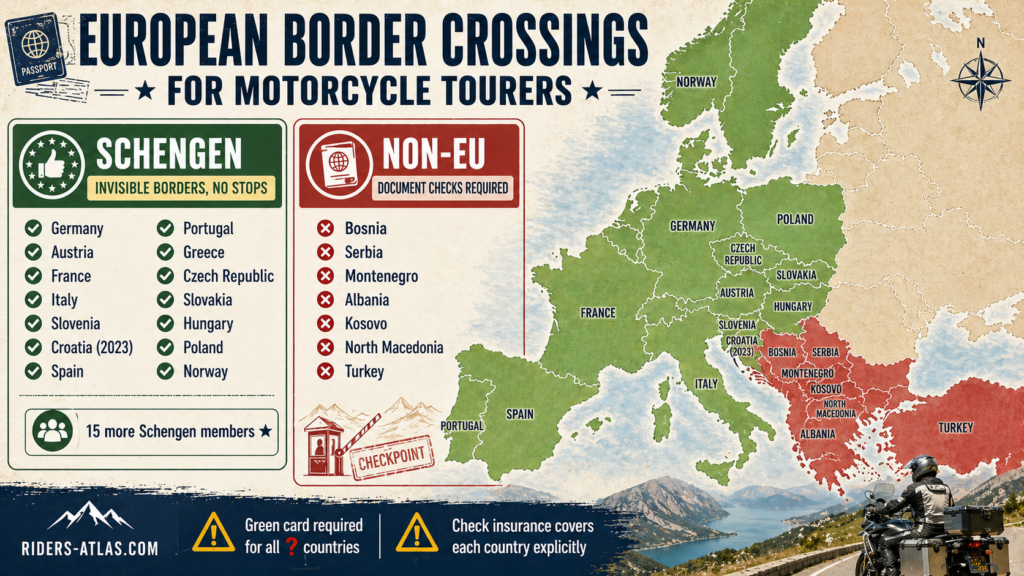
Recent Schengen expansions are worth noting for route planning: Croatia joined in January 2023, eliminating the brief Bosnia transit that previously interrupted the Dalmatian Coast route. Romania and Bulgaria completed full Schengen integration in 2024, significantly smoothing Eastern European routing.
Beyond Schengen, the step up in complexity is real but manageable. Non-EU countries require additional documentation, green card insurance, and occasional border queues. The process is predictable, the crossings are straightforward once you’ve done one, and the roads on the other side consistently reward the effort.
The distance reality is also worth stating clearly for riders who haven’t mapped it yet. From Munich, Slovenia is four hours on the highway, Croatia is six, Montenegro can be reached in two riding days. From Berlin, the Czech Republic is ninety minutes and Poland is two hours. Travelling Europe by motorcycle is not an expedition requiring weeks of preparation — it’s a decision followed by a weekend, a week, or a month, depending on ambition and available time.
Essential Documents for International Motorcycle Travel
Getting the documents right before departure is the difference between a smooth trip and a preventable problem. None of this is complicated — but all of it needs to be sorted at home, not at the crossing.
Riding Licence and IDP
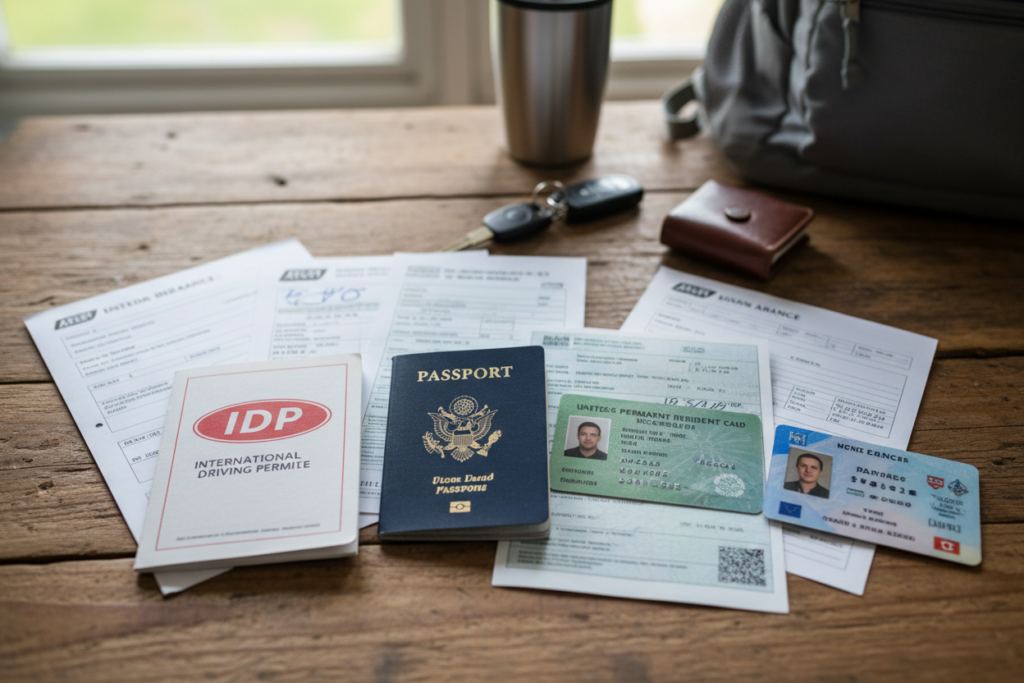
An EU driving licence is valid throughout the EU and EEA without additional documentation. For non-EU countries on a typical European motorcycle route — Albania, Turkey, some Balkan states — an International Driving Permit (IDP) may be required alongside your national licence. Two IDP conventions exist: the 1949 and 1968. Different countries recognise different conventions — check the specific requirement for each non-EU country on your route before departure. IDPs are issued by national motoring organisations (ADAC in Germany, AA and RAC in the UK) at 20–25 € and typically processed within a few days.
Vehicle Documents
The vehicle registration document — Fahrzeugschein in Germany, V5C in the UK — must be the original. Copies are not accepted at most non-EU border crossings. If the motorcycle is financed, carry a letter from the finance company confirming permission to take the vehicle abroad. If borrowing a bike, carry a letter from the owner. Keep vehicle documents in a waterproof wallet accessible without unpacking luggage — you’ll present them at every non-Schengen crossing.
Insurance and the Green Card
The green card confirms that your liability insurance extends to the country you’re entering. It’s not a separate policy — your existing insurer provides it, usually free or for a small admin fee. Request one before any tour that includes non-EU countries. Physical copies are required at most non-Schengen border crossings regardless of digital acceptance elsewhere.
Some countries require explicit verification with your insurer before departure — standard European policies frequently exclude specific destinations, and the gap at a border crossing is the wrong place to find out. Verify every non-EU country your route crosses with your insurer in writing, including countries you’re only passing through.
Money on the Road
The Euro zone covers the majority of Western and Southern Europe and an increasing share of Eastern Europe — Slovenia, Croatia, Montenegro, and Slovakia all use the Euro, which simplifies budgeting significantly for riders based in Euro zone countries.
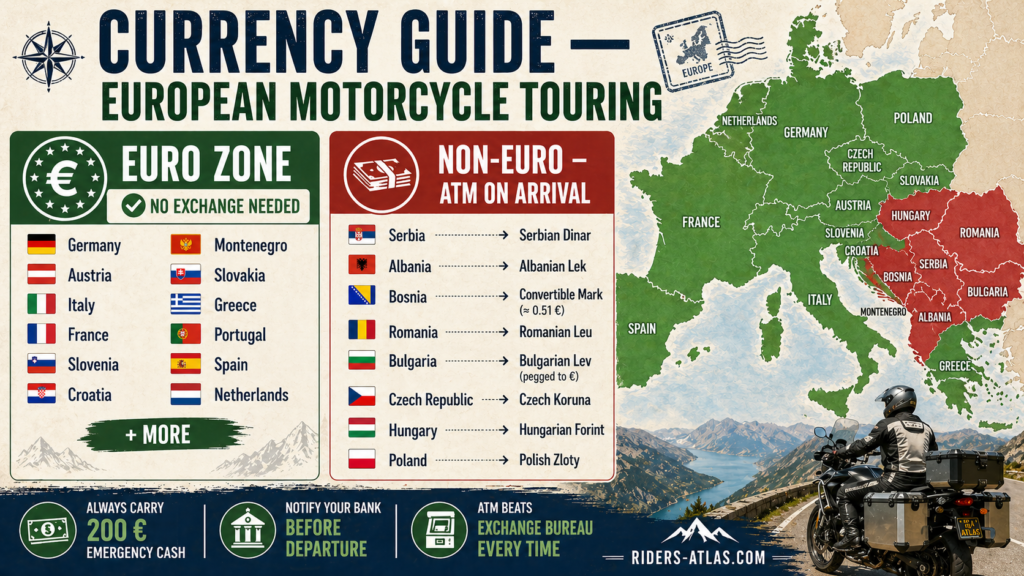
Non-Euro currencies on typical European motorcycle routes include: Serbian Dinar, Albanian Lek, Bosnian Convertible Mark (pegged to the Euro at approximately 1.96 BAM to 1 €), Romanian Leu, Bulgarian Lev (also pegged to the Euro), Czech Koruna, Hungarian Forint, and Polish Zloty. ATMs in the first major town after each border crossing dispense local currency at rates that consistently beat airport and border exchange bureaus.
Card payment acceptance varies by region across Europe. In cities and tourist areas it works reliably almost everywhere. In rural areas, and in smaller towns away from tourist infrastructure, cash becomes increasingly necessary — the further from services, the more true this becomes. Always carry Euro as emergency backup regardless of destination currency. A 200 € emergency reserve covers most roadside situations even in countries where Euro isn’t the official currency. Notify your bank before departure — card blocks triggered by unfamiliar transactions are entirely preventable and genuinely inconvenient at a remote fuel station.
Before the trip starts, the money question is simpler than it looks on the road: how much do you actually need? The answer depends on the countries, the duration, and how you ride — and it’s worth working out before you leave rather than estimating on the fly.
Research Every Country You Pass, Not Just the Destination
On a trip to Slovakia I crossed the Czech Republic and spent one night there — not the destination, just a transit country on the way. I hadn’t researched it because I wasn’t going there, not really. What I missed was that the Czech Republic doesn’t use the Euro but the Czech Koruna. I had no local currency at all. I was close enough to the Austrian border that shops accepted Euro as a workaround — fortunate rather than prepared. The lesson it left is straightforward: every country the route crosses gets researched individually, not just the headline destination.
Planning Your Route
The most consistent mistake in international motorcycle tour planning is overestimating daily mileage. An 800 km day is possible on motorways. It’s exhausting, produces no meaningful experience, and eliminates the spontaneity that makes international touring worthwhile. Comfortable touring — arriving at the overnight stop with energy to explore rather than collapse — runs at 200–300 km per day on mixed routes.
Buffer days are not optional on international tours. Build at least one unscheduled day per week into any itinerary. This day absorbs border crossing delays, mechanical issues, weather holds, and — most importantly — the discovery of a place worth staying longer than planned.
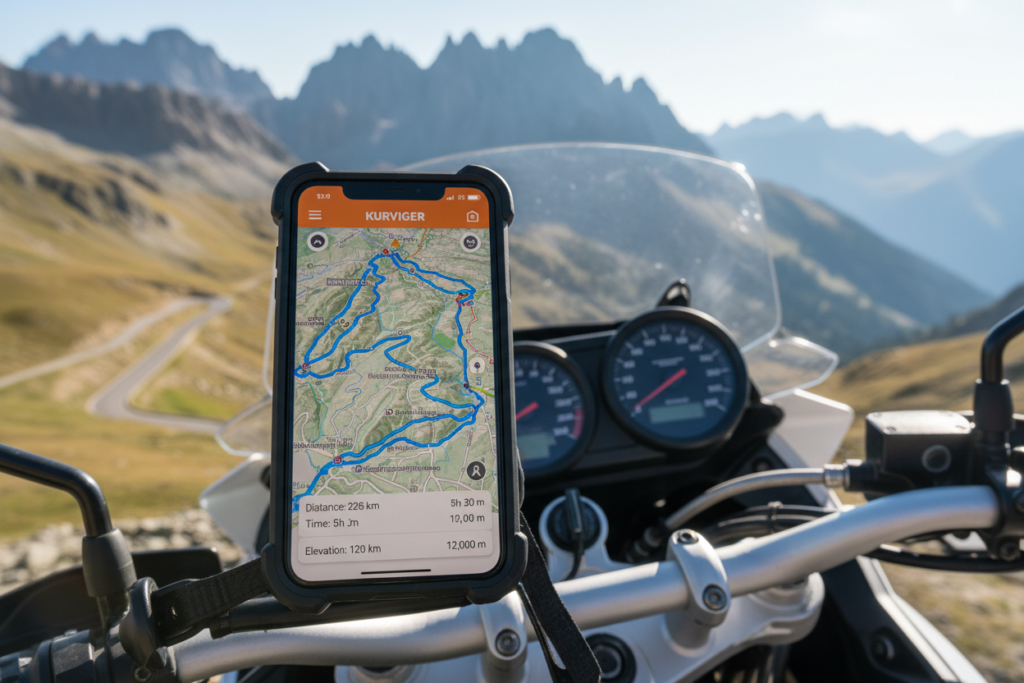
For route planning tools: Locus Map with the Pro version handles the full workflow — desktop planning, cloud sync to smartphone, GPX import for TET and ACT sections, and offline map download for countries with patchy data coverage. Kurviger is a useful motorcycle-specific alternative that routes via mountain passes and secondary roads rather than optimising for efficiency. Maps.me provides offline navigation that works without data — worth having downloaded for every country on the route regardless of which primary tool you use.
Choosing Your First International Route
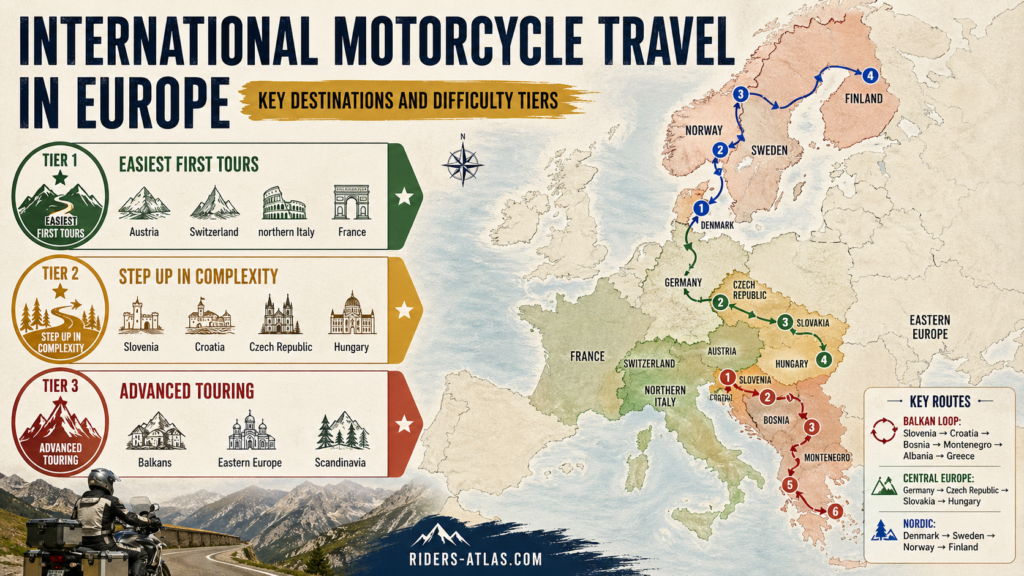
The natural progression for travelling Europe by motorcycle starts close and expands outward as experience develops.
Easiest first international tours from Central Europe: Austria, Switzerland, northern Italy, and southern France offer excellent roads, familiar infrastructure, and no documentation complexity beyond a standard EU licence. These destinations build the muscle memory of international touring — packing efficiently, managing daily distances, navigating in a foreign language — without adding border crossing complexity.
Step up in complexity: Slovenia, Croatia, Czech Republic and Hungary add modest additional planning with dramatically more rewarding riding. Slovenia in particular deserves more attention as a first serious international destination than it typically receives.
Advanced international touring: the Balkans, Eastern Europe beyond the Visegrad countries, and Scandinavia reward riders who’ve built the basic international touring toolkit. The Balkans specifically offer some of the most dramatic riding in Europe at the lowest cost, with border crossing complexity that experienced riders handle without difficulty.
Border Crossings in Europe — What to Expect
Border crossings carry a reputation for stress and complication that the reality rarely justifies. Within the Schengen Area they’re invisible — no booths, no stops, no document checks, full riding speed through a sign change. Outside it, the process is consistent: approach the booth, present passport, vehicle registration, and green card when asked, wait for the stamp or wave-through, proceed. An uncongested crossing takes five to fifteen minutes.
Summer queues at popular crossings can extend this to forty-five minutes or more in July and August. Cross before 10am where possible — morning crossings move at a fraction of the pace of afternoon ones. Have all documents in an accessible outside pocket before joining the queue.
When the Border Doesn’t Go Quite as Planned
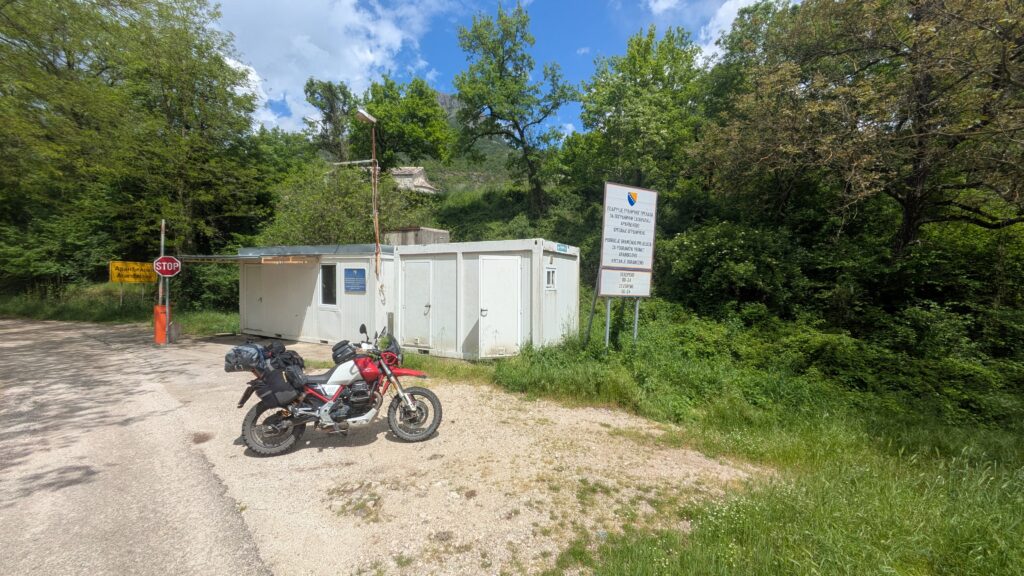
Crossing from Bosnia into Croatia near Bihać, I was heading to the old Željava aerodrome — a Cold War military airfield built into the mountain on the border between the two countries, and worth the detour. My GPS told me to turn left immediately after the crossing. So I crossed the border, turned left as instructed, and followed the track the GPS had decided was a road. It wasn’t, exactly — it was an old access road, closed after a few metres, and in looking for the way around it I managed to cross back into Bosnia without going through a border check in either direction.
The border officers, when I found them, laughed. They let me back into Croatia without incident, and one of them drew a map on a piece of paper showing exactly where the aerodrome entrance was. The most useful navigation I had on that trip, and entirely unplanned. Border crossings can go sideways — when they do, staying calm and being straightforward with the officers is almost always the right response.
Regulations Worth Knowing Before You Ride
Speed limits vary meaningfully across Europe and enforcement varies even more. Germany’s sections of autobahn without limits are the famous exception. Austria, Switzerland, and France enforce limits actively with fixed cameras. Other countries post limits that are enforced with variable intensity. The simplest approach: ride to the posted limit in every country and treat enforcement as irrelevant to the decision.
Mandatory equipment requirements are broadly consistent across Europe but vary in detail. A reflective vest, warning triangle, and first aid kit are required throughout most of Europe. Some countries additionally require spare bulbs. Carrying the full set covers every destination without needing to research each country individually.
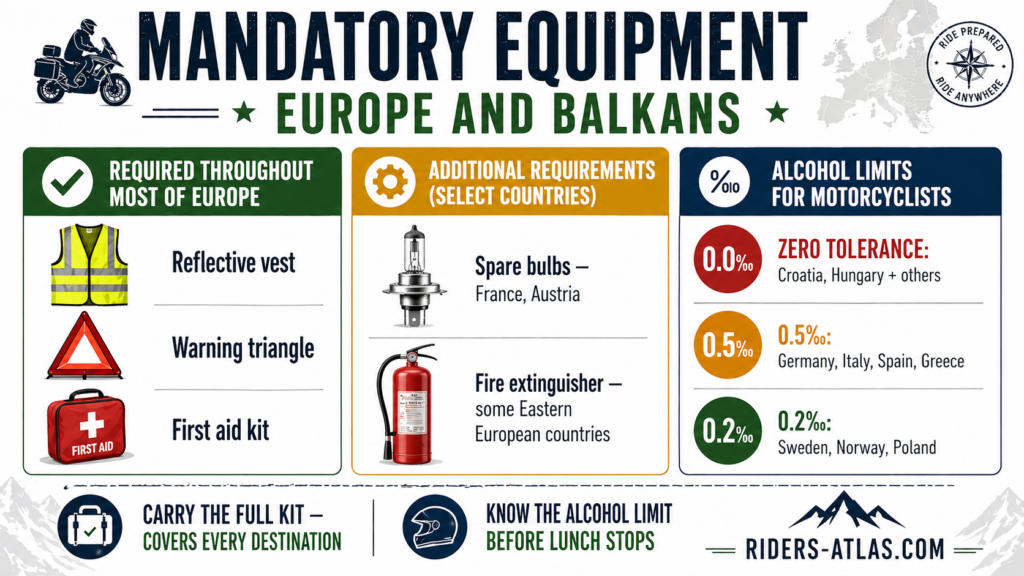
Alcohol limits for motorcyclists are stricter than for car drivers in several European countries. Zero tolerance applies to motorcyclists in Croatia, Hungary, and several others regardless of the general limit.
Vignette requirements vary significantly by country. Austria, Slovenia, Czech Republic, Hungary, and Switzerland all operate vignette systems for motorway use. Switzerland’s annual-only vignette at 40 CHF is the most significant for budget planning — there is no short-term option. Most other vignettes are available in 10-day formats at 6–15 €. These are small costs that add up across a multi-country tour and belong in the trip budget from the start.
Preparing the Bike and Gear
Tyre condition is the non-negotiable of international tour preparation. A tyre with 2,000 km of commuting life left will be asked to cover 3,000 km of varied European roads, often loaded with camping weight, across surfaces it hasn’t encountered before. Replace before the trip. The cost of a tyre at home is a fraction of the cost, time, and stress of sourcing one mid-tour in an unfamiliar place.
Service timing deserves consideration relative to the departure date. A service completed within 1,000 km before the tour starts provides confidence across the full distance. Oil change, chain adjustment, brake pad check, and tyre pressure verification cover the majority of what matters.
For navigation: Locus Map on a phone with offline maps downloaded for every country on the route handles the majority of touring scenarios effectively. A dedicated GPS unit — the Garmin touring range is the standard reference point — offers superior battery life, direct-sun visibility, and weather resistance if you’d rather not depend on a phone. Either works; the offline maps matter more than the hardware.
European SIM cards and data: within the EU, standard roaming at home rates applies — your existing data plan works in all EU countries. For non-EU countries, a local SIM in the first major city after the border provides affordable data for navigation and communication. They’re inexpensive and widely available.
Accommodation on an International Tour
The accommodation strategy that works best for international motorcycle touring combines flexibility with occasional advance booking. In Western Europe and Croatia in peak season, booking two to three nights ahead avoids the stress of arriving in a popular area without options. Outside peak season, arriving and finding is viable across most of Europe — guesthouses in smaller towns are rarely full.
Camping extends the touring season, reduces daily costs significantly, and opens up locations that hotels don’t reach. Wild camping laws vary by country — legal in Scandinavia under allemansrätten, tolerated in rural areas across much of the continent, prohibited on paper in most of Western Europe but rarely enforced in genuinely remote locations. Established campsites across Europe charge 10–25 € including motorcycle.
Hostels remain underused by motorcycle tourers and consistently offer better value than budget hotels in cities — 15–30 € for a dorm bed, often with secure parking if you ask directly. Warmshowers, the hospitality network built for cycle tourers, welcomes motorcycle tourers in many regions and provides free stays with local hosts.
How to Find Cheap Accommodation for Motorcycle Touring in Europe — full breakdown of every option
Solo vs. Group Touring
Solo international motorcycle travel offers a kind of freedom that group touring structurally can’t match: your pace, your route, your decision at every junction without negotiation. It also forces something that turns out to be one of the most valuable parts of travelling — contact with the country you’re riding through. When you’re alone, you have to talk to people. You ask for directions, you find the mechanic, you end up at a table in a restaurant where nobody speaks your language and you work it out anyway. That contact doesn’t happen in the same way when you’re moving as part of a group.
Group touring distributes mechanical risk, shares costs, and provides company on long riding days. The trade-off is pace: a group moves at the speed of its least experienced or least comfortable rider, and route decisions require consensus that solo touring never does. Whether that trade-off is worth it depends entirely on why you ride and who you’re riding with.
My own preference is solo for most tours — the depth of experience and the freedom to follow something interesting without checking with anyone are things I’m not willing to give up. That said, shared experience with people who matter has its own value that solo travel can’t replicate, and there’s a genuine safety case for riding with a partner on serious offroad sections where a breakdown or a fall in a remote location is a different proposition alone.
The international motorcycle community — encountered at campsites, border crossings, scenic viewpoints, and fuel stations across Europe — provides the social element of touring regardless of whether you set off alone. It is one of the most consistently warm and generous communities in travel.
When Things Go Wrong
Mechanical breakdown on an international tour sounds alarming and is, in practice, rarely catastrophic. Local mechanics throughout Europe are resourceful, affordable, and accustomed to seeing touring bikes from all over the continent. A breakdown is inconvenient wherever it happens — it is not a disaster. Carry breakdown cover that includes repatriation — the insurance cost is modest and the peace of mind is real.
Accident procedure is worth knowing before you need it: stop, ensure safety, call emergency services if required, photograph everything before anything moves, exchange details with any other party, contact your insurer before signing anything. The universal emergency number throughout Europe is 112 — it works in every country on the continent, including non-EU states.
The Welder Near the Winnetou Memorial
On ACT Croatia, Day 3, Derviša went down on a steep descent — one of the harder sections of the route, somewhere close to the Winnetou Memorial in the Velebit. I picked the bike up, checked what I could, and kept riding. It was only in the evening, going over the bike properly, that I found the crack: a frame weld connecting the foot peg to the main frame, split from the impact.
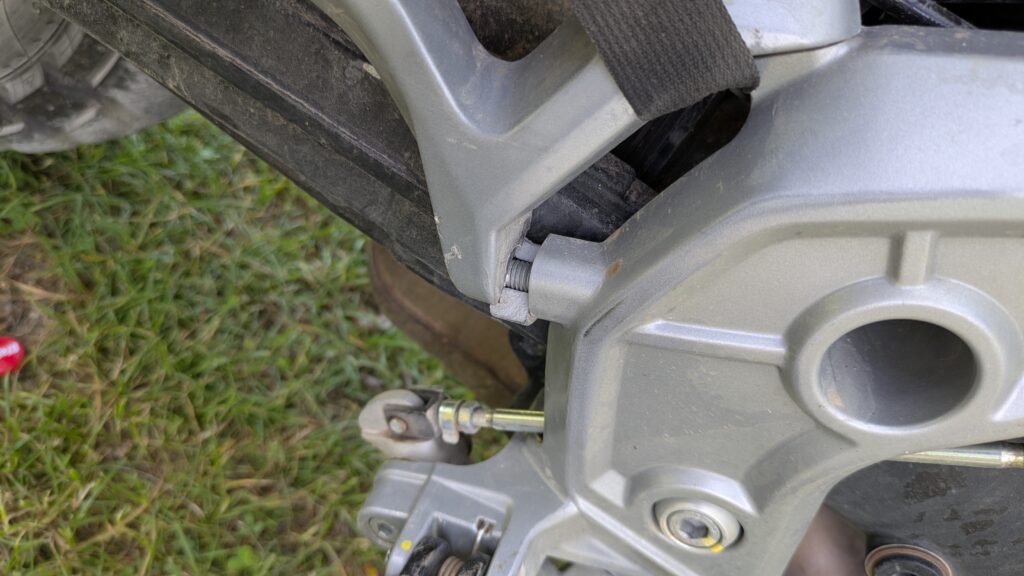
No motorcycle dealer within reasonable distance. No obvious solution. I started asking at car repair shops in the nearest town — could anyone weld it? The first few declined. It wasn’t a straightforward weld, and they knew it. The last shop I tried didn’t do it either, but the owner knew someone who could. He made a phone call, gave me directions, and that was it.
The welder came straight from work to his shop that morning. He looked at the crack, assessed it, and fixed it. When I asked what I owed him he waved the question off entirely. The weld held for the rest of the tour without complaint.
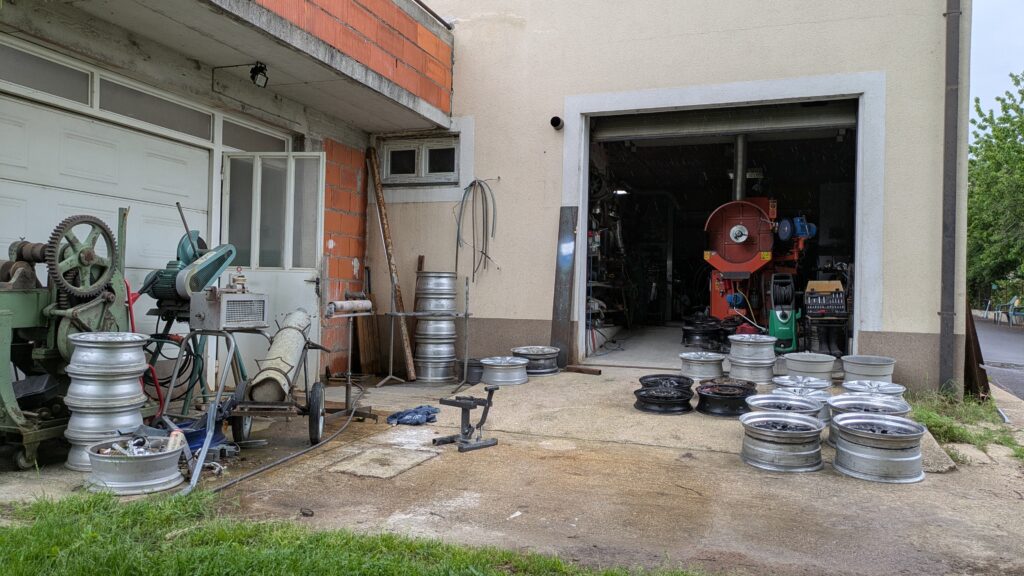
You cannot prepare for a cracked frame on a mountain descent. What you can know in advance is that the solution is almost never as far away as the problem makes it feel — and that the people you find when you ask for help are usually better than you had any right to expect.
Country-by-Country Guide
Every destination covered in detail on this blog, linked from here. Use this as the hub for the Travelling Europe category — each link goes to a full country guide with routes, costs, and practical detail.
Slovenia — world-class mountain roads, Vršič Pass, Soča Valley. Compact, excellent riding quality, often underestimated as a destination in its own right.
Croatia — Dalmatian Coast, Istria, Plitvice Lakes. Tourist infrastructure is excellent; peak summer is crowded, shoulder season is outstanding.
Bosnia and Herzegovina + Montenegro — Neretva canyon, Mostar, Bay of Kotor, Durmitor. Two countries that couldn’t feel more different, combined naturally into a single loop.
Albania — Albanian Alps, SH1 coastal road, exceptional value. Europe’s most underrated motorcycle destination.
Greece — Peloponnese, Epirus, Zagori villages, ancient history from the saddle. The natural southern anchor of any Balkan tour.
Slovakia — High Tatras, Slovak Paradise, Spiš Castle, Central Europe’s most underrated riding. (coming soon)
Italy — Dolomites, Alpine passes, Amalfi, budget breakdown from real touring experience.
The full Balkan loop — Slovenia through Croatia, Bosnia, Montenegro, Albania, and back. The two-week route that covers the best of southeastern Europe.
The Planning Is the Easy Part
Travelling Europe by motorcycle is not a category of touring reserved for experienced riders with elaborate preparation and generous budgets. It is what motorcycle touring becomes when you point the bike toward a border and keep riding. The documents are manageable. The border crossings are predictable. The planning, once you’ve done it once, becomes faster and more intuitive with every tour.
The Czech koruna lesson, the hand-drawn map from the Bihać border officer, the welder in the Velebit who refused payment — none of these were planned. All of them were resolved. That’s the pattern that international touring teaches over time: prepare what you can, build flexibility into what you can’t, and trust that the solution to most problems is closer than it looks from the moment the problem appears.
The country guides and planning resources linked throughout this guide are the detail. This is the map. Start with a country close enough to reach in a day, build the basic toolkit, and cross the first border. Everything after that is iteration.
By Fritz