Most riders don’t fail to go on the trip. They fail to start planning it. The destination sits in the back of their head for months — the Balkans, the Dolomites, the Trans-Euro Trail — and nothing moves. Not because the riding isn’t appealing, but because the gap between wanting to go and knowing how to actually put it together feels too wide to cross in an evening.
This guide closes that gap. It covers how to plan a motorcycle trip from the first research questions all the way through to the documents in your tank bag — route research, daily mileage, packing decisions, pre-trip maintenance, budget, and the administrative layer that most riders leave until the night before. It’s written the way I actually plan trips, not the way a generic checklist says you should.
My first real trip was on Vittoria — my Honda XL 600 V Transalp. The destination was the ACT through central Italy. I thought I’d make the approach road part of the adventure and integrated TET Italy sections on the way down. By the time I reached the start of the ACT I was already running low, physically and mentally. I’d treated the approach as a warm-up when it was actually the first act of a ten-day trip. I finished the ride, and when Vittoria climbed out the other end of the ACT, the name felt earned. But the lesson about treating every kilometre as part of the effort — not just the kilometres you planned to enjoy — has shaped how I plan every trip since.
Start With the Destination, Not the Route
The instinct when planning a motorcycle trip is to open a map and start drawing lines. Resist it. The route is the last thing you build, not the first. Before any routing starts, you need to understand what the destination actually offers — and what kind of riding you’re going to enjoy there.
The Questions to Ask Before You Open a Map
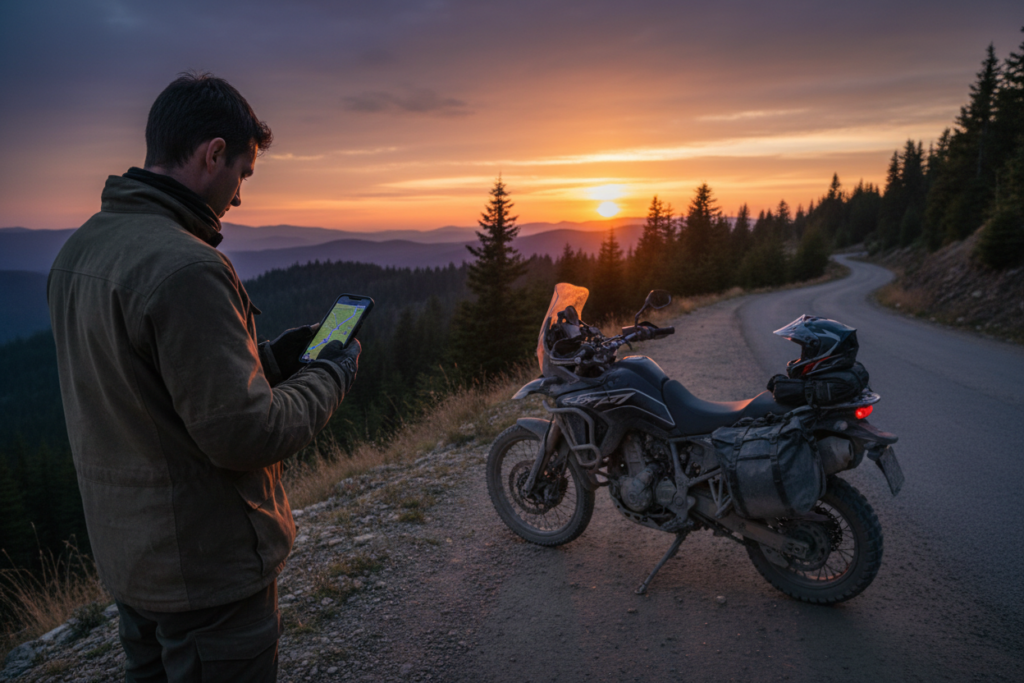
Four questions, in order, before a single waypoint gets placed:
What are the roads like? Not in general — specifically. Are there mountain passes with genuine switchbacks, or is it mostly fast valley roads? Are surfaces generally well-maintained, or should you expect broken tarmac in places? This shapes what bike you take and what tyres you run.
Is offroad possible, and at what level? Some countries have extensive TET or ACT sections that are genuinely rideable on a capable bike. Others have offroad options that are mostly rough forest tracks — rideable but not worth planning around. Others are largely tarmac affairs. Knowing this early determines for me whether Ludmila, my Suzuki DR 800, comes out or stays in the garage.
What are the must-see locations? Not tourist highlights — riding highlights. The road to the viewpoint, the pass that gets talked about in every trip report, the town you’ve seen in photos and want to arrive at from the back road rather than the main drag.
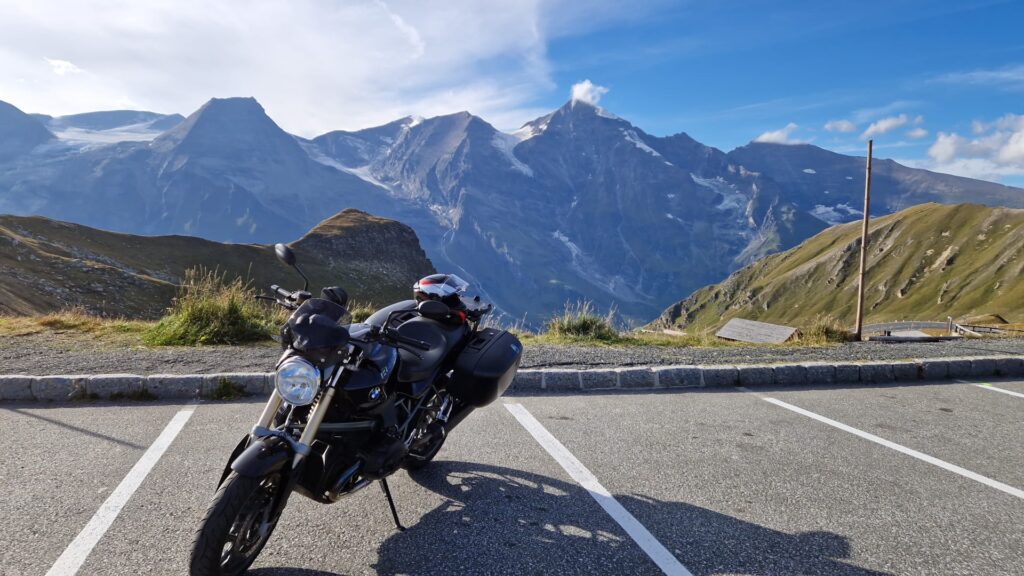
Are there bucket list roads? Places like the Transfăgărășan in Romania or the Großglockner-Hochalpenstraße in Austria — roads that are destinations in their own right. These become fixed anchor points around which everything else gets organised.
I do all of this research before I open Locus Map, my current route planning tool. I note everything down — roads, locations, possible TET or ACT sections, hidden spots that come up in forums or trip reports — and then start marking highlights in the map. Once the highlights are placed, I can see the shape of the trip. The routing comes from connecting those marks in a way that makes geographic sense, not from drawing the most efficient line between start and finish.
Building the Route
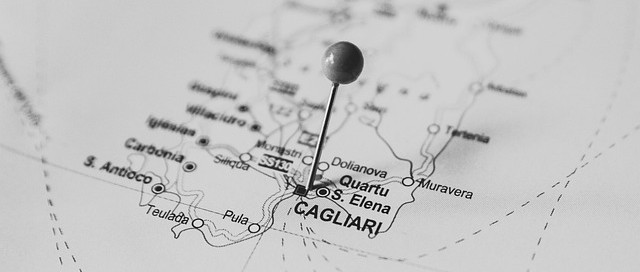
With your highlights marked, the route planning can begin. This is where most of the real decisions happen — and where the difference between a good trip and a great one gets made.
The starting point is letting the route planner build a basic connection between your highlights. Don’t overthink this first version. It exists to give you something to react to, not something to follow. From this base route, the refinement begins: swap boring connector sections for roads with actual character, add the offroad tracks you identified in the research phase, look for the roads with a high density of tight curves rather than fast sweepers if that’s what you’re after.
When the route feels right — when riding it in your head produces a sequence of sections you’re actually excited about — it gets saved as a GPX file. This is your detailed route: the ideal version of the trip.
The Dual-GPX System
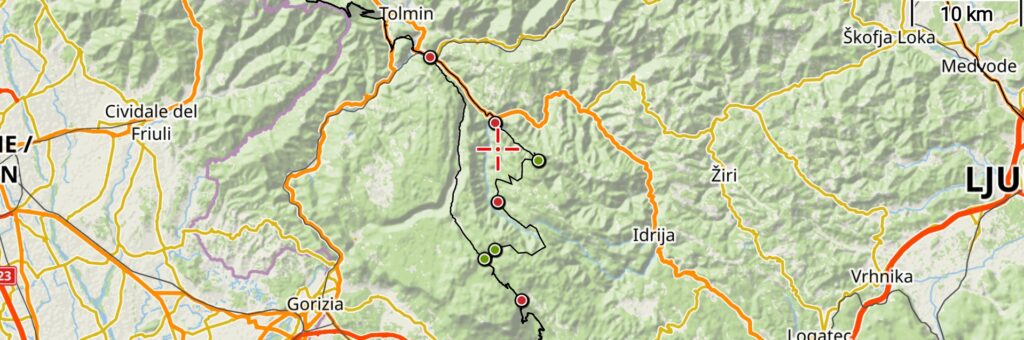
The ideal route is not the route you’ll always ride. Weather closes passes. Roads get dug up. You arrive somewhere and want to stay an extra day. Planning for this isn’t pessimism — it’s the difference between a flexible trip and a stressed one.
Once the detailed route is saved, I build a second version: a fine-tuned GPX that trims the most time-consuming sections, inserts a fast lane or highway stretch where needed to make the daily distances manageable, and creates a leaner version of the same journey. This gets saved separately.
On the road, I carry both. The detailed GPX is the trip I want to ride. The fine-tuned GPX is the trip I’ll be riding. Carrying both GPX files gives me the possibility to switch routes if something changes. Having the backup already built means the decision to adapt takes thirty seconds, not an hour of replanning on the side of the road.
Planning for Tarmac vs Dirt
If the trip includes offroad sections, the routing process changes in one important way: the TET and ACT provide pre-mapped tracks that can be imported directly and overlaid on your planned route. This is the starting point for offroad planning, not a forum recommendation or a general sense that “there’s good dirt riding there.” The tracks exist, they’ve been ridden and documented, and they tell you immediately whether an offroad section is feasible for your bike and your skill level.
Mixed-surface trips require one additional consideration in the route build: where the surfaces change. The transition from tarmac to dirt and back again needs to happen at logical points — not mid-pass, not on a section you can’t turn around on if conditions aren’t what you expected. Plan the join points deliberately.
Daily Mileage — How Far Should You Ride?
Overestimating daily distance is the most common planning mistake, and it costs more than time. A rider who arrives at camp exhausted every evening isn’t enjoying the trip — they’re surviving it. The route becomes a target to complete rather than an experience to have.
The formula I use is simple: average speed multiplied by riding hours. That’s your realistic daily distance, and it works across every surface.
The Mileage Formula
Average speed × riding hours = realistic daily distance.
On good roads with light traffic, 70 km/h average and six hours of riding gives you 420 km — with three hours before lunch and three after, and still room for fuel stops, food, and the photo you didn’t plan to stop for. The same six riding hours at 30 km/h average on 90% offroad gives you 180 km. Same day. Same effort. Very different distance.
The Numbers by Surface
As rough targets: pure offroad days sit between 150 and 200 km. Pure tarmac, with good roads and manageable traffic, can reach 500 km comfortably — though 400 km is the more honest number if the route has a lot of 50 km/h speed limits and regular stops for highlights. Mixed surfaces require splitting the day: calculate time on each surface separately and add them together.
Country matters too. Riding through a country with strict speed enforcement and frequent villages is a different proposition to open mountain roads with few restrictions. Build this into your estimates before you finalise the daily breakdown.
Breaking the Route Into Days
Once the mileage is right, the day breaks become strategic decisions. Where you stop for the night shapes what you can do the next morning. A busy viewpoint or a popular mountain pass is best hit early — before the tourist and day-trippers arrive. If that means the previous day ends in a less interesting location to position yourself well, that’s often the right trade.
The ACT lesson applies here directly. I’d treated the approach ride from Germany to central Italy as part of the trip — not a necessary distance to cover before the real trip started. By the time the ACT actually began I had already put in three hard days of riding. The approach wasn’t separate from the trip. It was the first three days of it, planned without any of the care I’d given the ACT sections themselves. Since then, every day of a trip gets the same planning attention, start to finish.
Accommodation gaps also drive day structure. In remote areas where finding a room or a site is genuinely uncertain, the day needs to end somewhere with options — or the camping decision needs to be made deliberately in advance. Don’t let the end of the day be an afterthought.
Packing for a Motorcycle Trip
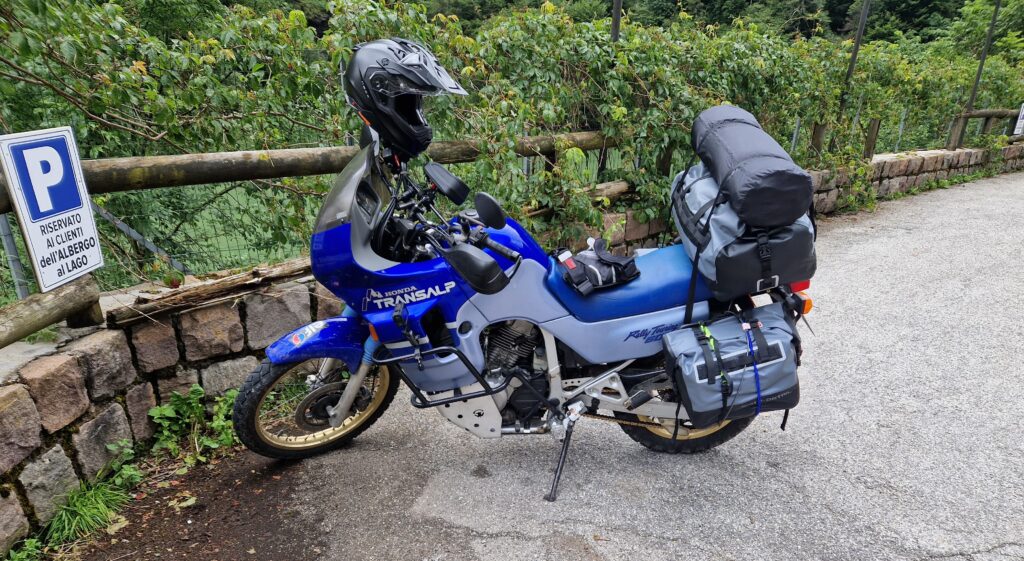
Packing for a motorcycle trip is a compression problem. Everything that goes in a bag has to earn its place twice — once for the weight it adds and once for the space it takes. The failure mode isn’t forgetting things. It’s bringing things that duplicate each other or that you’ll never use.
Clothing works best as a three-layer system: a moisture-wicking base layer, an insulating mid layer, and a waterproof outer layer. These three pieces handle almost any weather combination you’ll encounter across Europe, and they pack small. One pair of riding trousers. Two or three base layer tops. One warm layer. The rest is gear, not clothes.
Luggage system choice comes before packing strategy. Hard panniers give you weather protection, security, and a fixed volume that forces disciplined packing — you simply cannot bring more than fits. Soft bags are lighter and more flexible but require weather covers in some cases and careful weight distribution. The right choice depends on the bike and the trip, but whatever system you use, the rule is the same: pack it the night before, not the morning of.
The first Transalp trip also taught me what cheap luggage systems actually cost. Not in money — in time and frustration. A strap that looked fine on the garage floor becomes a liability on a rough track. By the end of that first trip I had a clear list of what needed replacing before the next one. Buy less and buy better — or spend the trip managing your bags instead of riding.
What Most Riders Forget
Everyone thinks about the flat tyre repair kit and the spare fuse. Almost nobody thinks about zip-ties. Pack a handful — they weigh nothing and can solve problems that no amount of spare parts will fix.
Somewhere in the Apennines, on the ACT with Vittoria, the improvised USB charging setup I’d wired under the headlight started losing connection. On road, the vibrations were manageable. On gravel, every section of track shook it loose. My GPS battery was dropping and I was in the middle of a section with no signal and no obvious bailout. The fix took five minutes and four zip-ties — each wire routed and tied firm so the charger couldn’t move regardless of what the road threw at it. Those zip-ties are still there. They’ll stay there until there’s a reason to remove them. Bring more than you think you need.
Motorcycle Trip Packing List — complete breakdown of what to bring and how to pack it
Pre-Trip Maintenance — Don’t Skip This

Maintenance belongs in a planning guide because a mechanical problem on the road isn’t bad luck — it’s usually a problem that was already present when you left home. The goal of pre-trip maintenance isn’t to service the bike. It’s to find problems when you’re in the garage, not on a mountain pass three countries from home.
The minimum checks before any trip: tyre condition and pressure, brake fluid level and feel, chain slack and lubrication, battery terminals, and all lights. None of these require specialist knowledge. All of them take under twenty minutes to work through. A tyre with marginal tread that feels fine on a dry commute becomes a real issue on a wet alpine descent with full luggage.
If you’re not confident doing these checks yourself, have a shop walk you through them once. You won’t need to be shown twice.
Budget and Documents
Budget and documents are the administrative layer of motorcycle trip planning — the part that nobody enjoys but that defines whether the trip actually runs smoothly. Both benefit from being sorted weeks before departure, not the evening before.
Building a Realistic Budget
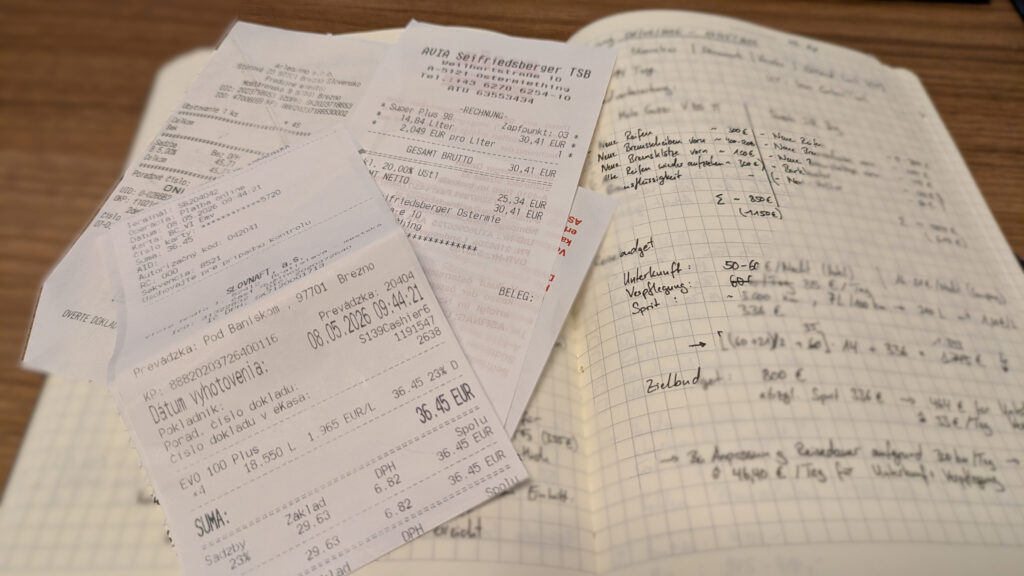
Fuel is the biggest variable cost and the easiest to underestimate. Your bike’s official fuel consumption figures are derived from conditions nothing like loaded touring on mountain roads. Calculate on your real-world worst case — typically 10 to 20% worse than the official figure — and anything better is a surplus rather than a deficit.
Accommodation costs vary enough that planning a mix is both practical and financially sensible. Wild camping on public land costs nothing. A private campsite with facilities runs 15–30 €. A basic guesthouse or budget hotel sits somewhere between 40–80 €. A decent hotel in a tourist area during peak season can easily double that. Plan the mix based on where the route puts you each night — remote sections push toward camping by necessity, which also happens to be cheaper. Build an emergency buffer of at least 30% on top of your total estimate. Cash matters more in rural areas than most riders expect.
How to Create Your Motorcycle Trip Budget — worked examples and a breakdown by cost category
Documents — Sort These Weeks Before You Leave
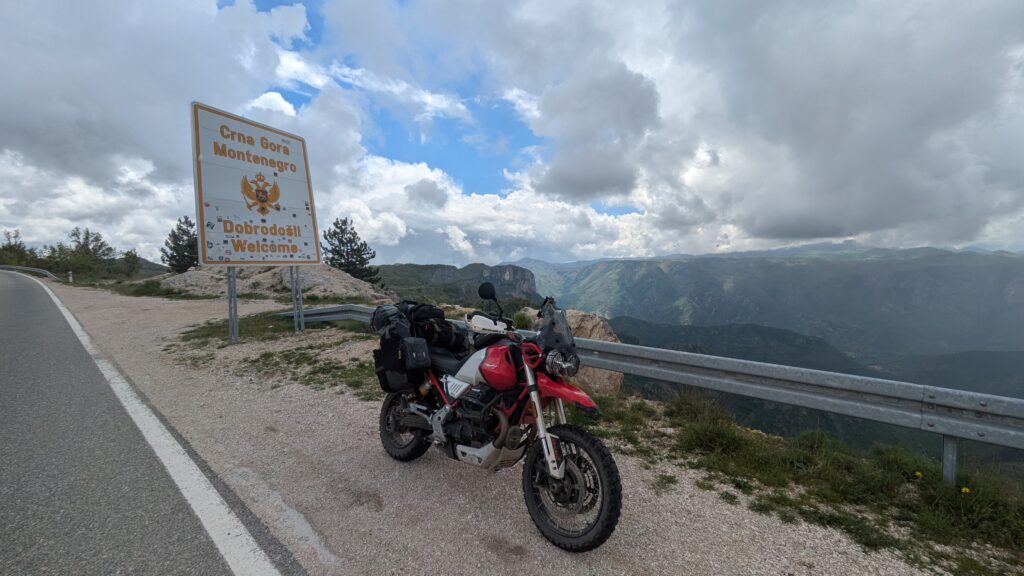
The document list for European motorcycle travel: vehicle registration, proof of insurance, your driving licence, and if you’re riding outside the EU, an International Driving Permit. For travel within Europe, a Green Card is the standard proof of third-party insurance coverage — but coverage varies by insurer and by country, and the important word there is varies.
I was turned back at the border to Kosovo because my insurance covered most of Europe but specifically excluded Kosovo. It wasn’t a bureaucratic grey area — the exclusion was in the policy documents the whole time. I just hadn’t checked every country on the route individually. I’d assumed that “European coverage” meant European coverage. It doesn’t always. Now every country the route passes through gets checked individually, not just the headline destinations.
Check your insurance documents for every country your route crosses — including the ones nearby in case you take a spontaneous reroute. Some countries also require specific additional insurance that can only be purchased at the border. Research this in advance rather than finding out at the crossing.
For health insurance and travel insurance — verify what’s covered before you go, not after you need it. Some policies exclude “high-risk activities,” and motorcycling qualifies under many definitions. Read the fine print.
Motorcycle Travel Insurance Europe — what you need, what to check, and what the gaps look like
The Planning Is What Makes the Freedom Possible
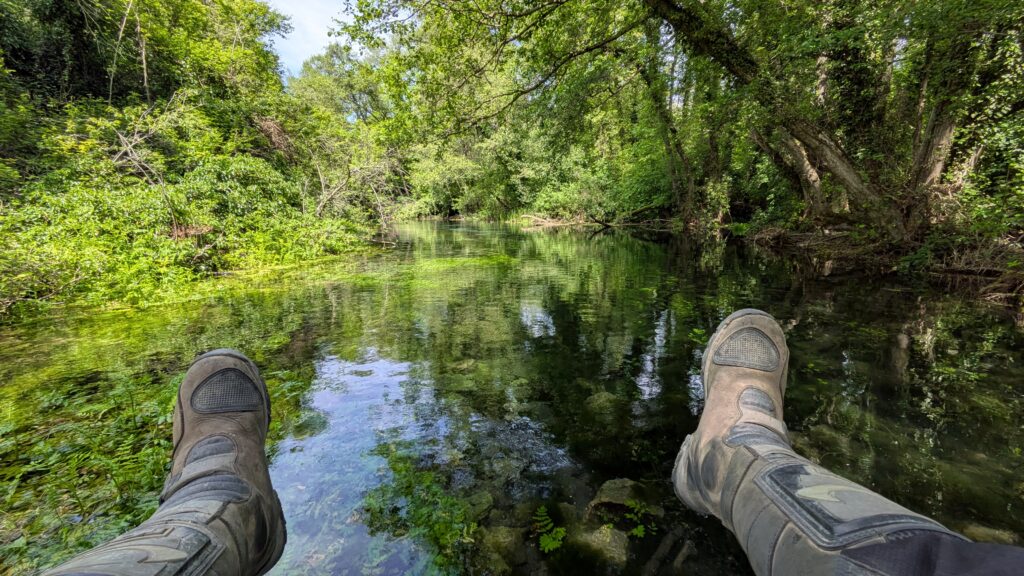
There’s a version of motorcycle travel that treats planning as the enemy of spontaneity. It’s a romantic idea and it’s mostly wrong. The riders who handle the unexpected well — the road closure, the weather that changes overnight, the mechanical that happens fifty kilometres from the nearest town — are the ones who planned the expected thoroughly enough to have capacity left when things go sideways.
The dual-GPX means a route change takes thirty seconds. The mileage formula means you arrive with energy rather than depleted. The zip-ties in the Apennines fix the problem that no amount of spare parts could. The insurance check means Kosovo is a destination rather than a wall.
Each section of this guide has a deeper post behind it — daily mileage, packing, maintenance, budget, insurance. Use this as the map, and follow the links when you need the detail. The ride is waiting.
By Fritz