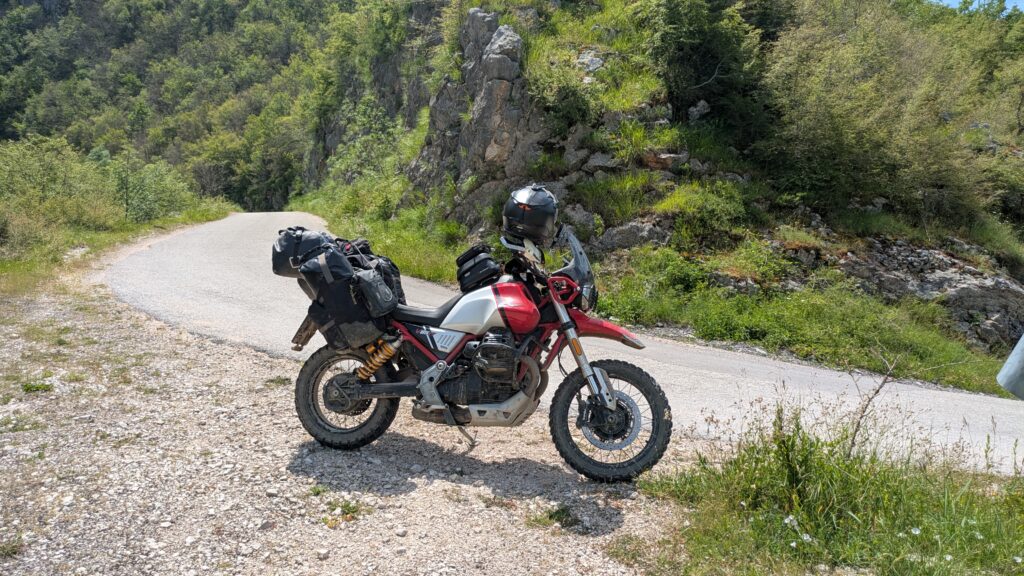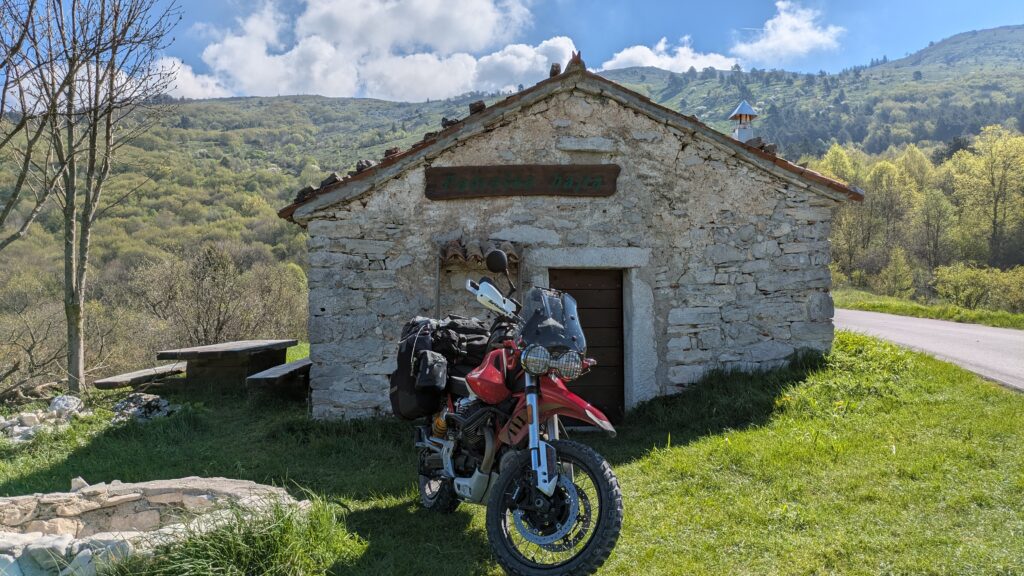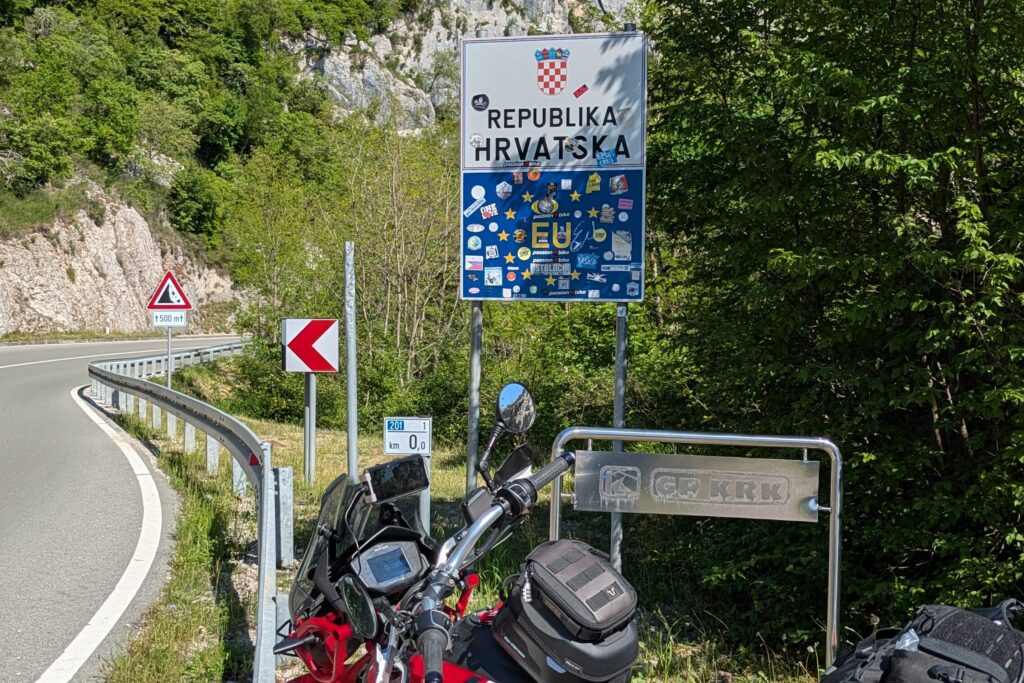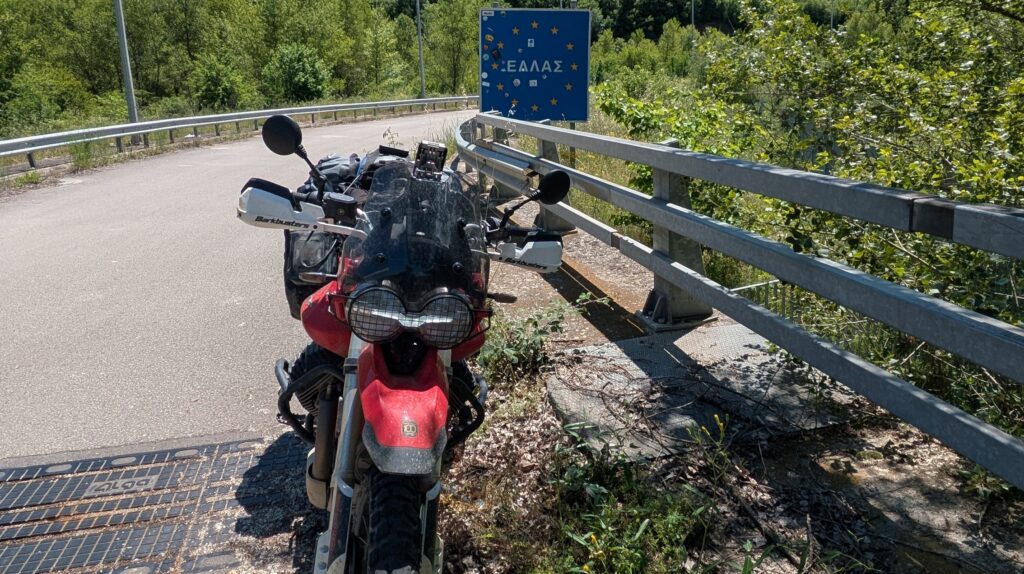
Most people’s mental image of Greece involves a whitewashed terrace, a blue-domed church, and a glass of something cold. It’s not wrong — but it’s about ten percent of what Greece motorcycle travel actually is. The other ninety percent is a country of dramatic mountain ranges, empty interior roads, ancient ruins visible from passes that most tourists never find, and a peninsula — the Peloponnese — that delivers some of the finest motorcycle touring in southern Europe. Greece motorcycle travel accesses a completely different country from the one that fills the holiday brochures.
I’ve ridden into Greece from the north — down through Albania, across the border at Kakavijë, and south through Epirus toward the Peloponnese — and the transition from the Balkans into Greece feels like arriving somewhere simultaneously ancient and immediate. The roads are better than expected, the food is better than anywhere nearby, and the combination of landscape and history visible from a motorcycle seat is unlike anything else in Europe. This guide covers the routes, the costs, and the practical details that make the difference between a good Greek motorcycle tour and an exceptional one.
Why Greece Rewards Motorcycle Touring
The geography makes the case immediately. Mainland Greece is predominantly mountainous — around eighty percent of the country is hills or mountains — which means the road network is full of the kind of winding, elevation-changing, view-producing tarmac that motorcycle tourers travel specifically to find. The famous islands and beach resorts occupy the coastline. The interior belongs to riders willing to leave the obvious route.
Road quality on the mainland is consistently better than Greece’s reputation among riders who haven’t been. Main national roads are well-maintained and well-signed. Mountain passes in Epirus and the Peloponnese interior are in excellent condition. Secondary roads in the Mani Peninsula and Zagori villages are narrow and atmospheric — not rough, just characterful.
The ancient history factor is genuinely unique to Greece motorcycle travel. Riding the Peloponnese, you pass within sight of Mycenae, Epidaurus, Olympia, and Mystras — some of the most significant archaeological sites in the world — between sections of mountain road. The combination of riding quality and cultural depth that this produces is hard to replicate anywhere else in Europe.
Best Time to Ride Greece by Motorcycle
April and May are the outstanding window for Greece motorcycle travel on the mainland. Wildflowers cover the hillsides, temperatures are ideal for riding in full gear without overheating, ancient sites are manageable without tour group crowds, and accommodation prices haven’t reached summer levels. The Peloponnese in May specifically is one of the finest motorcycle touring experiences in Europe.
September and October are equally excellent — the summer heat has passed, the sea is still warm from months of sunshine, tourist infrastructure remains open, and the roads empty noticeably after the August peak. Autumn light in Greece has a quality that photographers travel specifically to find, and it makes landscape motorcycle photography significantly easier than the harsh midday light of July.
July and August are challenging in the south — temperatures regularly exceed 35°C and riding in full gear in direct sun becomes a genuine endurance event. The interior mountains and northern Epirus remain manageable in summer, but coastal and Peloponnese riding is best reserved for early morning starts. The islands in peak summer are beautiful and expensive — accommodation costs in the Cyclades in August are difficult to justify on any touring budget. Since Greece motorcycle travle connects natrually to the Balkan route check out this article about the best time to visit the Balkans for a complete trip.
Greece’s Best Motorcycle Routes
The Peloponnese — Greece’s Greatest Motorcycle Peninsula
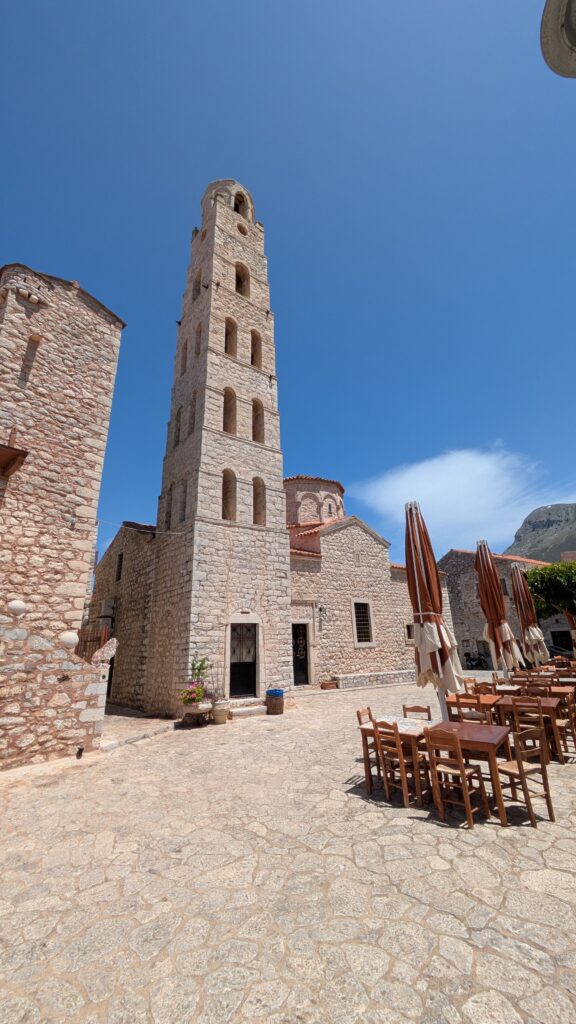
The Peloponnese is the starting point for any Greece motorcycle travel conversation and the destination that justifies a dedicated trip on its own. Connected to the mainland by the Rio-Antirrio bridge near Patras, it’s a peninsula of extraordinary geographic variety — fertile plains in the north, dramatic mountain spine through the centre, and the wild Mani Peninsula in the deep south where the road narrows, the tower houses appear, and the landscape becomes genuinely austere.
The outer coastal loop — Corinth south to Nafplio, west to Sparta, down through the Mani to Kalamata, north to Patras — covers approximately 700 km and deserves four to five days minimum. The Taygetos mountain road between Sparta and Kalamata is the highlight: a mountain pass through the range that forms the backbone of the Peloponnese, with views east toward the Laconian Gulf and west toward the Messenian Bay from the same road. It’s one of those passes where stopping at every viewpoint is not optional.
The Mani Peninsula south of Kalamata is the wildest section of the loop. The road narrows progressively as you head south, tower houses built by rival Mani clans appear against the rocky hillsides, and the end of the road at Cape Tenaro — the southernmost point of mainland Greece — feels genuinely like arriving at the edge of something. Road surface throughout is good; traffic is minimal outside summer.
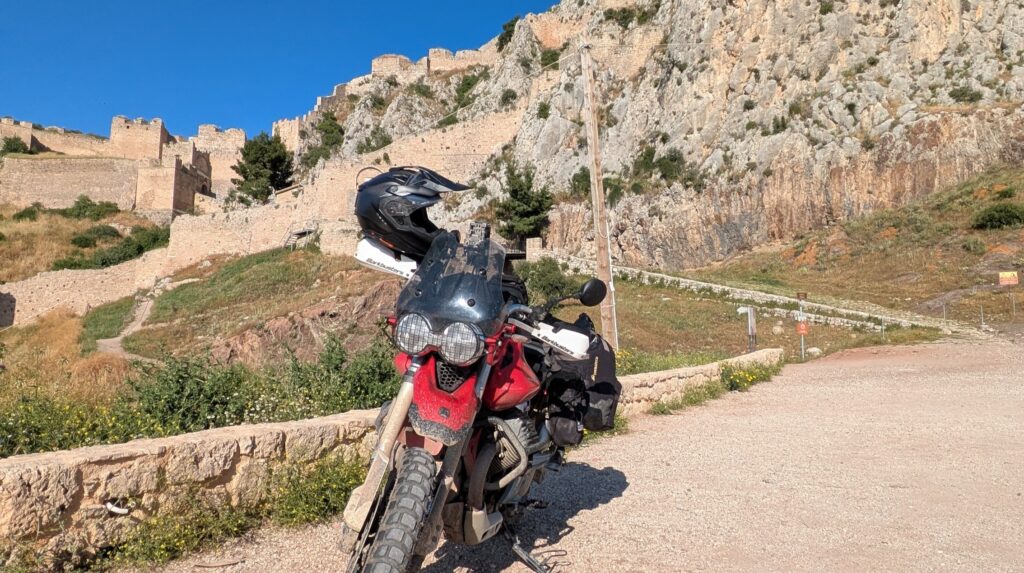
Ancient sites along the Peloponnese route make the cultural depth of Greece motorcycle travel concrete. Mycenae sits on a hillside above the plain of Argos and is visible from the road kilometres before you arrive. Epidaurus, Mystras, and Olympia are all within easy reach of the main loop. On my first trip through the Peloponnese I planned the tour around visiting every major ancient site — and discovered by the end of the first week that I’d spent close to 150 € on entry fees alone, averaging one or two sites per day with the riding fitted around them. Greece’s ancient history is everywhere and much of it is visible for free from a motorcycle on the right road. The entry fees are optional. The scenery isn’t.
Epirus and the Zagori Region — Northern Greece’s Secret
Epirus in northwestern Greece is the most underrated motorcycle touring region in the country and one of the finest in Europe. The Pindus mountain range runs through it, the Vikos Gorge — one of the world’s deepest relative to its width — cuts through the Zagori plateau, and the 46 stone-built Zagorochoria villages are connected by mountain roads that see almost no traffic outside summer weekends.
The Zagori village roads are narrow, atmospheric, and in better condition than their remote character suggests. Riding between Monodendri, Papingo, and Tsepelovo on a clear morning with the Vikos Gorge dropping away to the north is the kind of riding that produces the specific silence that happens when something is more beautiful than you expected.
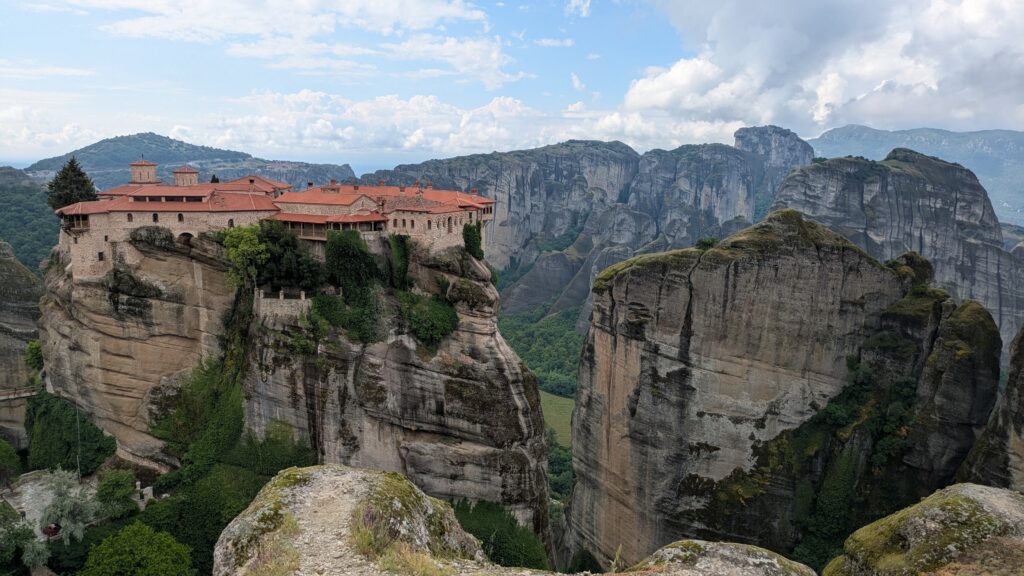
Meteora — the extraordinary rock formations topped with Byzantine monasteries northwest of Kalambaka — is one of Greece’s most photogenic locations and entirely accessible by motorcycle. The road climbing among the rocks to the monasteries provides a series of viewpoints that make the approach as impressive as the destination. Allow a half day minimum.
Ioannina is the natural base for Epirus exploration — a city of 100,000 on a lake, with a working old town, good accommodation in the 40–65 € range, and excellent food. From Ioannina the Zagori villages are thirty minutes north, Meteora is ninety minutes east, and the Albanian border is forty-five minutes west.
Central Greece — Delphi and the Mountain Roads
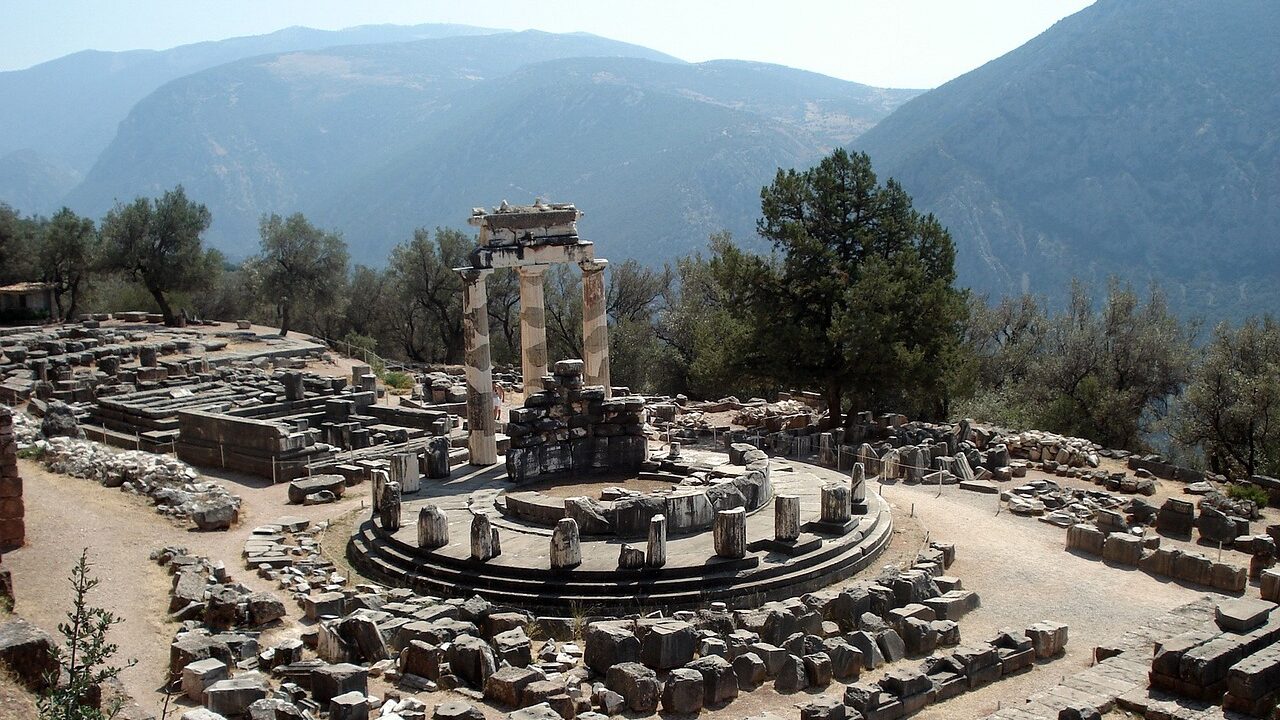
The road to Delphi from the east is one of Greece’s most dramatic approaches to any archaeological site. The road climbs through the Boeotian plain, enters the Parnassus foothills, and arrives at Delphi on a narrow shelf of rock above the Pleistos Valley with Mount Parnassus rising steeply behind. The ancient Greeks believed this was the centre of the world. On a clear morning it’s easy to understand why.
The Mount Parnassus road above Delphi continues to the Arachova ski resort and offers excellent mountain riding on a well-maintained surface. Arachova itself — a mountain village of stone buildings and local cheese shops — is worth an overnight stop if the itinerary allows. From Arachova the road connects north toward Epirus or south toward the Peloponnese, making central Greece a natural pivot point in any mainland motorcycle tour.
Northern Greece — Macedonia and Thrace
Northern Greece along the Via Egnatia corridor from the Albanian border to Turkey is the least visited section of the mainland and has some of the emptiest and best-maintained roads in the country. The Egnatia Odos motorway runs east-west as a toll road — the parallel national road is free, better riding, and passes through landscape the motorway bypasses entirely.
Thessaloniki — Greece’s second city — is the natural base for northern Greece exploration. The food scene rivals Athens, accommodation is significantly cheaper, and the city’s Byzantine heritage is accessible without the crowds that Athens attractions carry. Mount Olympus, 80 km south of Thessaloniki, is surrounded by roads that approach the mythological mountain from multiple directions — none of them disappointing.
The Islands — Logistics and Reality
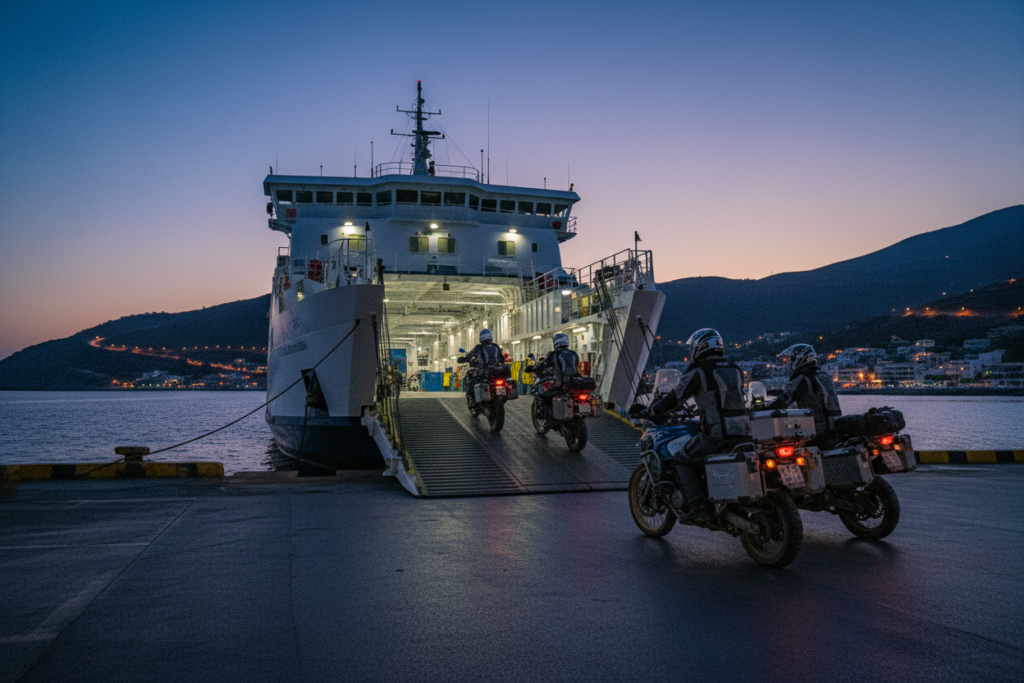
The honest assessment of island motorcycle touring in Greece: the logistics complicate what the scenery promises. Getting a motorcycle to most Greek islands requires a ferry booking with a vehicle space, advance planning in summer, and costs that add meaningfully to the daily budget.
Crete is the exception that justifies the effort. Large enough to offer a week of varied touring — the White Mountains in the west, the Lasithi Plateau in the east, the coastal road along the south — Crete rewards riders who make the commitment of the ferry crossing from Piraeus or Heraklion. The ferry from Piraeus takes eight to ten hours overnight — an efficient use of riding time.
Lefkada requires no ferry at all — a causeway connects it to the mainland near Preveza, making it the most accessible island for motorcycle tourers. The island road circuit takes half a day and the west coast beaches rank among the most dramatic in Greece.
Budget and Daily Costs in Greece
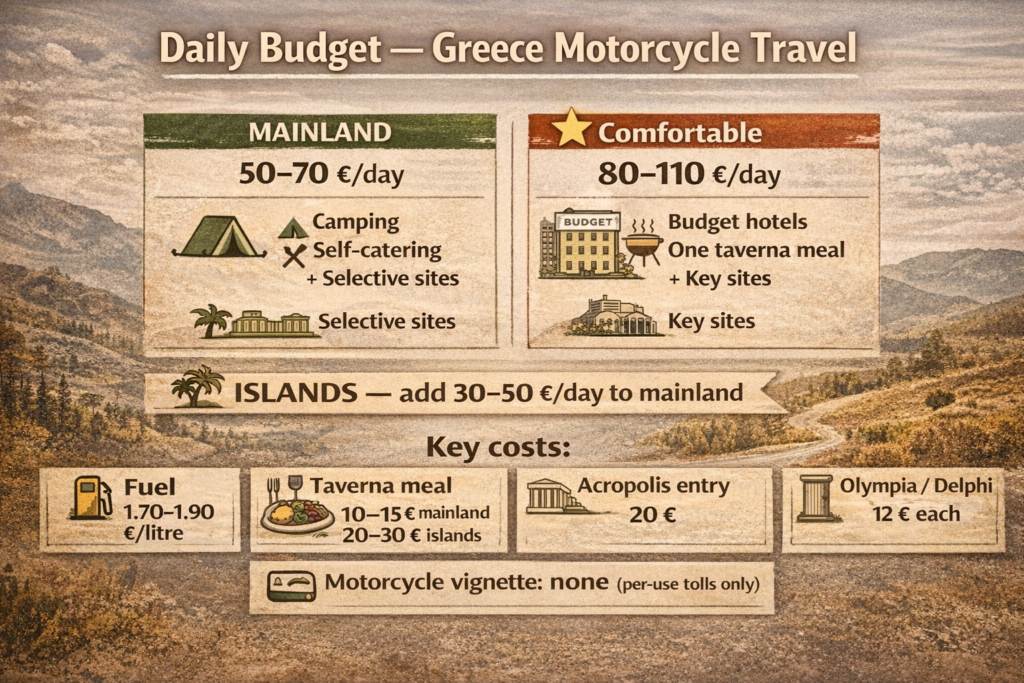
Greece sits in the moderate tier for European motorcycle touring — more expensive than the Balkans, significantly cheaper than Western Europe, with dramatic variation between mainland and island pricing.
Fuel runs 1.70–1.90 € per litre — above the European average and noticeably higher on islands where fuel is shipped. Accommodation on the mainland ranges from 35–55 € for budget guesthouses and 50–80 € for comfortable hotels. Island accommodation in season runs 60–100 €+ for equivalent quality. Food at a local mainland taverna costs 10–15 € for a full meal — simple grilled fish, Greek salad, local wine, bread. The same meal on a popular island in August costs 20–30 €.
Attraction entry fees require a budget line of their own. The Acropolis costs 20 €, Olympia 20 €, Delphi 12 €, Mycenae 12 €. A week of daily site visits adds 80–150 € to the touring budget — significant on any budget tier. Research which sites matter most to you before arriving rather than paying every entry fee as it appears.
Motorway tolls on the Egnatia Odos and Athens ring roads add 10–20 € per crossing day — use the parallel national roads wherever time allows.
Daily budget tiers for mainland Greece:
- Budget: 50–70 €/day — camping or cheap rooms, self-catering most meals, selective attraction visits
- Comfortable: 80–110 €/day — budget hotels, one taverna meal per day, key attraction entries
- Islands: add 30–50 €/day to mainland figures in season
Border Crossings and Entry Requirements
Greece’s northern borders — Bulgaria and North Macedonia — are Schengen and invisible for EU riders. The Albanian border at Kakavijë is the most relevant crossing for riders arriving from or departing toward the Balkans — efficient in the morning, busier in summer afternoons. The Turkey border at Kipi is straightforward but requires green card insurance extension for Turkey specifically.
The Patras to Italy ferry connection — Ancona, Bari, or Venice depending on operator — is one of Europe’s classic motorcycle touring routes and a logical western exit from a Greek tour. The overnight ferry from Patras to Ancona takes approximately twenty hours and arrives on the Italian Adriatic coast within easy riding distance of the Dolomites or Amalfi. Book well in advance for summer crossings.
The short ferry from Corfu to Saranda in Albania connects greece motorcycle travel naturally into the Balkan route northward — one of the most convenient multi-country transitions available in southeastern Europe. But be aware that Albania is not part of the schengen area so better check your motorcycle insurance.
Practical Riding Tips for Greece
Speed limits are 50 km/h urban, 90 km/h rural, 110 km/h on expressways, and 130 km/h on motorways. Speed enforcement is present on main routes but less intensive than in Austria or Germany. The mandatory equipment list — reflective vest, warning triangle, first aid kit — applies throughout Greece.
Athens is worth routing around entirely. The city’s traffic is genuinely chaotic and the ferry port of Piraeus is accessible via the coastal road without transiting the city centre. If Athens is a deliberate stop, park the motorcycle at the hotel and use the metro — it’s the only rational approach to central Athens sightseeing.
Heat management in July and August requires early starts — riding before 10am and after 5pm avoids the worst of the midday heat. Carry more water than you think you need; dehydration at riding pace in 35°C heat arrives faster than expected. Ancient site visits in peak summer are most comfortable at opening time — 8am at most major sites — before tour groups arrive and before the sun reaches full intensity.
One warning worth its own mention for riders tempted by Greece’s mountain tracks: guard dogs. I once spent three hours stranded on a trail after encountering a sheep herd resting across the path — dogs blocking the way forward and dogs waiting behind me on the way back. Greek shepherds leave their herds largely unattended, with dogs trained to protect against wolves and predators. They are not accustomed to humans and there is almost certainly no shepherd within calling distance. If you encounter a resting herd across a mountain trail, stop well before the dogs’ threshold, cut the engine, and wait. Do not approach, do not attempt to pass, and think carefully before leaving the tarmac in the first place.
Combining Greece with Neighbouring Countries
Greece as the southern anchor of a Balkan loop is the most natural context for greece motorcycle travel in a broader European touring strategy. Riding south through Albania, crossing at Kakavijë, and touring the Peloponnese before returning north through Epirus and back into Albania covers the full range of southeastern European riding in a single tour.
The Bulgaria connection — crossing north from Thessaloniki or Drama — opens Central European routing toward Romania, Serbia, and beyond. North Macedonia from Thessaloniki combines naturally with Lake Ohrid for a compact two-country addition to any northern Greece tour.
The Italy ferry from Patras is the connection that allows Greece to sit at the end of a tour that started in Central or Western Europe — ride east through Italy, cross to Greece, tour the mainland, and fly home from Athens with the bike shipped separately, or reverse the entire routing.
Final Thoughts
Greece motorcycle travel delivers far more than the beach holiday reputation suggests. The Peloponnese alone — five days of mountain passes, ancient ruins, wild peninsula roads, and taverna dinners — justifies a dedicated trip from anywhere in Europe. Add Epirus and the Zagori villages and you have two weeks of riding that rivals anything the continent offers.
Visit in April, May, or September. Avoid Athens by motorcycle. Choose your ancient sites deliberately rather than paying every entry fee as it appears. And spend at least one morning on the Taygetos mountain road between Sparta and Kalamata — it’s one of those passes that stays with you long after the trip ends.
Have you ridden the Peloponnese or Epirus? Drop your route tips and taverna recommendations in the comments — there’s always a rider planning their first greece motorcycle travel adventure who’ll benefit from real-world experience on the road.