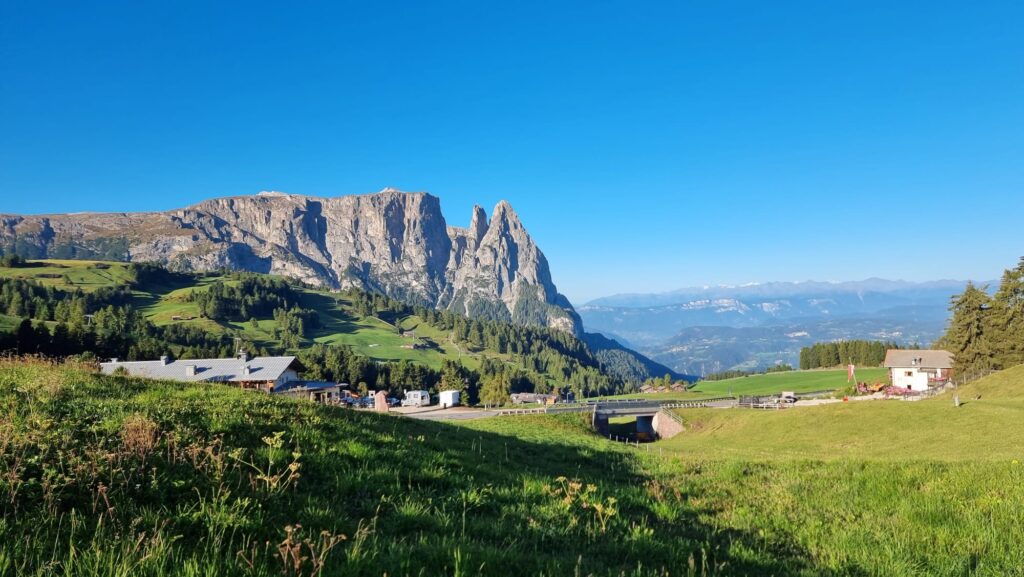
There are places in Europe where the landscape does something to you that roads in other continents simply can’t replicate. The Dolomites are one of those places. The rock formations rise almost vertically from the valley floors — pale limestone towers stained orange and pink at sunrise, dropping into forests and meadows that seem deliberately arranged for maximum effect. The road winds through all of it at a pace that a motorcycle handles perfectly and a car almost manages. No other vehicle gets the Dolomites quite right.
Northern Italy motorcycle routes cover more world-class riding per square kilometer than almost anywhere else on the continent. The Dolomites alone could occupy a month of serious exploration. Add Lake Garda’s western shore, the Stelvio Pass, the Alpine border crossings into Austria and Switzerland, and the quieter lake district roads of Lombardy, and you have a region that rewards annual return visits without repeating itself. This guide covers the essential routes, the practical details, and how to combine northern Italy with neighbouring countries for a complete Alpine motorcycle tour.
Why Northern Italy Belongs on Every Rider’s Europe List
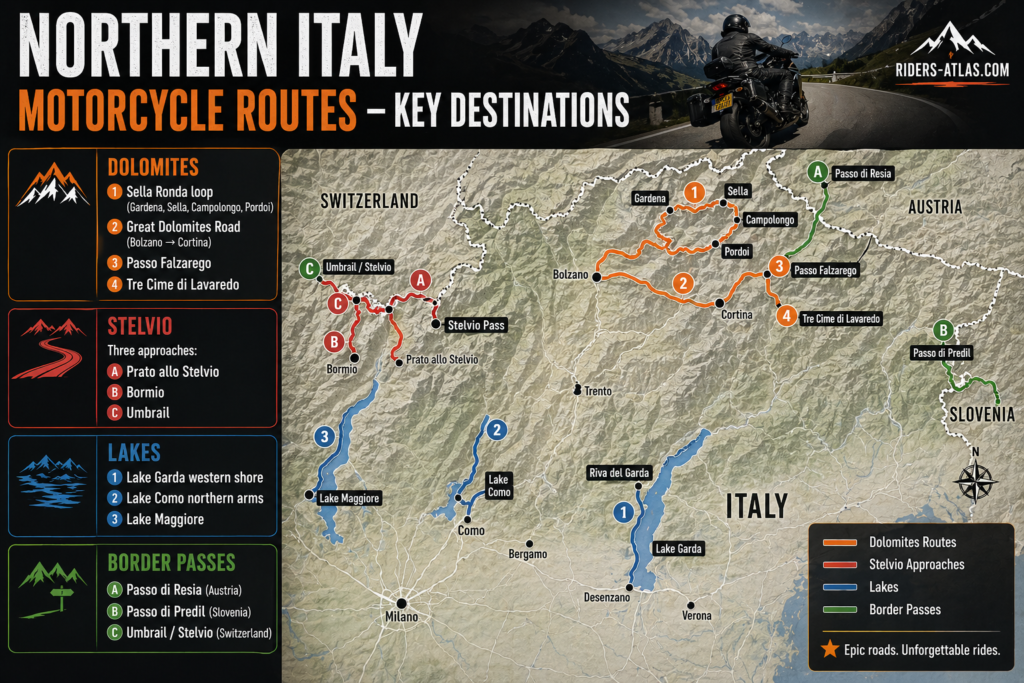
The variety is the first argument. Within a single day’s riding from Verona, you can access the Dolomites to the north, Lake Garda to the west, the Venetian foothills to the east, and the Lombardy pre-Alps in almost any direction. No other region in Europe packs this density of genuinely different riding experiences into such a compact area.
Road quality throughout northern Italy is consistently among the best in Europe. Pass roads are maintained to the highest standard — smooth surfaces, clear markings, regular safety barriers on the exposed sections. The investment in mountain road infrastructure in the South Tyrol and Trentino regions specifically reflects decades of tourism development, and the results are roads that feel engineered for enjoyment rather than merely for transport.
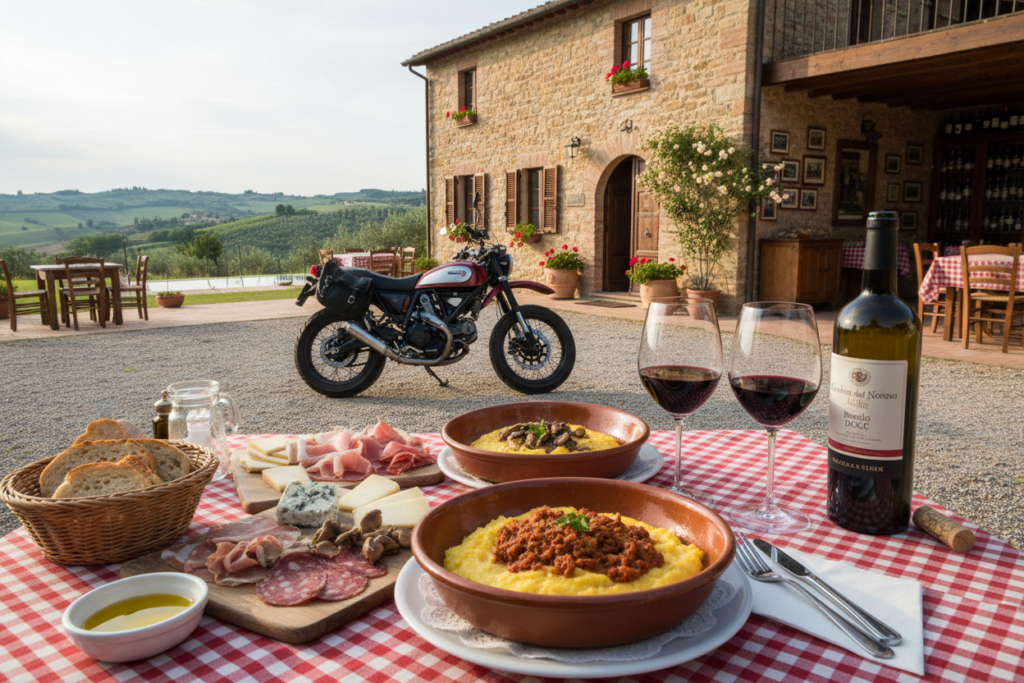
The food and culture factor is inseparable from the riding experience. Northern Italy’s food culture — the bar breakfast ritual, the aperitivo culture, the trattoria lunch, the regional wine — provides a rhythm to the riding day that becomes part of the appeal rather than an interruption of it. A coffee and cornetto at a mountain rifugio between passes is not a fuel stop. It’s a fundamental part of what northern Italy motorcycle routes deliver.
To this day, i passed through northern Italy and the Dolomites countless times without stopping to admire it’s true beauty. Maybe because it is to close to home for me. But for this part of the alps there is no itinerary required. The natural beauty is everywhere and entirely forgiving of spontaneous decisions. Yes, this article covers the most scenic routes — but they tend to be busy precisely because everyone already knows about them. The thing about the Dolomites that took me a few visits to fully appreciate: you cannot make a wrong turn. Every road leads somewhere worth being. The only rule is don’t follow the traffic.
Best Time to Ride Northern Italy by Motorcycle
May and June are the outstanding window. High Dolomites passes typically open from mid-May — Passo Stelvio usually opens in late May, Passo Gardena and Passo Sella slightly earlier. Temperatures are ideal for riding in full gear, the roads are clear of summer tourist traffic, and the landscape still carries snow on the highest peaks, which makes the visual contrast with the green valleys below particularly dramatic.
September and October are equally excellent and arguably offer the finest photography conditions. Autumn light in the Dolomites is extraordinary — the warm golden tone of October afternoon light on the pale rock faces is unlike anything the landscape produces in summer. The passes remain open until late October or November depending on early snowfall. Crowds thin noticeably after the August peak and accommodation prices drop.
July and August are the most challenging months for northern Italy motorcycle routes. The Sella Ronda circuit in particular — one of the most famous motorcycle routes in Europe — becomes genuinely congested in peak summer, with motorcycles, campervans, cyclists, and tourist buses all competing for the same narrow pass roads. Riding before 9am sidesteps the worst of it. Valley roads and lake districts in the July heat are better visited early morning and late afternoon.
Pass opening dates vary by year and elevation — always check current status before routing through high passes in spring or late autumn. The local tourist boards and pass-specific websites publish current opening status reliably.
Northern Italy’s Best Motorcycle Routes
The Dolomites — The Crown of Northern Italy
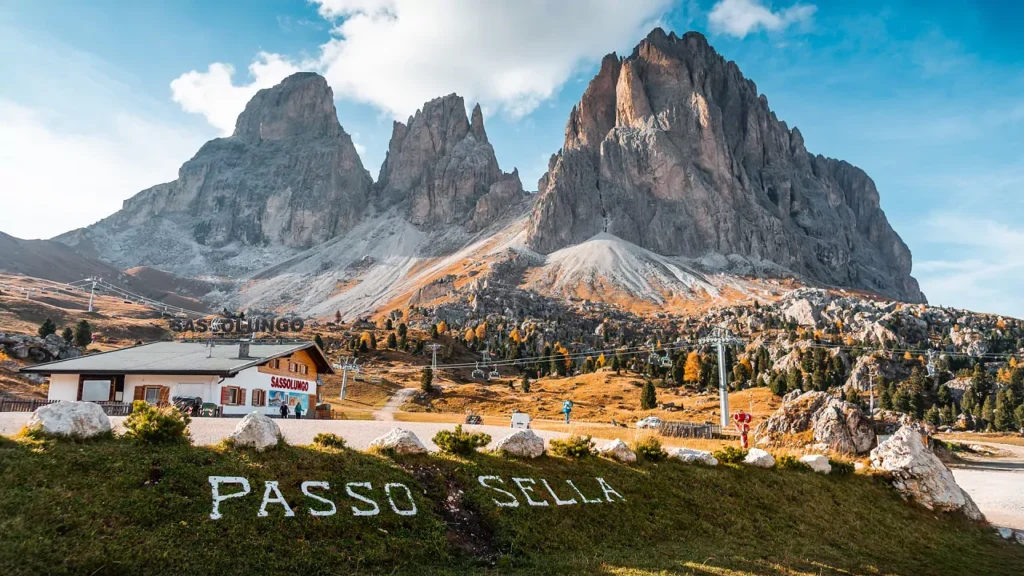
The Great Dolomites Road — SS48 and SS241 connecting Bolzano to Cortina d’Ampezzo — is the classic crossing and the natural starting point for any Dolomites riding itinerary. The road passes through Passo Costalunga, drops to Canazei, climbs over Passo Pordoi, and arrives in Cortina through a sequence of rock formations that become progressively more dramatic as you travel east. Allow a full day for the crossing with stops — rushing it misses the point entirely.
Passo Sella is the emotional centre of the Dolomites — the pass sits between four mountain groups with views in every direction that represent the Dolomites at their most concentrated. On a clear morning before the tourist traffic builds, the views from the top of Passo Sella rank among the finest in European motorcycle touring. The road surface is excellent.
The Sella Ronda circuit — four passes linked in a continuous loop: Passo Gardena, Passo Sella, Passo Campolongo, and Passo Pordoi — is the one-day northern Italy motorcycle route that every rider should complete at least once. More detail on this circuit in its own section below.
Passo Falzarego, connecting Cortina to the Stelvio direction via Passo Valparola, is one of the finest individual passes in the Dolomites — less famous than the Sella Ronda passes, which means marginally less traffic, and with approach roads that deliver sustained dramatic scenery rather than a single peak moment. The approach from Cortina looking west toward the Lagazuoi massif is one of the defining views of the Dolomites.
Tre Cime di Lavaredo — the three iconic rock towers in the eastern Dolomites — is accessed via a toll road costing 25 € per vehicle. The road ends at a rifugio below the towers and the walk to the classic viewpoint takes under an hour. Whether the toll is worth paying depends on how much the image of those three towers matters to you. For most riders who make it to the eastern Dolomites, it matters enough.
Lake Garda — Italy’s Most Scenic Lake Circuit
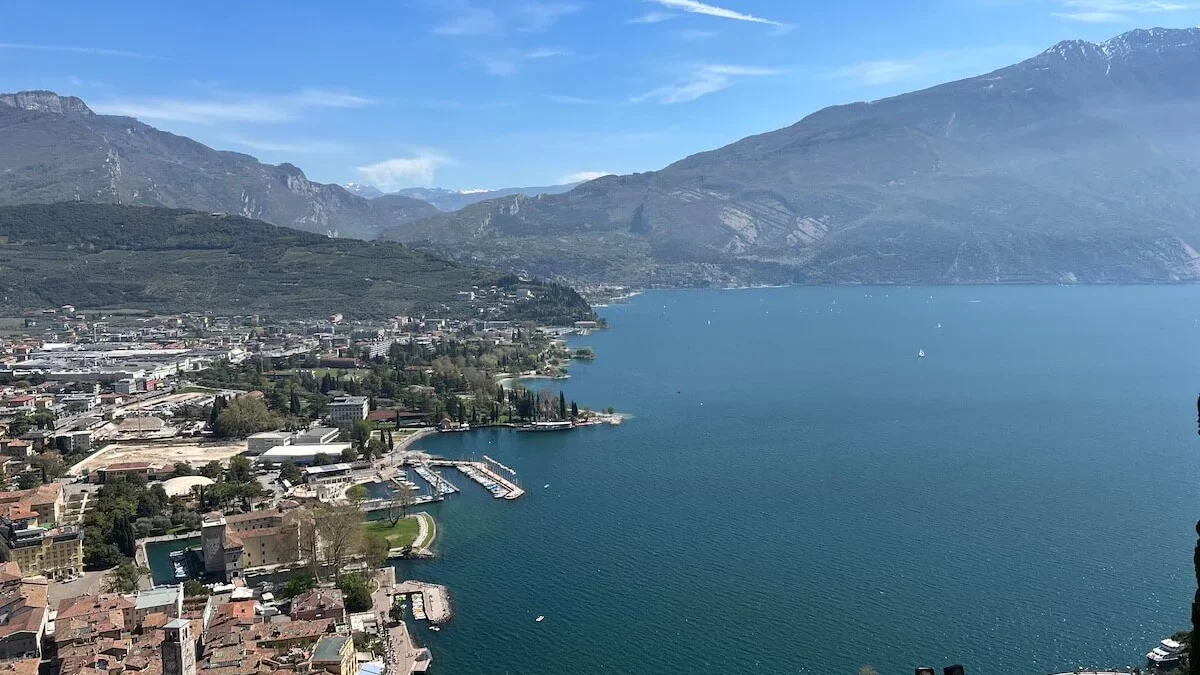
Lake Garda’s full circuit covers approximately 140 km and takes a full day if ridden with the attention it deserves. The western shore — the SS45bis between Salò and Riva del Garda, passing through Gargnano and Limone sul Garda — is the reason riders come. The road is cut into the clifftop above the lake, tunnelling repeatedly through the rock before emerging to views that make stopping inevitable. It is narrow, occasionally single-lane in the oldest tunnel sections, and worth every moment of concentration it demands.
The eastern shore is broader, faster, and significantly less dramatic — useful for returning to base efficiently rather than for scenic riding. The northern tip around Riva del Garda and Torbole offers the lake at its most compressed and atmospheric, with the mountains closing in from both sides.
Lake Garda works best as a base for Dolomites day rides — the lake district provides comfortable, well-serviced overnight options at prices more reasonable than the Dolomites resort towns, while the passes are within ninety minutes’ riding in the morning.
The Stelvio Pass — Italy’s Most Famous Road
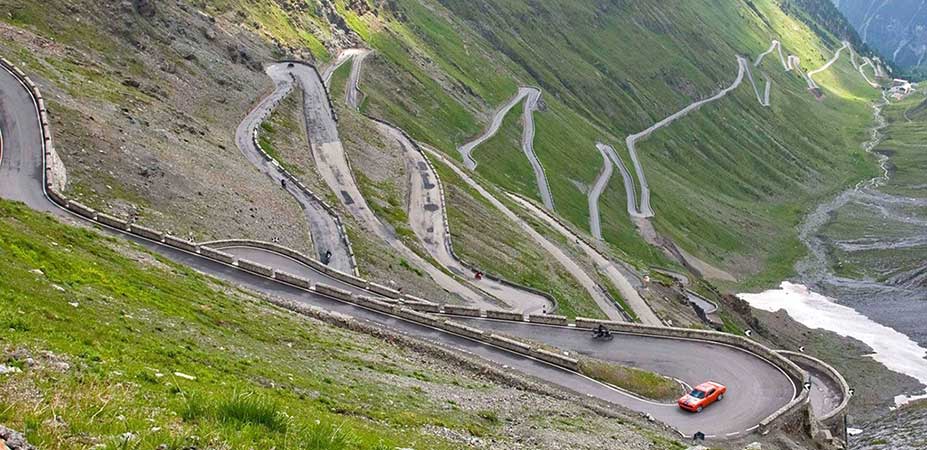
The Stelvio is the road that appears on every European motorcycle route list, and it earns its reputation. Forty-eight numbered hairpins on the southern approach from Prato allo Stelvio, climbing to 2,758 metres — the second highest paved pass in the Alps — with views back down the hairpin sequence that become more dramatic with every hundred metres of elevation gained. The road surface is excellent throughout. The gradient and hairpin radius are manageable for any touring bike.
Three approach routes exist and each delivers a different experience. The southern approach from Prato allo Stelvio is the classic — the full hairpin sequence, the most dramatic climbing. The northern approach from Bormio is shorter, with fewer hairpins but equally good road quality. The Swiss approach via the Umbrail Pass from Santa Maria in Val Müstair is the finest of the three — a quieter road through genuine Alpine landscape that arrives at the Stelvio summit from an angle that the Italian approaches don’t provide. If riding the Stelvio from Switzerland, take the Umbrail.
Traffic on the Stelvio in summer is the route’s primary limitation. The combination of motorcycles, cyclists, and tourist vehicles makes the road genuinely crowded by mid-morning in July and August. The solution is consistent: arrive at the base before 8am. The early morning Stelvio — mist in the valleys, empty hairpins, the summit in the first direct light — is a completely different road from the midday version.
The Alpine Border Passes — Connecting North and South
The passes connecting northern Italy to Austria, Switzerland, and Slovenia are among the most underappreciated northern italy motorcycle routes for riders who focus exclusively on the Dolomites. Passo di Resia, connecting the upper Vinschgau valley to Austria, passes a lake with a submerged medieval church tower visible above the waterline — one of the more surreal images in the Alpine region and a natural photography stop.
Passo di Predil, connecting Tarvisio in northeastern Italy to Slovenia‘s Soča Valley, is the gateway to one of the finest touring combinations in the Alps: northern Italy to Slovenia’s Vršič Pass and Soča Valley in a single riding day. The road quality on the Predil is good throughout and the descent into Slovenia’s Bovec area delivers an immediate change of landscape character that rewards the crossing significantly.
The Sella Ronda — A Perfect Motorcycle Day
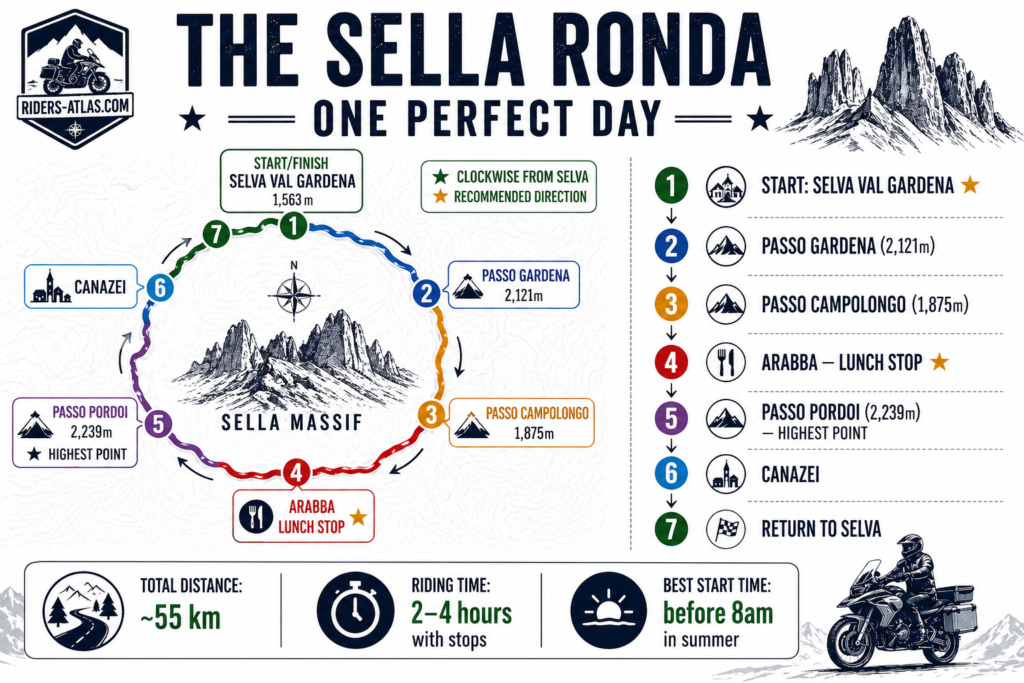
The Sella Ronda circuit deserves its own section because it represents something rare in motorcycle touring: a route where the sum is genuinely greater than the parts. Four passes — Gardena, Sella, Campolongo, and Pordoi — linked in a continuous loop of approximately 55 km that takes between two and four hours depending on stop frequency and traffic.
Clockwise from Selva in Val Gardena is the preferred direction for most riders — it puts the steepest and most dramatic sections of each pass on the climbing side rather than the descent, which produces the better sequence of views. Starting from Selva also allows the circuit to begin before the Cortina tourist traffic has fully arrived.
The realistic time commitment for a properly ridden Sella Ronda — including coffee at a rifugio at the top of Passo Sella, photographs at the Pordoi summit viewpoint, and a brief stop at each pass top — is three to four hours of moving time. Allow a full morning and plan lunch at Arabba or Canazei before riding further.
Budget and Daily Costs in Northern Italy
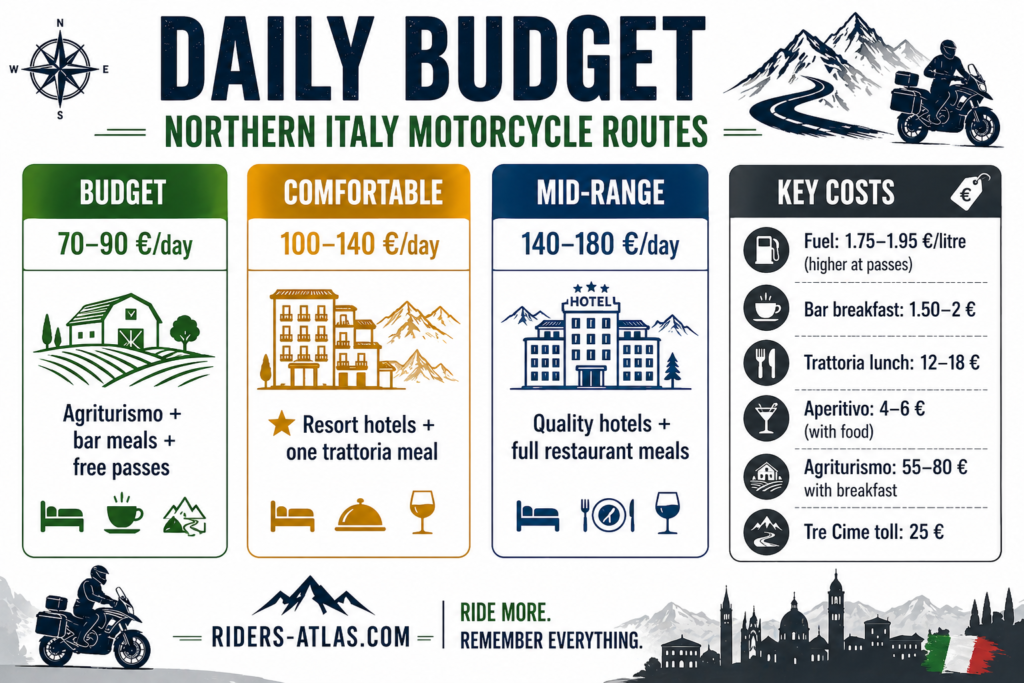
Northern Italy is the most expensive part of Italy for motorcycle touring and sits in the upper tier of European touring costs. Fuel runs 1.75–1.95 € per litre in mountain areas — plan fuel stops in valley towns rather than at pass-level stations where prices carry a premium. Accommodation in the Dolomites resort towns — Cortina, Selva, Madonna di Campiglio — runs 80–120 € for a budget room in season. Moving slightly outside resort centres to working towns like Brunico, Bressanone, or Trento reduces accommodation costs to 60–80 € without significantly increasing riding distances.
Agriturismo — farm accommodation scattered throughout the northern Italy countryside and foothills — provides excellent value at 55–80 € including breakfast and typically includes secure motorcycle parking in a barn or garage. For riders staying multiple nights in one area while day-riding the passes, agriturismo represents the best overall value in the region.
Food costs follow the bar breakfast rule: 1.50–2 € for espresso and cornetto at the bar. Trattoria lunch: 12–18 €. Aperitivo in the late afternoon: 4–6 € with accompanying food. Evening meal at a local restaurant rather than a resort-facing tourist operation: 15–22 €. The spread between eating well locally and eating badly at tourist prices in the Dolomites is as wide as anywhere in Italy.
Daily budget tiers for northern italy motorcycle routes:
- Budget: 70–90 €/day — agriturismo or budget hotels outside resort centres, bar meals and self-catering lunch, no toll roads
- Comfortable: 100–140 €/day — resort area hotels, one trattoria meal daily, occasional toll road use
- Mid-range: 140–180 €/day — quality hotels, full restaurant meals, maximum flexibility
Practical Riding Tips for Northern Italy
Pass road etiquette is worth understanding before riding the Dolomites. On narrow single-lane sections, uphill traffic has priority — pull into passing places to allow descending traffic through. This is understood and practiced by local drivers and cyclists; following the convention keeps traffic moving smoothly and avoids the standoffs that occur when riders unfamiliar with the rule hold their position on a narrow hairpin.
Tunnel riding in the Dolomites requires preparation. Mountain tunnels are cold — sometimes significantly colder than the ambient temperature outside — dark, and occasionally wet. A jacket with a thermal liner and good headlight visibility are worth ensuring before entering longer tunnel sections. The road surface in older tunnels can be rougher than the pass road surface — reduce speed on entry until surface quality is confirmed.
Weather in the Dolomites changes faster than almost anywhere else in the Alps. A clear morning can become a full thunderstorm by early afternoon with minimal warning. Carrying a packable rain layer — accessible without unpacking — is not optional on any Dolomites riding day. The standard Alpine rule applies: if you can see the storm building, you’ve already left it too late to find shelter before it arrives.
When I say the weather changes fast in the Dolomites, I mean it in the most literal sense. I once headed out for a short two-day ride on a perfect forecast — packed accordingly, which meant no rain gear, no thermal layer, nothing. What started at a comfortable 20°C had turned cold and wet by noon. Thoroughly unpleasant. But by mid-afternoon the sun was back out and I was completely dry again — the storm had arrived and left within a few hours. The Dolomites don’t do prolonged bad weather as often as they do sudden, dramatic, and brief bad weather. The problem is you never know which kind is coming. Always carry the rain layer.
Combining Northern Italy with Neighbouring Countries
Northern Italy sits at the centre of the finest Alpine touring loop available in Europe. Austria to the north via the Brenner or Resia passes provides natural connection to Tyrol’s riding roads and onward to the rest of Central Europe. Switzerland to the northwest via the Stelvio’s Umbrail approach or the Bernina Pass above St. Moritz adds another layer of Alpine riding quality. Slovenia to the northeast via Passo di Predil connects the Dolomites to the Soča Valley and the full Balkan route south.
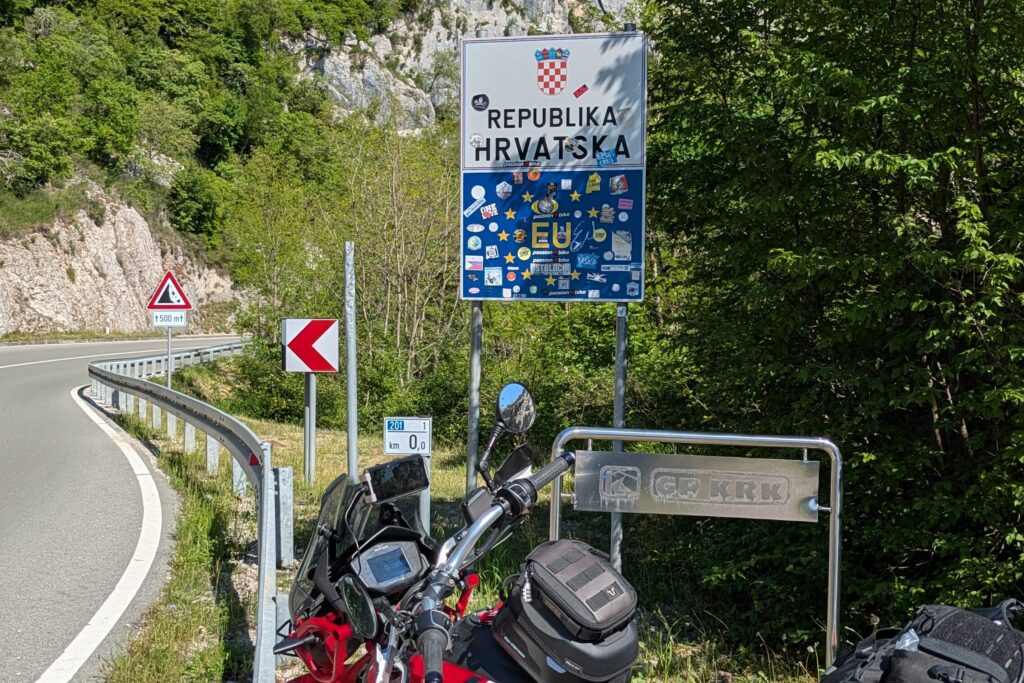
The Trieste corridor — riding southeast from Venice or Udine toward Trieste and then into Slovenia — is the natural gateway from northern Italy into the Balkans. From Trieste, Ljubljana is ninety minutes, Zagreb is three hours, and the full Balkan route begins. Riders who connect a northern Italy Dolomites tour with a Balkan loop through this corridor get two of Europe’s finest riding regions in a single trip.
France via the Aosta Valley and the Mont Blanc tunnel or the Little St. Bernard Pass adds the French Alps — Route des Grandes Alpes and the Tour de France pass roads — to any northern Italy itinerary. The combination of Italian and French Alpine riding in a single tour is one of the great European motorcycle circuits and entirely achievable in two weeks with careful routing.
Final Thoughts
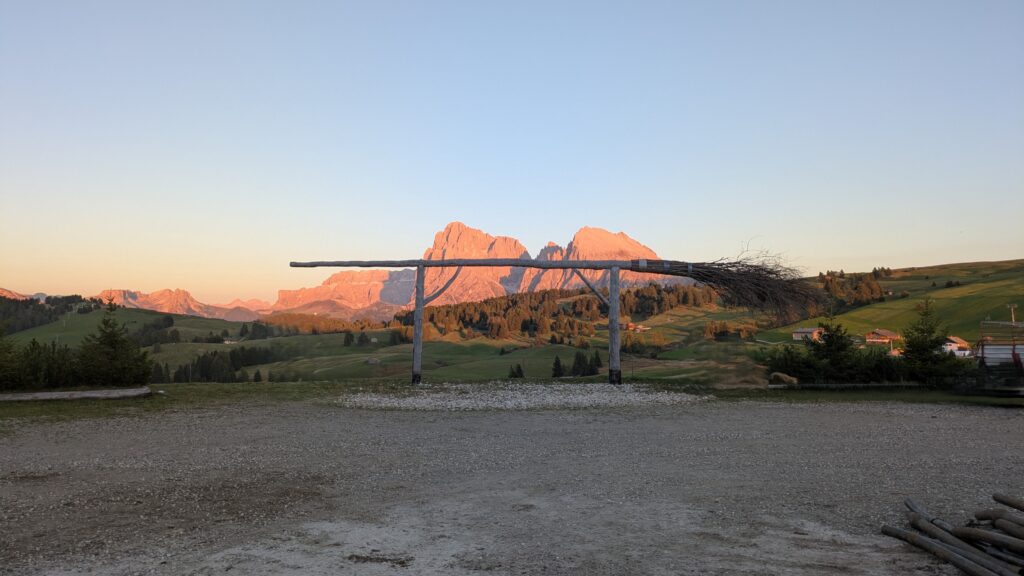
Northern italy motorcycle routes are inexhaustible in a way that very few riding regions manage. The Dolomites deliver something new on every visit — different light, different season, different approach road, different combination of passes. The Stelvio is worth riding more than once. The Sella Ronda is worth riding every time you’re within reach of it.
Ride in May, June, or September for the best combination of open passes, manageable traffic, and riding conditions. Start early — the Dolomites before 9am belong to riders, not tourist traffic. And allow more time than you think you need — northern Italy has a consistent ability to expand the itinerary in ways that feel entirely justified.
Have you ridden the Dolomites or the Stelvio? Share your own northern Italy route recommendations in the comments — there’s always a rider planning their first Alpine tour who’ll benefit from knowing which pass is worth the detour.