A motorcycle trip budget fails on the road for one reason: the assumptions it was built on were wrong before departure. Not because you spent carelessly, not because the trip cost more than it should have — but because the budget was built around a plan that had no room to change.
The plan that doesn’t change is the exception. A campsite that’s full, a pass that’s closed, a road that adds sixty kilometres to the day, a ferry you didn’t know existed — these are not failures of the trip. They’re the trip. A budget built without room for any of them fails at the first deviation, which usually arrives before the end of day two.
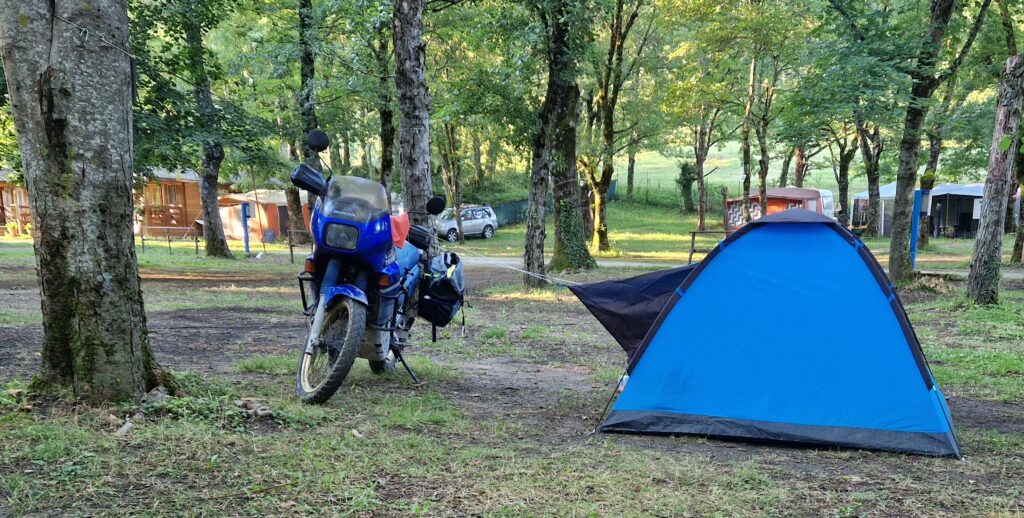
On my first trip with Vittoria I’d built the whole budget around camping. The logic was straightforward: camping is cheap, the gear was already bought, and a week of camping would keep costs well inside what I had available. What the budget didn’t account for was what happens when the camping plan fails. The tent didn’t hold on the third night and the weather stayed unstable for the rest of the trip. I spent the remainder in hotels — paying significantly more per night than any campsite would have cost, and more than the budget had ever imagined. The budget wasn’t wrong because I overspent. It was wrong because it assumed the plan would hold. It didn’t.
This guide covers the process of building a budget that doesn’t depend on everything going right: the five cost categories that account for every euro spent on tour, the pre-departure costs that arrive before the trip starts, how to research realistic destination costs, and how to build the contingency into the budget rather than onto it.
Start With the Right Categories
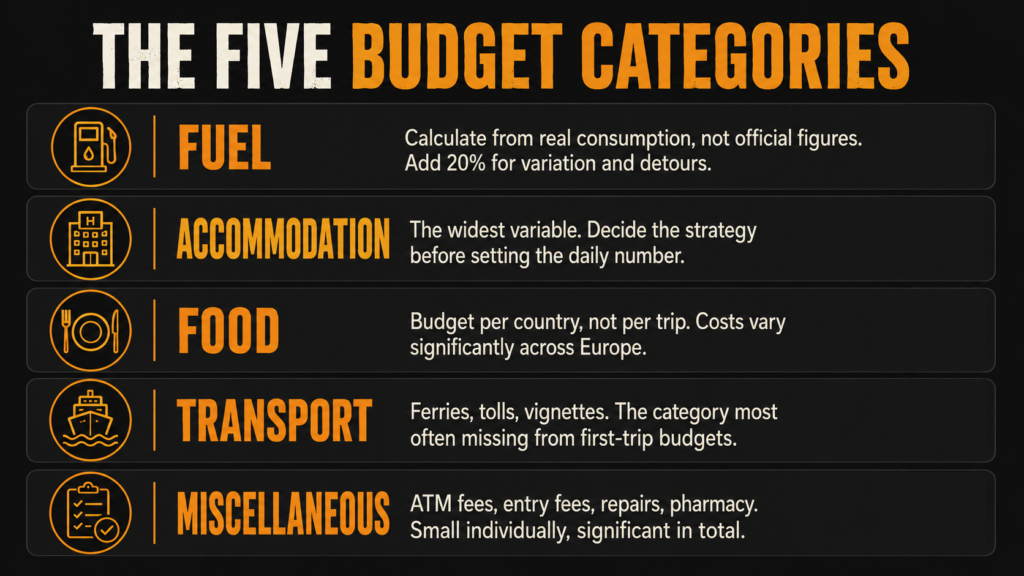
The most common budgeting mistake isn’t getting the numbers wrong — it’s missing entire categories of cost. A budget built around fuel and accommodation that forgets transport, entry fees, and miscellaneous daily spending will run short regardless of how carefully the fuel and accommodation numbers were calculated.
Five categories cover every euro that leaves your wallet on a motorcycle tour. These come from tracking real expenses across real trips — not a generic template.
Fuel
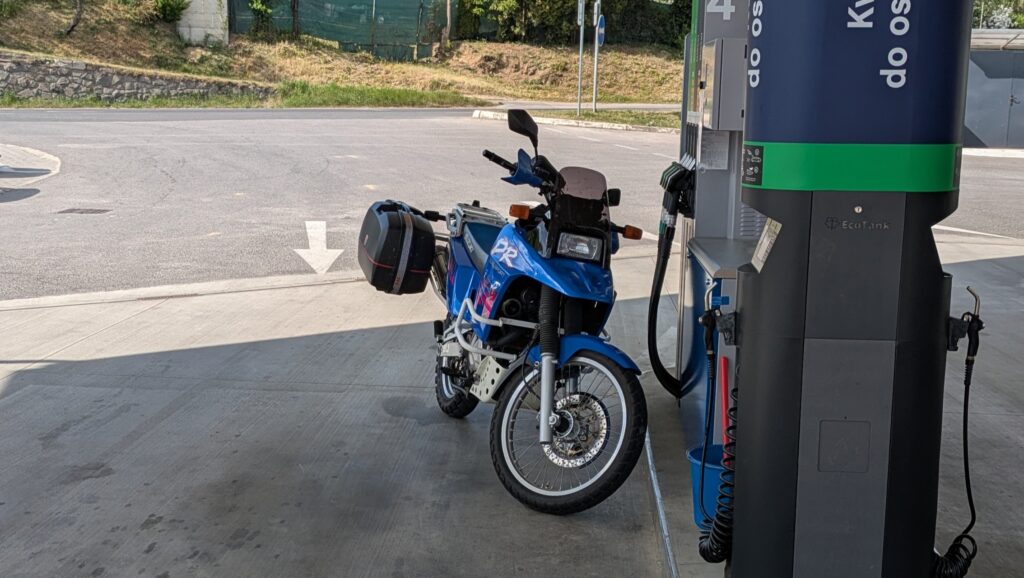
Calculate from real consumption, not manufacturer figures. Official consumption figures assume conditions nothing like loaded touring on mountain roads. Real-world consumption runs 10–20% higher — use that as the baseline, not the manufacturer number. The formula: planned distance divided by real-world consumption, multiplied by the fuel price in the destination country.
Research destination fuel prices before you leave — the difference between fuel costs in Spain and fuel costs in Norway is significant enough to change the calculation meaningfully. The Budget Motorcycle Travel Europe guide has current cost tiers by country.
Accommodation
The widest variable in any touring budget. Wild camping costs nothing. A private room in a guesthouse in Slovenia costs 35–55 €. A hotel on the Adriatic coast in July costs considerably more. The accommodation strategy needs to be decided before the daily budget number is set — not after.
Food
A single daily food budget across an entire multi-country tour is the wrong approach. What a meal costs in Portugal is not what it costs in Scandinavia. What a day of self-catering costs anywhere is not what a day of restaurant meals costs anywhere. Set the food budget per country and per strategy — cooking versus eating out — rather than as a single trip-wide figure.
Transport
Everything that moves you but isn’t fuel: ferries, toll roads, vignettes, city transit for days off the bike. This is the category most consistently missing from first-trip budgets, because it doesn’t fit neatly into fuel, accommodation, or food — and so it doesn’t get a line in the budget at all.
The ferry from Split to Stari Grad on Hvar cost 16 € during the Balkans trip. It appeared nowhere in the original budget. Not because it was unknown in advance — the route to Hvar was planned — but because the budget had no transport category to put it in. It came out of the miscellaneous buffer, which then wasn’t available for its actual purpose. One missing category cascades through the rest of the budget when it’s finally needed.
Miscellaneous
The category that catches everything the others miss: ATM withdrawal fees, attraction entry fees, parking charges, small repairs, pharmacy purchases, the coffee that wasn’t part of any plan. The temptation is to skip this category because the individual amounts seem trivial. They’re not trivial in aggregate.
Across six weeks of the Balkans trip, ATM withdrawal fees totalled 45.30 €. Every cash withdrawal from a foreign ATM in a non-Euro country carried a fee — small at the individual transaction level, invisible in the moment, and significant across a long tour through countries where card payments aren’t universally accepted. Budget for it as a line item. The number is small enough that most riders skip it. It’s not small enough to ignore.
Pre-Departure Costs — The Budget Block Before You Leave
Pre-departure costs are the most consistently underestimated component of any motorcycle touring budget. They arrive before the trip starts, often weeks or months before, and because they don’t feel like trip spending — they happen at home, at a workshop, in an online shop — they frequently don’t make it into the trip budget at all.
The First Trip, the Second, and the Tenth
Pre-departure costs are not a fixed amount. They depend on where you are in your touring life and what the specific trip demands — and the relationship between those two factors is less linear than most riders expect.
The first trip carries the highest pre-departure spend: building the kit from nothing, making assumptions about what the trip will require, buying for conditions you haven’t yet experienced. Some of that spending is correct. Some of it is wrong in ways only the trip will reveal — and the trip that reveals it is usually the second one.
The second trip is often where the largest corrective spending happens. The tent that failed, the luggage that didn’t hold, the gloves that weren’t waterproof enough, the tool that was missing at exactly the wrong moment — these are specific, known gaps, and filling them costs money. The second trip’s pre-departure phase is frequently more targeted than the first, but not necessarily cheaper.
By the tenth trip the kit is established and maintenance is routine. Pre-departure costs are lower — but they’re never zero, because the trip’s purpose still drives preparation costs regardless of experience level.
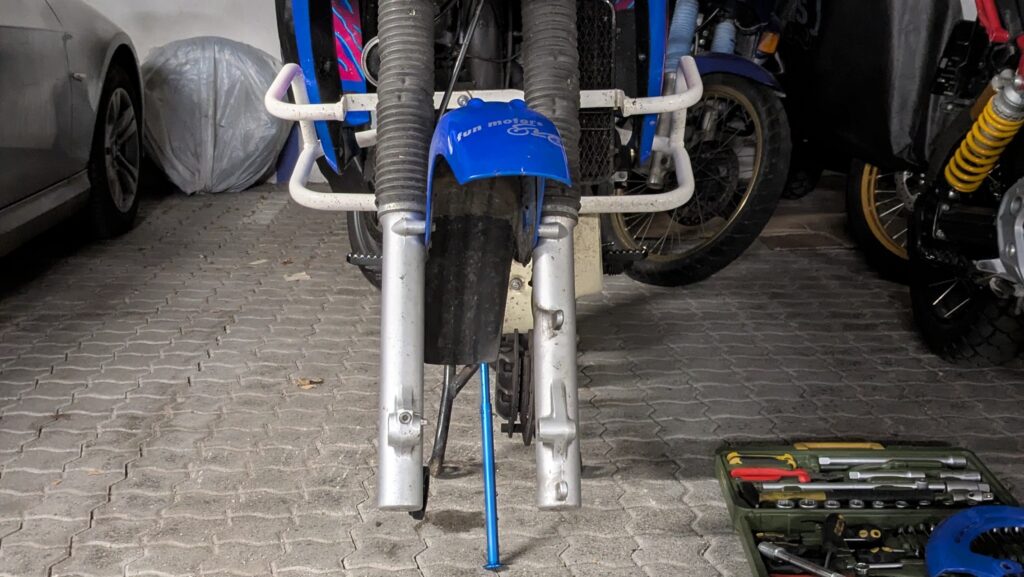
The Balkans trip with Derviša required 2,354.64 € in pre-departure spending: body protection and engine guards for offroad riding, a suspension upgrade, a full service with new tyres, camping equipment, accessory bags for the luggage system, and two small tool additions for roadside repairs. The Slovakia trip with Ludmila required 136.68 €: a front brake disc and pads, and a DIY oil change. Same rider, same approach to preparation, radically different cost — because the trips demanded different things from the bikes. The Balkans trip involved offroad sections, camping, and a multi-country loop across unfamiliar terrain. Slovakia was road-only, hotels, a familiar country. Purpose drives pre-departure cost, not duration.
The Pre-Departure Categories
Four categories cover most pre-departure spending: maintenance and service, gear and equipment, documents and insurance, and miscellaneous preparation costs. The last category is where things like a travel pharmacy belong — 43.74 € before the Balkans trip, bought at home, correctly categorised before departure rather than appearing as an unexplained line item in the daily spending record.
Research Destination Costs Before You Build the Numbers
A budget is only as accurate as the cost data it’s built from. A hotel night in Slovenia and a hotel night in Norway are not interchangeable figures, and a budget that uses the same daily accommodation number across a route that crosses both countries will be wrong in both directions simultaneously.
Every country on the route needs individual research — including transit countries, not just the headline destinations. The cost of one night in a country you’re only passing through is still a real cost.
Published guides provide a starting point, not a final answer. Fuel prices, accommodation rates, and ferry costs change faster than any guide updates. Forum posts, recent trip reports, and community discussions from riders who completed the specific route in the last six months produce more current cost data than any reference document — use both.
Build the Contingency In, Not On Top
A contingency fund added as a single line at the end of the budget calculation is the wrong approach. It looks like extra money. It gets cut when the budget looks too high. And when it’s actually needed it covers everything at once, which means it either covers one problem or none of them.
The contingency belongs inside each category, as a percentage, not above the total as a lump sum.
Category contingency percentages
Fuel: +20% (price variation, unplanned detours, inefficient routing).
Accommodation: +25% (peak season surprises, unavailable options forcing a step up in category).
Food: +15% (tourist-area pricing, days when cooking isn’t possible).
Transport: +30% (unplanned ferries, toll roads not on the route plan, emergency transit).
Miscellaneous: +50% (the category that catches what everything else misses).
A separate mechanical contingency fund sits outside the daily budget entirely: 200–500 € depending on the bike’s age and reliability. This covers a repair bill, not an expensive dinner. It’s accessible but not counted as available spending — the distinction matters when the repair bill arrives and the daily contingency has already been spent on a hotel upgrade after a campsite closed.
Track It While You’re Riding
A budget that isn’t tracked during the trip is a forecast with a number attached. Actual spending against planned spending, updated each evening, catches category overruns before they compound across multiple days. A note-taking app, a simple spreadsheet, or a physical notebook — the tool doesn’t matter. The habit of updating it daily does.
Tracking produces something more valuable than budget compliance over time: a personal data bank of real costs from real trips. Six weeks of Balkans expense data — every fuel stop, every ATM fee, every accommodation, every ferry — is more useful for planning the next Balkans trip than any published cost guide. It also shows the patterns: which category consistently runs over, which countries cost more than the research suggested, where the contingency was correct and where it was too conservative.
That data bank becomes the most accurate budget input you have — more accurate than any source outside your own riding history.
The Budget Is What Lets the Trip Happen
A realistic budget doesn’t constrain the trip — it removes the financial anxiety that would otherwise follow you through it. The Vittoria trip taught that lesson the way most budget lessons get taught: mid-tour, in the rain, recalculating in a hotel room that wasn’t supposed to be in the plan.
Five categories, realistic destination research, pre-departure costs included, contingency built into each line rather than sitting on top of it — that’s a budget that can absorb what actually happens on the road. Not every deviation. Not a mechanical catastrophe on day one. But the ordinary unpredictability of a motorcycle tour across multiple countries, which is most of what a budget actually needs to handle.
By Fritz