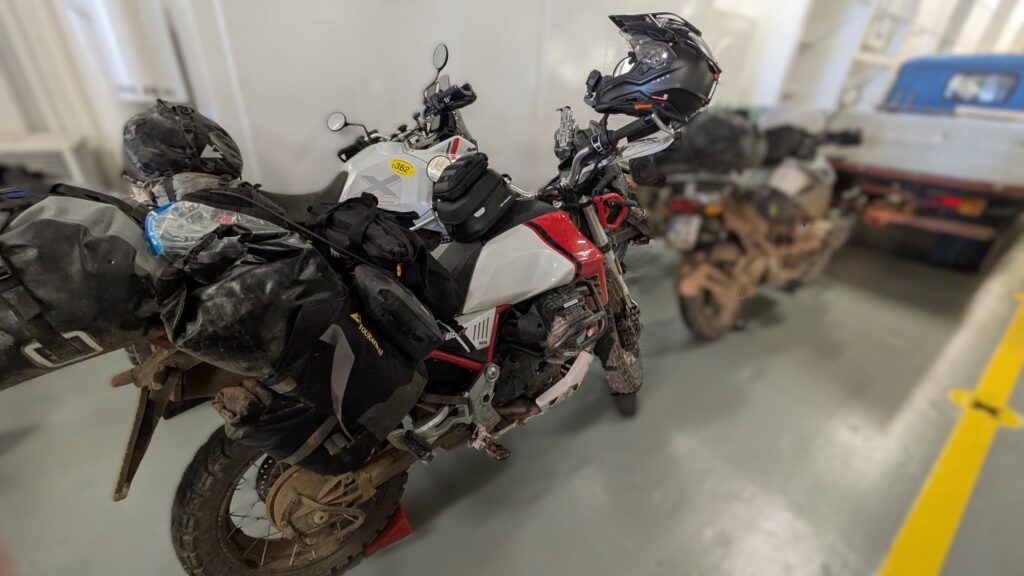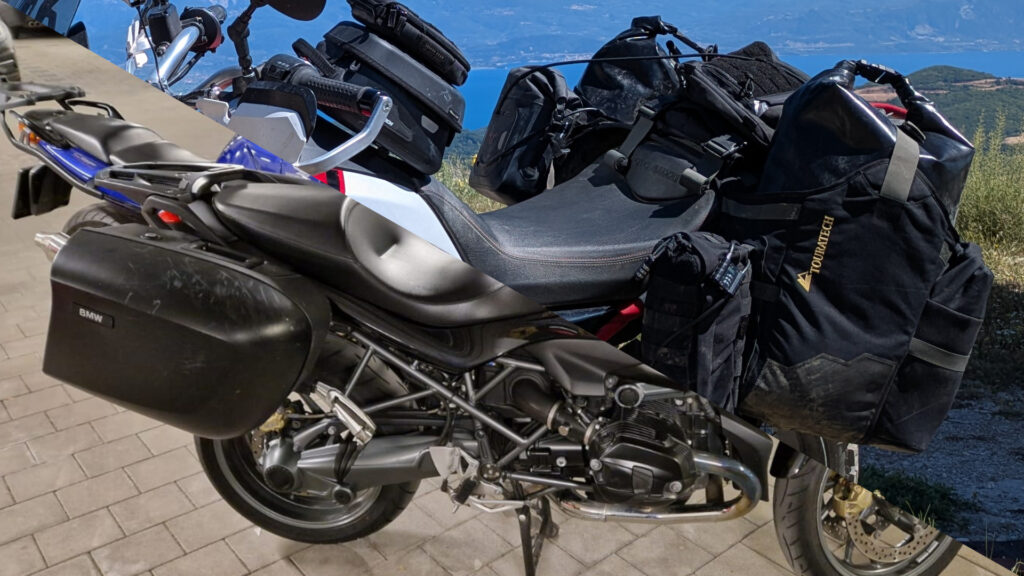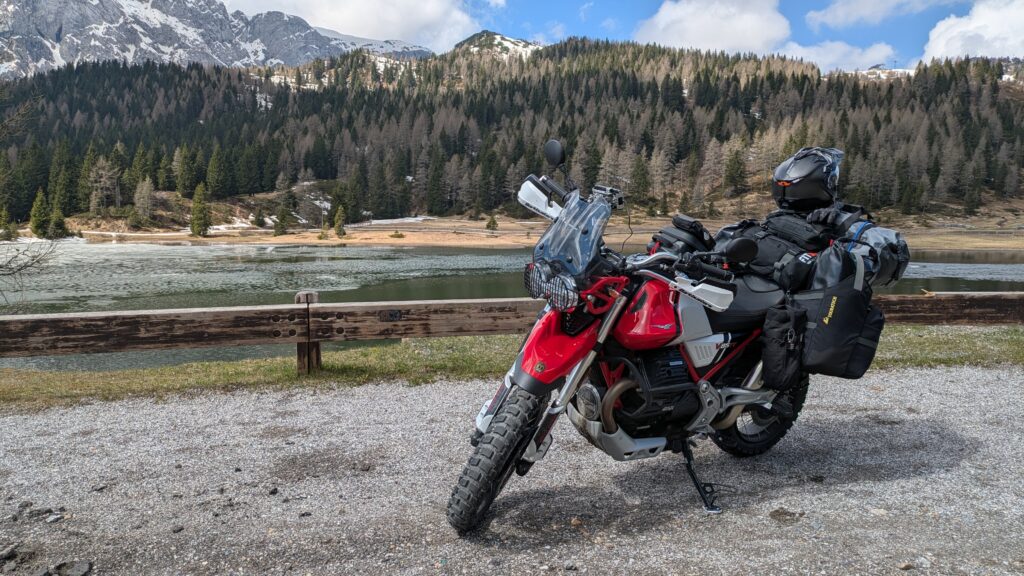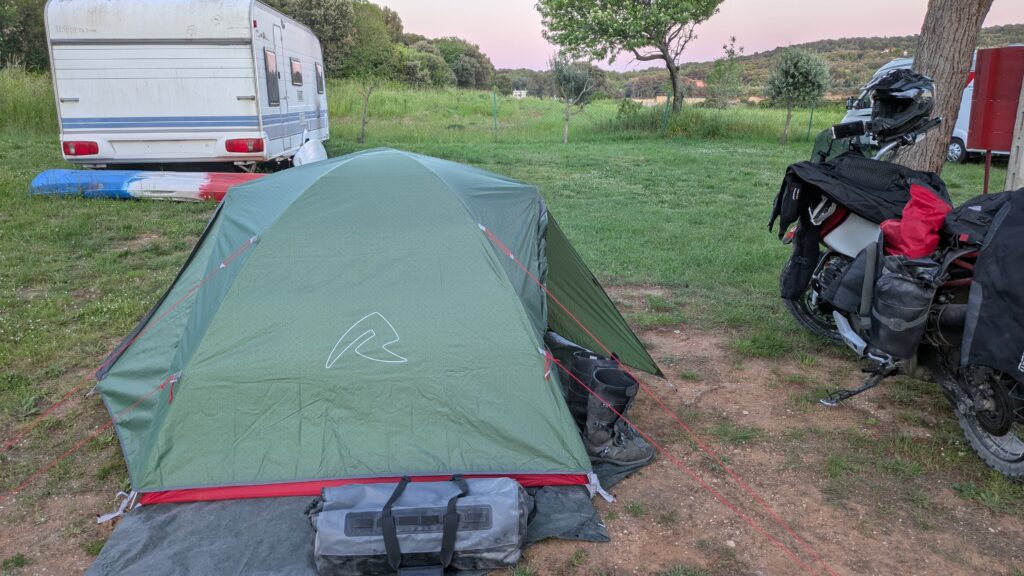
Motorcycle camping gear opens up incredible freedom and budget savings when touring Europe. Instead of booking hotels weeks in advance or paying €80+ per night for accommodation, you can stop wherever the road takes you—a mountain meadow in the Alps, a quiet beach on the Albanian coast, or a forest clearing in Slovenia – be sure to follow the local laws regarding wild camping. But here’s the challenge: every item needs to fit in your limited luggage space, survive vibration and weather, and be light enough not to overwhelm your bike.
I’ve refined my camping setup over dozens of tours, learning through mistakes what works and what doesn’t. That ultralight tent that seemed perfect? Collapsed in a Balkans storm. The fancy camping stove? Too finicky when you’re cold and hungry after a long riding day. The sleeping bag rated for “three seasons”? Left me freezing on a mountain pass in May. Real-world motorcycle camping requires gear that’s durable, compact, and actually functional when you’re tired and the weather turns nasty.
This guide covers everything you need for motorcycle camping across Europe—from the essential big items like tents and sleeping bags to the small gear that makes the difference between comfortable camping and miserable nights. A more detailed guide on what you need to be comfortable during your trip can be found here. You’ll learn what to prioritize when space is limited, what weight you can realistically carry, and which gear investments pay off versus where you can save money. Whether you’re planning occasional camping to save budget or want to wild camp throughout your entire tour, this equipment list sets you up for success!
Understanding Motorcycle Camping Gear Constraints
Before diving into specific gear, you need to understand the unique constraints of motorcycle camping. Your bike has payload capacity limits—typically 150-200kg total including rider, passenger, luggage, and gear. Subtract your weight and riding gear, and you’ve got maybe 40-60kg for everything else. Space is equally limiting. Even with hard panniers and a top case, you’re working with perhaps 60-80 liters of storage. Regarding the weight, your decision starts already with the question which luggage system to chose.
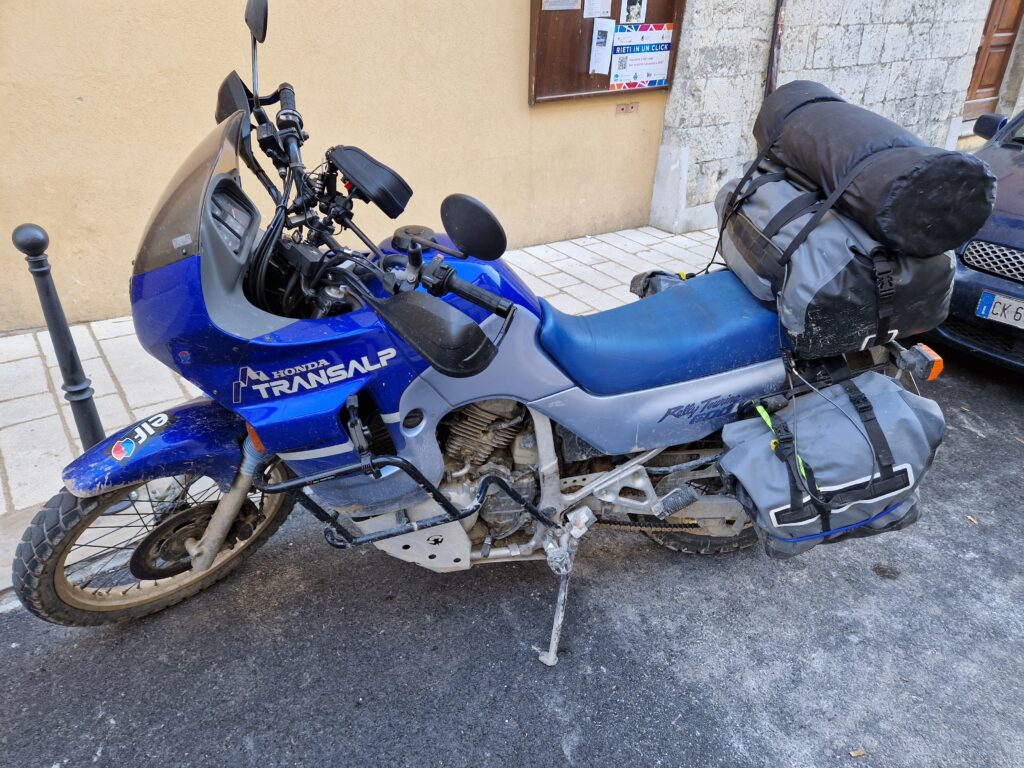
Constant vibration affects gear differently than backpacking. Items loosely packed will shake apart or wear through. Inflatable pads develop leaks from vibration if not protected. Tent poles can crack if bouncing against hard cases. Everything strapped to your bike faces weather exposure—rain, dust, sun, and road spray. Your gear needs to handle this abuse.
Setup and packdown speed matters more than backpacking because you’re doing it frequently, often after exhausting riding days. Fumbling with complicated tent poles in the dark after ten hours of riding is miserable. You want gear that works quickly and intuitively even when you’re tired. The best ultralight backpacking gear often requires careful setup that’s frustrating on a motorcycle tour.
European conditions vary dramatically. Mediterranean summer heat requires different gear than alpine spring cold. Scandinavia in June has long daylight but cool temperatures. The Balkans combine coastal heat with mountain cold. Your gear needs versatility to handle these variations unless you’re only touring one region. Climate considerations affect every equipment choice from sleeping bag temperature ratings to tent ventilation.
The Big Three: Tent, Sleeping Bag, Sleeping Pad
These three items form your sleep system and deserve the most attention and budget. Get these right, and everything else is manageable. Get them wrong, and you’ll be miserable every night regardless of how nice your other gear is.
A quality tent designed for motorcycle touring should pack down to under 50cm length and 20cm diameter. For solo riders, I recommend a two-person tent rather than a one-person. The extra space accommodates your riding gear, boots, and bags inside the vestibule, keeps you from feeling claustrophobic, and provides comfortable room to move. The weight penalty is minimal—maybe 500 grams—and the comfort gain is substantial.
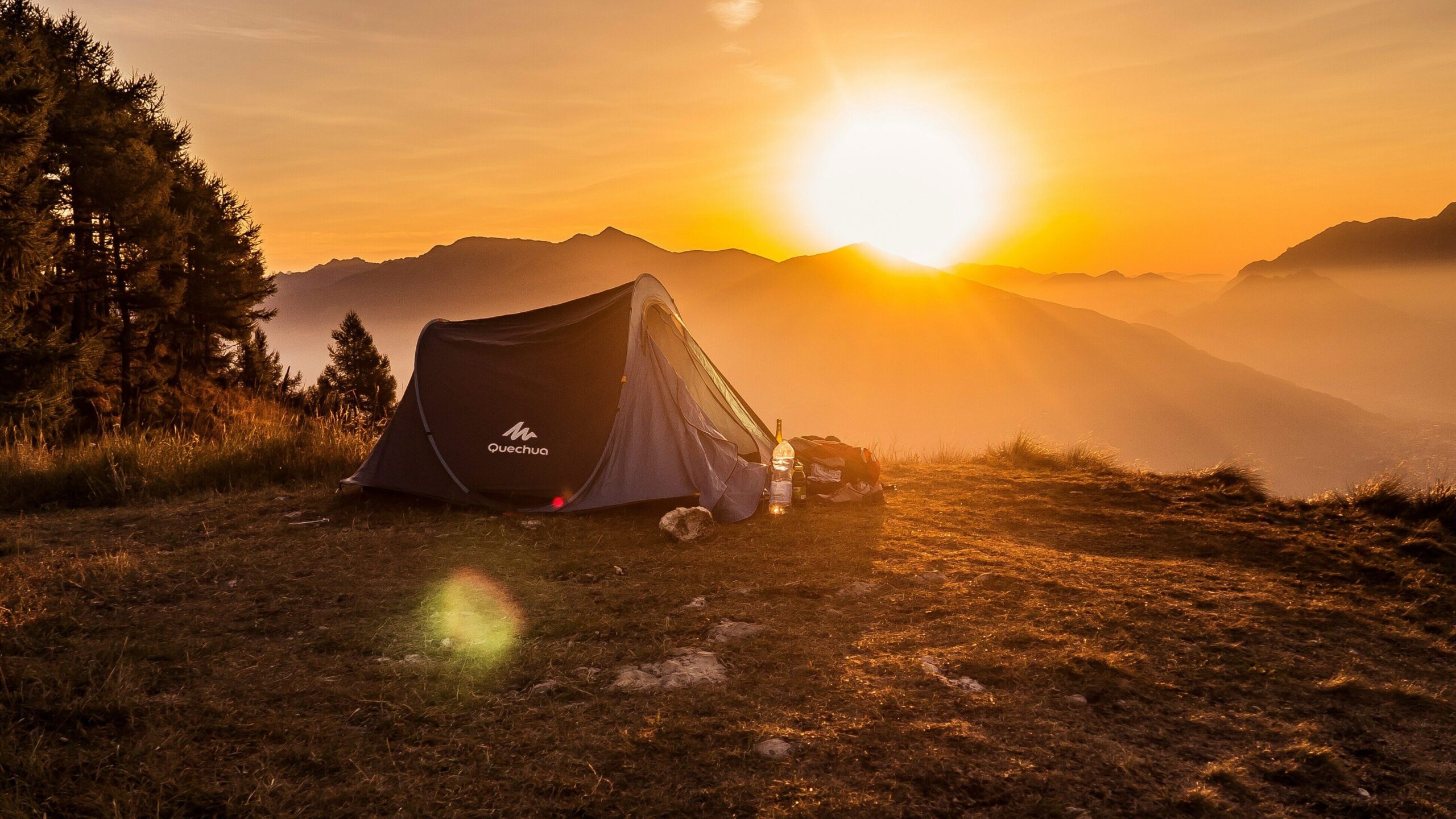
Look for minimum 3,000mm waterproof rating on the fly and floor. European weather can dump rain for days, and you need confidence your tent will keep you dry. Aluminum poles handle vibration better than fiberglass, which can crack. Seam sealing should be factory-applied, but check and reinforce if needed. Freestanding tents work better for motorcycle touring because you can set up on hard ground or gravel where stakes don’t work well.
Wind resistance matters if you camp in exposed locations. Mountain passes, coastal areas, and open fields all see significant wind. A tent that flaps all night prevents sleep and risks damage. Look for low-profile designs with good guy line systems. Four-season tents handle wind better but add weight and cost—three-season tents work for most European touring unless you’re riding shoulder season in mountains.
Quick setup is critical. After riding all day, you want your shelter up in 10-15 minutes maximum. Color-coded poles and clips help. Practice setup at home before your trip so you can do it smoothly even in rain or fading light. A footprint or groundsheet protects your tent floor from abrasion and adds waterproofing. You can use a custom-cut tarp or specialized footprint—either works.
I learned about tent durability the hard way during a spring trip through Italy. The ultralight tent I’d bought to save weight had thin fabric and minimal guy lines. When a storm rolled in overnight with high winds, the tent collapsed partially and leaked at the seams. I spent a miserable night holding up the center pole and got soaked. Since then, I prioritize durability over weight savings for tents. A tent that keeps you dry and standing in bad weather is worth every extra gram.
Your sleeping bag choice depends on when and where you’re touring. For spring through autumn European touring, a sleeping bag with 0-5°C comfort rating works well. This handles cool mountain nights in shoulder season while being ventilated enough for warmer lowland camping. If you’re only touring southern Europe in summer, a 10°C bag suffices. For April or October mountain touring, consider a -5°C comfort rating.
Down versus synthetic is a classic debate. Down offers better warmth-to-weight ratio and compresses smaller—critical for limited motorcycle luggage space. But down loses all insulation when wet and dries slowly. Synthetic insulation works even when damp, dries faster, and costs less. For European touring where rain is common, I lean toward synthetic or treated water-resistant down. The weight and bulk penalty is worth the reliability when weather turns bad.
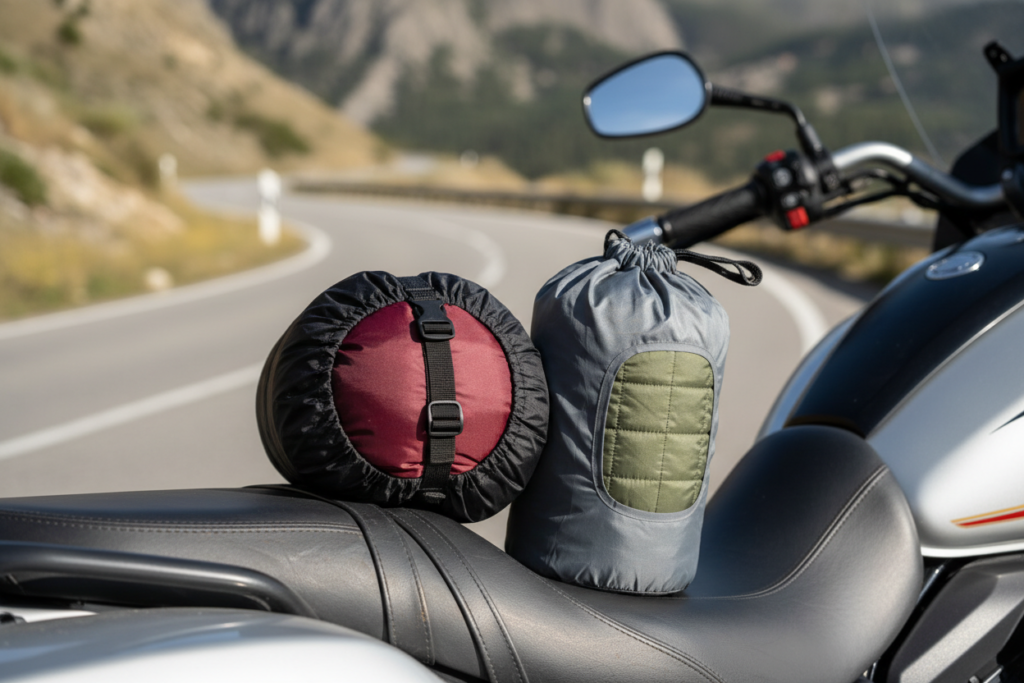
Mummy bags are warmest and most compact but feel restrictive. Rectangular bags offer more comfort but are heavier and bulkier. For motorcycle touring, mummy or semi-rectangular designs work best. Target packed size under 30cm by 20cm and weight under 1.5kg. Use a compression sack to minimize volume in your luggage—sleeping bags are one item where aggressive compression is fine.
Sleeping pads are often underestimated, but they’re crucial for warmth and comfort. Cold ground steals body heat rapidly—your sleeping bag compresses under you and provides minimal insulation. The pad’s R-value measures insulation effectiveness. For three-season European camping, minimum R-value 3.0 is adequate. For shoulder season and mountains, R-value 4.0 or higher prevents cold nights.
Air pads are lightest and most comfortable but have puncture risk. Self-inflating foam pads are durable and comfortable but heavier. Closed-cell foam pads are nearly indestructible and cheapest but bulky and less comfortable. For motorcycle touring, I recommend quality air pads with repair kits. The comfort significantly improves sleep quality, and with proper packing protection, punctures are rare. Target weight 400-600 grams and packed size under 30cm length when rolled.
Cooking System and Food Storage
A reliable cooking system is essential for motorcycle camping. Canister stoves are ideal for European touring—lightweight, clean-burning, and easy to use. Gas canisters are available in outdoor stores across Europe, though brands vary by country. MSR, Jetboil, and Primus are widely available. Canister stoves weigh just 100-300 grams and pack small.
Integrated systems like Jetboil are convenient with built-in pot, wind protection, and efficient fuel use. They excel at boiling water for dehydrated meals and coffee but are less versatile for actual cooking. Separate burner and pot setups offer more flexibility for cooking real food but require wind protection. For most touring, I carry a simple canister stove with a 1-liter pot—lightweight, reliable, and adequate for solo cooking needs.
Liquid fuel stoves work in all temperatures and use universally available fuel, but they’re heavier, require priming, and need more maintenance. They make sense for winter touring or extremely remote areas, but for typical European touring from spring through autumn, canister stoves are simpler.
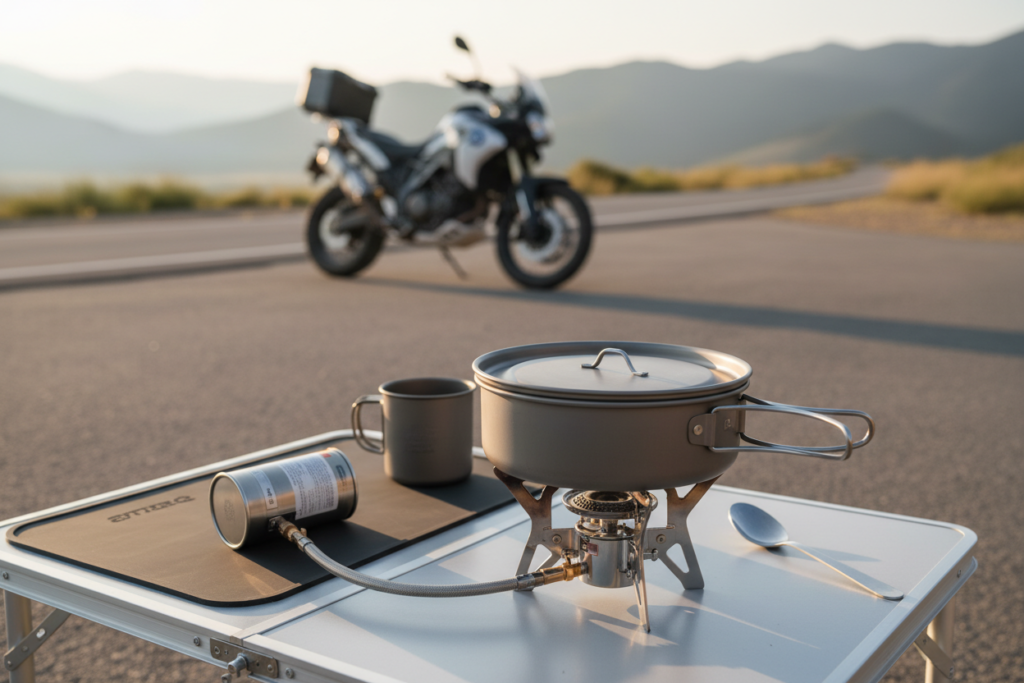
Cookware should be minimal. A single 1-liter pot with lid handles most solo camping needs. The pot lid doubles as a plate or bowl. Titanium is lightest but expensive. Aluminum is affordable and light enough. Non-stick coatings are convenient but scratch easily. For eating utensils, a spork or separate spoon and fork works—lightweight titanium or lexan plastic options pack small. A small folding knife or multi-tool serves as your kitchen knife. An insulated cup for hot drinks is nice but optional—you can drink from the pot.
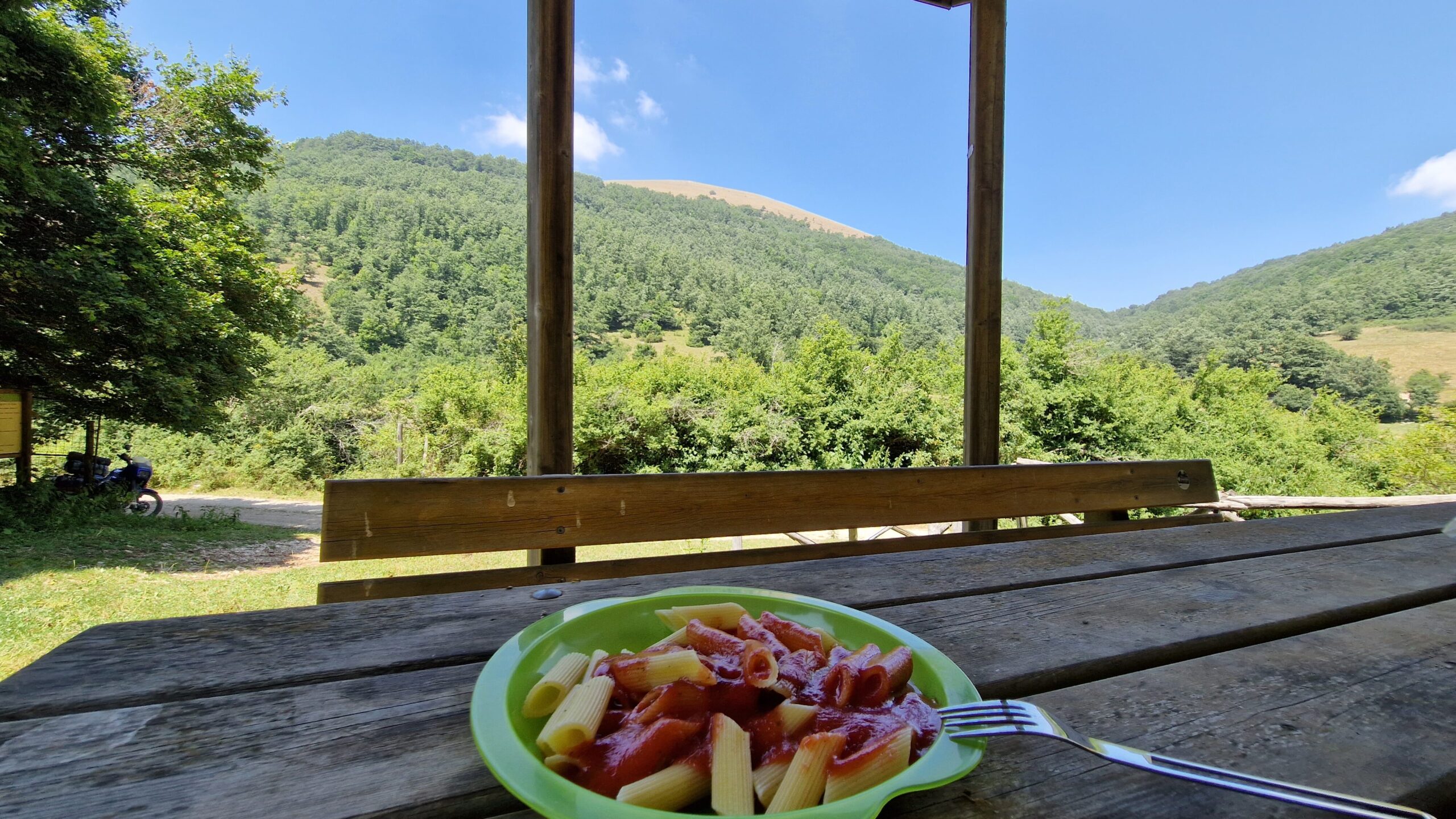
For cleaning, carry a small sponge and travel-size biodegradable soap that works for dishes, body, and laundry. A bandana or small towel dries dishes. Practice Leave No Trace principles—don’t wash directly in streams or lakes. Use a pot to carry water away from sources and scatter waste water widely.
Water storage requires 2-3 liter capacity. Collapsible bottles or bladders save space when empty. European tap water is generally safe, but carry filtration for wild water sources when camping remotely. Sawyer Squeeze filters, LifeStraw, or water purification tablets are lightweight insurance. In most of Europe, you can refill at gas stations, campgrounds, or town fountains.
Food planning balances weight, nutrition, and cost. Dehydrated camping meals are convenient but expensive—€6-10 per meal adds up on long tours. I prefer buying fresh food from grocery stores and supplementing with lightweight staples like pasta, rice, instant soup, and oatmeal. This is cheaper, tastier, and provides better nutrition. Plan for breakfast and dinner at camp, with bread, cheese, and snacks for lunch on the road.
Shelter Accessories and Comfort Items
A tent footprint or groundsheet protects your tent floor from abrasion and adds waterproofing. You can buy a custom footprint, cut a Tyvek sheet to size, or use a cheap painter’s plastic drop cloth. Emergency blankets work in a pinch. This small addition (100-200 grams) significantly extends tent life by preventing floor damage from rocks and sticks.
Replace cheap stock tent stakes with better quality aluminum or titanium stakes if your tent included flimsy ones. Carry extra stakes for variable ground conditions—hard ground, sand, and soft soil all benefit from different stake types. Extra guy lines let you better secure your tent in storms. Reflective guy lines prevent tripping at night, which is annoying and potentially dangerous when you’re barefoot heading to pee at 2 AM.
Lighting is critical. A quality headlamp is essential for nighttime camp tasks—cooking, setting up tent in the dark, finding items in bags. LED headlamps with 200+ lumens provide plenty of light. Red light mode preserves night vision when moving around at night. Rechargeable headlamps are convenient if you carry a power bank. Otherwise, pack spare batteries.
A small LED lantern or string lights are optional but create nice ambiance inside your tent. Some riders use lightweight LED string lights hung from the tent peak. Others just hang their headlamp inside. Both work. Weight is minimal (50-150 grams) if you want the extra comfort.
Camp pillows significantly improve sleep quality. Inflatable camping pillows pack down incredibly small and weigh just 100-200 grams. Alternatively, stuff your extra clothes into a stuff sack to create a makeshift pillow. This saves weight and gear but is less comfortable. After testing both approaches, I carry an inflatable pillow—the sleep improvement is worth the small weight and space penalty.
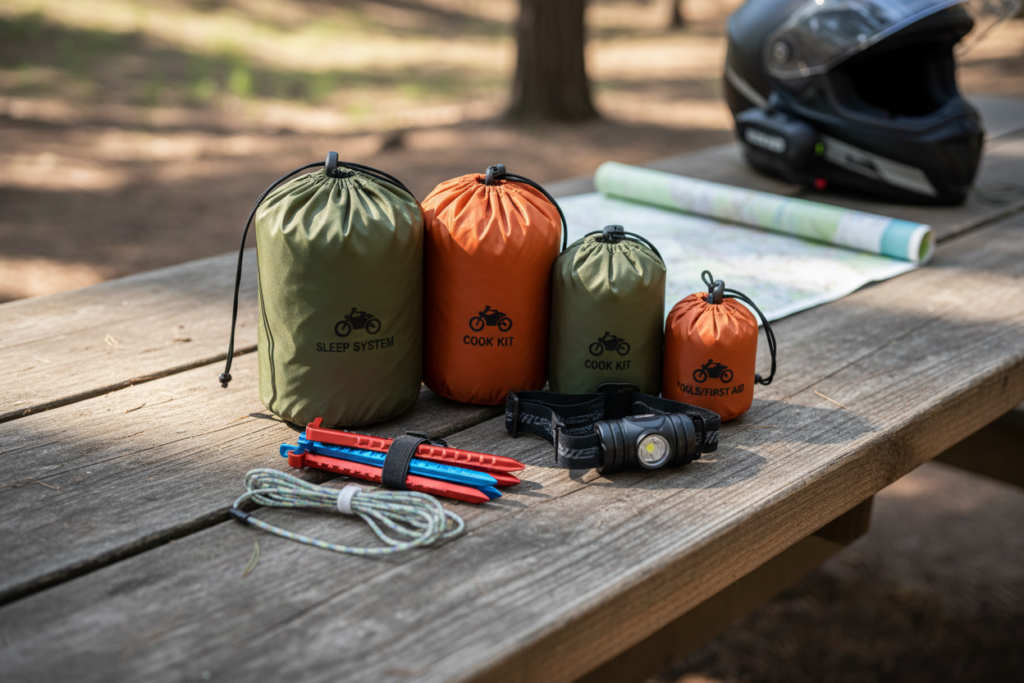
Organization matters on a motorcycle because you’re packing and unpacking daily. Color-coded dry bags help you find items quickly. I use separate bags for sleeping system, cooking gear, and camp clothes. This prevents digging through everything to find what you need. Compression sacks minimize sleeping bag volume. Waterproof protection is essential even with hard panniers since water can enter through openings or during heavy rain.
On one trip through Slovenia, I learned the value of good organization after spending 20 minutes searching for my stove fuel in the rain. Everything was jumbled together in panniers, and the small canister was buried beneath clothes and gear. Since then, I’ve used a specific bag for all cooking equipment—stove, fuel, pot, utensils, food. It stays together, packs efficiently, and I can grab the entire cooking system in one piece. This simple organizational change saved countless minutes of frustration over subsequent tours.
Clothing and Personal Items for Camping
Your riding gear provides some camp clothing, but you’ll want a few dedicated camp items. A lightweight base layer works as sleepwear and provides warmth on cold nights. Merino wool or synthetic materials dry quickly and resist odor better than cotton. This single layer can handle a range of temperatures by adding or removing your riding jacket over it.
An insulated puffy jacket is essential for spring and autumn touring. Down or synthetic fill both work—down compresses smaller, synthetic works better when damp. These jackets pack down incredibly small (fist-sized) but provide substantial warmth when sitting around camp in cool evening temperatures. Weight is typically 300-500 grams. Even in summer, mountain nights can be cold, and this layer makes the difference between shivering and comfortable.
Rain protection at camp can come from your riding rain gear or a lightweight packable rain jacket. If you’re carrying full riding rain gear anyway, that often suffices. Some riders pack a cheap poncho for camp use to avoid wearing riding gear constantly. Rain pants are less critical for camp unless you’re experiencing extended wet weather.
Camp shoes provide relief from riding boots. Lightweight sandals, Crocs, or simple slip-on shoes weigh 200-400 grams and let your feet breathe after long days in boots. This small luxury significantly improves camp comfort. Your feet will thank you.
Personal hygiene on a motorcycle camping tour should be minimal. Toothbrush and small toothpaste, biodegradable soap for body and dishes, a small microfiber towel, toilet paper (partial roll), and a small trowel for digging catholes. Hand sanitizer is convenient. Add any prescription medications and basic first aid items. Keep this kit small—you’re not backpacking for weeks between resupply.
Sunscreen and lip balm protect against sun exposure. Insect repellent is essential in some regions—Scandinavia in summer has mosquitoes, and Mediterranean evenings bring bugs. Ear plugs help if camping near roads or in campgrounds with noise. The total weight of personal items should be under 500 grams unless you have specific medical needs requiring additional supplies.
Weight and Space Management
Let’s calculate realistic camping gear weight to understand what you’re carrying. The big three total 4-5kg minimum: tent (2-3kg), sleeping bag (1-1.5kg), and sleeping pad (0.5kg). Cooking system adds 1.5-2kg including stove, fuel, cookware, and food per day. Camp clothing and accessories add another 2-3kg. Your total camping gear weight is approximately 8-10kg for a complete setup.
Add riding gear, clothing, tools, and personal items, and you’re approaching 20-25kg total luggage weight. Check your motorcycle’s payload capacity and ensure you’re not exceeding limits. Most touring and adventure bikes handle this fine, but smaller bikes may struggle – and don’t forget the effect of each kilogram on your daily Mileage!
Distribution matters as much as total weight. Pack heavy items low and centered in panniers near the bike’s center of gravity. Sleeping bags are light but bulky—they go in top cases or tail bags. Tents fit alongside panniers due to their long shape. Cooking gear packs in panniers where it’s protected. Frequently needed items should be accessible without unpacking everything.
Compression is your friend for sleeping bags—squeeze them aggressively into compression sacks. Stuff sacks work better than rolling for most items. Group gear by use: camp setup together, cooking together, sleeping system together. Use dry bags within panniers even with hard cases since water can enter during heavy rain. Keep daily items separate from camping gear so you’re not unpacking tent and sleeping bag just to access snacks.
What NOT to bring: camp chairs are too bulky for motorcycles, full-size pillows waste space, heavy cast iron cookware is unnecessary, multiple changes of camp clothes add weight without value, and luxury items that sound nice at home become burdens on the road. Every item should justify its weight and space.
Budget Considerations and Where to Invest
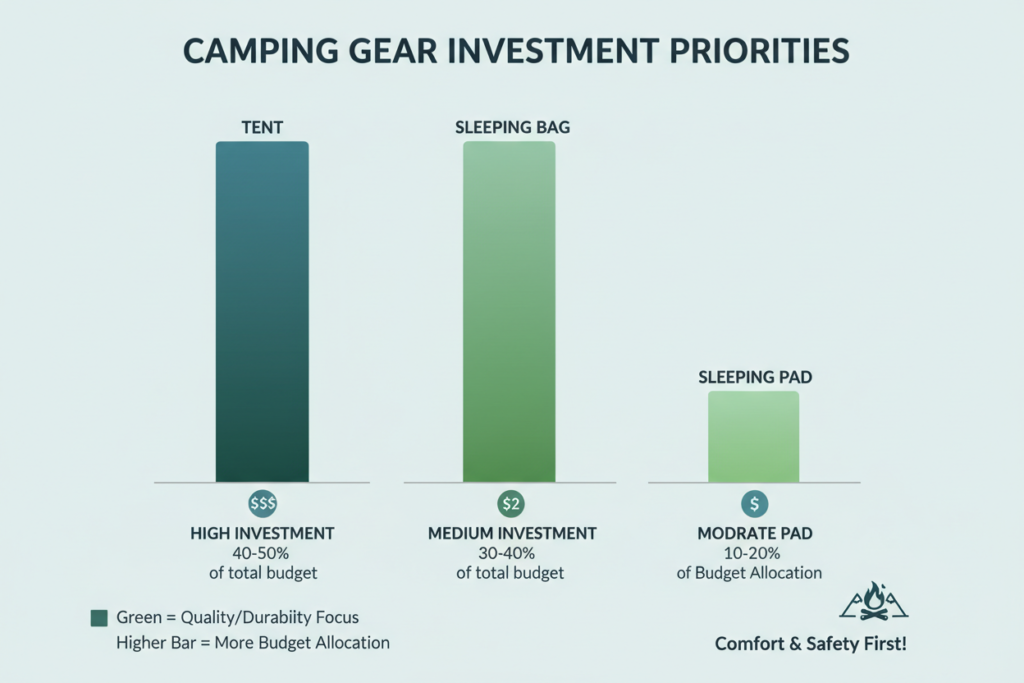
Tent quality is worth the investment. A reliable €200-400 tent from brands like MSR, Big Agnes, or Nordisk will last many seasons and keep you dry in storms. Cheap tents develop leaks, break poles, and leave you miserable. Since your tent is your shelter in all weather, this is not the place to save money. Failure in a mountain storm is not just uncomfortable—it’s potentially dangerous.
Sleeping bags also warrant quality investment. €150-300 gets you a reliable three-season bag that will last years. Good bags compress well, retain loft, and actually keep you warm at their rated temperatures. Cheap bags don’t compress, lose loft quickly, and have optimistic temperature ratings. Poor sleep affects your daily riding safety and enjoyment.
Sleeping pads at €80-150 for quality options provide comfort that directly affects sleep and recovery. Cheap pads are uncomfortable, don’t insulate well, and puncture easily. Since you’re using your pad every night on tour, this investment pays dividends in actual rest.
Cooking gear is where you can save money. A €30-50 basic pot set works fine. You don’t need titanium—aluminum is light enough and much cheaper. Function matters more than minimal weight savings. A simple canister stove from any reputable brand works as well as expensive models for typical European touring.
Accessories like stuff sacks, groundsheets, and organization bags can be budget items or DIY solutions. Generic compression sacks work as well as name brands. A hardware store plastic sheet works as a footprint. You can make a pillow from clothes in a stuff sack. These small savings add up without sacrificing function.
Used gear can offer value, but inspect carefully. Tents need checking for damage, missing parts, and pole condition. Sleeping bags should retain loft and have functional zippers. Inflatable pads must be tested for leaks. Avoid used sleeping bags that have lost insulation or tents with damaged floors.
For total budget, expect €400-600 for a functional budget setup that works but is heavier. €600-1000 gets you quality gear with balanced weight and durability—this is the sweet spot for most touring riders. €1000-1500 buys premium ultralight gear with maximum durability—justified if you tour extensively and want the lightest possible setup. In the end your camping setup has to fit in you personal trip budget – and can be upgraded later on.
Conclusion
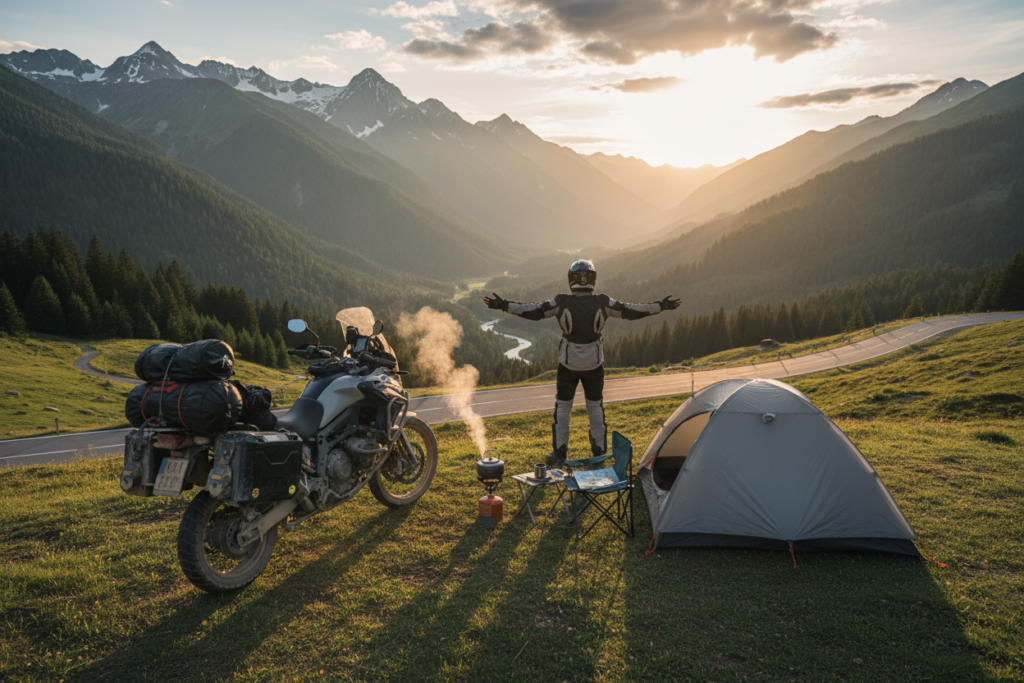
Motorcycle camping gear requires balancing competing priorities—light enough not to overload your bike, durable enough to handle vibration and weather, compact enough to fit in limited luggage space, and functional enough to keep you comfortable after long riding days. The tent, sleeping bag, and sleeping pad form your foundation, and investing in quality for these items pays dividends in comfort and reliability throughout your tour.
Start with the essentials covered in this guide, test your setup on weekend trips close to home, and refine based on what works for your riding style and the regions you explore. You don’t need the most expensive ultralight gear—you need gear that’s reliable, packable, and appropriate for European conditions. A €300 tent that keeps you dry in a Balkans storm is worth more than a €500 ultralight tent that collapses in wind.
Remember that camping gear expands your freedom to explore. With proper equipment, you can ride remote mountain passes, camp on quiet beaches, and explore areas where hotels don’t exist—all while saving significant money on accommodation costs. The initial investment in quality camping gear pays for itself quickly when you’re spending €15 at a campground instead of €80 at a hotel, or wild camping for free in stunning locations.
What camping gear has worked well for your motorcycle tours? Any recommendations or lessons learned from gear that didn’t work out? Share your experiences in the comments to help fellow riders build their perfect camping setup!